
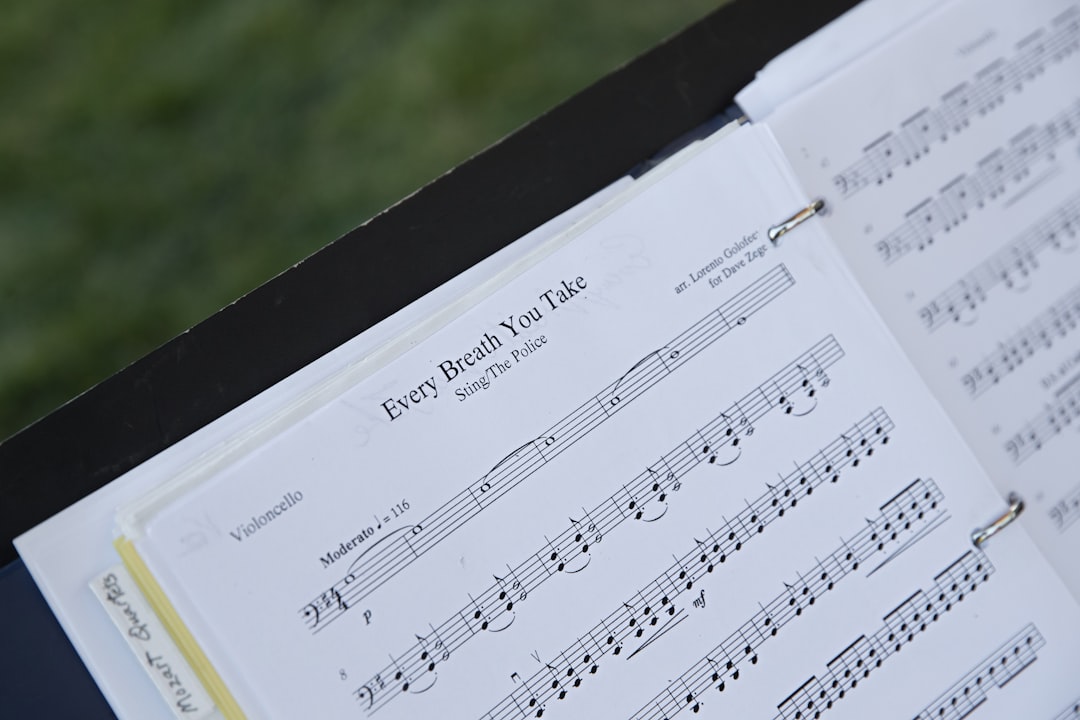
So what is a chord progression? It’s simply a sequence of chords played in order — the harmonic backbone a melody sits on top of. When you hear a song’s “chords,” you’re hearing its progression: a string of chords that move from one to the next and usually return home. C – G – Am – F is a chord progression, and so is the looping pair under almost any pop chorus.
Progressions are where harmony meets emotion. The same melody over different chords can feel triumphant, sad or unresolved. Understanding how chords move is the single most useful songwriting skill you can build.
If terms like scale degree, triad or key are still fuzzy, start with our music theory for beginners guide, which covers the essentials progressions are built on.
If you want to go deeper than individual articles, a structured book is the best way to connect chords, scales and form. Our pick of the best music theory books covers options from first steps to advanced harmony.
How chords get their numbers
Musicians label chords with Roman numerals based on which scale degree they’re built on, so a progression can be described in any key at once. In a major key, the chords are:
- I, IV, V — major chords (uppercase).
- ii, iii, vi — minor chords (lowercase).
- vii° — diminished.
So “I–V–vi–IV” in C major means C – G – Am – F, and in G major it means G – D – Em – C. These come straight from the diatonic chords of the key. The numeral system is why a Nashville session player can call a tune in any key on the spot — see the Nashville number system for the working musician’s shorthand.
Why progressions create emotion
Chords create a push and pull between tension and rest. The I chord feels like home. The V chord feels tense and wants to resolve back to I. The vi chord is the relative minor and adds a touch of sadness. Moving between these is what gives a song its emotional shape. A progression that ends on V leaves you hanging; one that lands on I feels settled. That sense of arrival or suspense is called a cadence.
The three jobs a chord can do
It helps to stop thinking of chords as isolated shapes and start thinking about the role each one plays. In tonal music, every diatonic chord falls into one of three broad functions, and most progressions are simply a journey through these three states:
- Tonic (rest) — the I chord, and to a lesser extent vi and iii. This is home. It feels stable and resolved, the place a phrase wants to start from and return to.
- Subdominant (movement) — IV and ii. These pull you away from home without much tension. They set up the next move, which is usually toward the dominant.
- Dominant (tension) — V and vii°. These hold the most tension and want to resolve back to the tonic. The pull from V to I is the strongest gravitational force in Western harmony.
Read in that light, the classic I–IV–V–I is just home → movement → tension → home. Once you hear chords by their function rather than their letter name, you can swap chords that share a job — say, using ii in place of IV — and keep the same emotional arc while changing the colour.
A few progressions you already know
Most popular music reuses a small set of progressions, because they work:
- I–V–vi–IV — the “four-chord” pop progression behind countless hits.
- I–IV–V — the foundation of blues, rock and folk.
- ii–V–I — the cornerstone of jazz.
- vi–IV–I–V — a slightly more wistful rotation of the four-chord loop, a staple of the sad chord progressions that tug at listeners’ emotions.
Our roundup of common chord progressions every songwriter should know walks through these with examples in real keys.
How to write your own
- Pick a key. Start in C or G major — no awkward chords.
- Start and end with I. Anchoring on the tonic gives a sense of home.
- Add tension in the middle. Drop in a V or IV to create movement before resolving.
- Try a borrowed colour. Once comfortable, swap a chord for an out-of-key one — see borrowed chords — for a fresh twist.
Loop your progression and hum over it. If a melody comes easily, the chords are doing their job — and our guide to writing a melody over chords shows how to turn that hum into a finished line.
Common mistakes to avoid
When a progression sounds wrong, it’s usually one of a handful of predictable issues rather than a deep theory problem:
- Never leaving home. Looping I and IV forever feels safe but goes nowhere. A progression needs at least one chord with real tension — usually a V — to give the loop somewhere to resolve to.
- Resolving too early or too often. Landing on I at the end of every bar kills momentum. Delay the resolution and the payoff lands harder when it finally arrives.
- Ignoring the bass line. The lowest note of each chord forms its own melody. A progression with a stepwise, singable bass line almost always sounds more polished than one that leaps around.
- Changing key by accident. If a chord suddenly sounds jarring, check whether it actually belongs to your key. Out-of-key chords can be wonderful when chosen deliberately, but a stray one usually just sounds like a mistake.
- Over-complicating it. Beginners often assume more chords means a better song. Some of the most memorable music in history loops two or three chords. Strong melody and rhythm matter far more than chord count.
Frequently asked questions
What is a chord progression in simple terms?
It’s a series of chords played in a set order that forms the harmonic foundation of a song. The melody sits on top of the progression, and the way the chords move between tension and resolution gives the song its emotional feel.
What do the Roman numerals in a progression mean?
Each numeral represents a chord built on a scale degree of the key. Uppercase numerals (I, IV, V) are major chords and lowercase (ii, vi) are minor. Using numerals lets you describe a progression in any key, since I–V–vi–IV works the same way wherever you transpose it.
What is the most common chord progression?
The I–V–vi–IV progression is probably the most widely used in pop music — C–G–Am–F in the key of C. Other staples include I–IV–V in blues and rock, and ii–V–I in jazz. These appear constantly because they balance familiarity with a satisfying pull home.
How many chords does a progression need?
There’s no minimum. Plenty of complete songs are built on just two chords, and a great many pop tracks use only four. What matters is movement and a sense of resolution, not the number of chords. Start with three or four, get them looping convincingly, and only add more if the song genuinely calls for it.