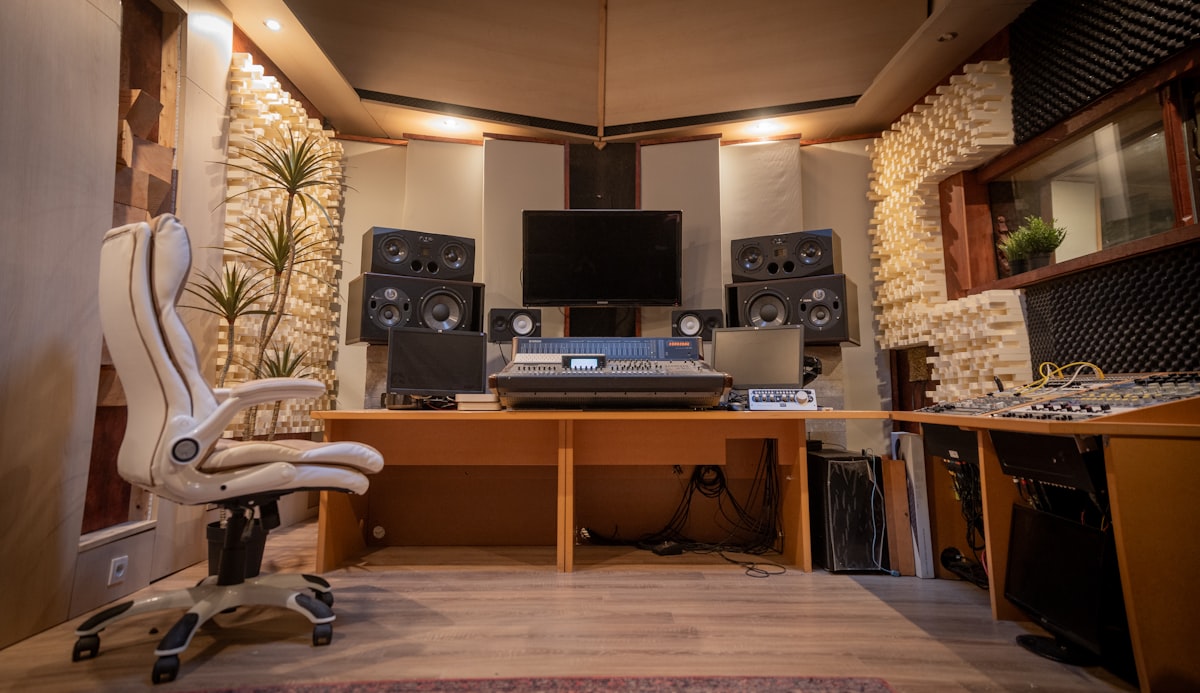
Looking for a professional recording or production studio in the US? Tell us what your project needs and we’ll match you with a vetted studio that fits your sound, schedule and budget — usually within one business day. It’s free, and there’s no obligation.
Violet Recording is an independent guide, not a studio. We connect you with partner studios across the US and may earn a referral fee when a booking goes ahead — at no extra cost to you. We only suggest places we’d be comfortable recording in ourselves.
Tell us about your project
Fill in a few details and we’ll come back with the best match. The more you tell us, the sharper the recommendation.
Not sure what to write? A single sentence like “solo singer-songwriter, need vocals and acoustic guitar tracked in Austin next month, small budget” gives us everything we need for a first pass. You can always add detail once we reply.
What we can match you with
- Recording studios — tracking rooms for vocals, bands, voiceover and podcasts, from boutique project rooms to full commercial facilities.
- Music production — producers and writing rooms to take a song from idea to finished record.
- Mixing & mastering — engineers to mix your session or master your final to release standard.
- Rehearsal & pre-production space — rooms to tighten the set before you track.
- Live & broadcast production — studios equipped for streaming, video and multi-camera capture.
If your project sits between categories — say a podcast that needs music production, or a band that wants tracking and mixing handled in one place — mention it in the form. Plenty of our partner studios cover more than one of these, and it’s often cheaper to keep everything under one roof.
How it works
- Tell us what you need. Service, location and a line about the project — that’s enough to start.
- We match you. We shortlist studios that fit your genre, budget and timeline from our US network.
- You book direct. We make the introduction; you deal with the studio directly. No markup, no middleman on the rate.
Here’s what that looks like in practice. After you submit the form, a real person (not an auto-responder) reads your brief. If anything important is missing — genre, headcount, whether you need an engineer included — we’ll email a quick follow-up question or two. Then we go through our partner list and pick the one or two rooms that genuinely fit, rather than blasting your details to everyone. You get a short email introducing you to the studio, with a line on why we think it’s the right fit. From there the conversation is yours: you agree on dates, rates and deliverables directly with the studio, exactly as if you’d found them yourself. If the first match doesn’t feel right, tell us why and we’ll go again — no hard feelings, no pressure.
What to expect on price
Studio pricing in the US varies a lot by city, room size and whether an engineer is included, so treat any number you read online as a starting point rather than a quote. Broadly: small project studios typically charge modest hourly rates, mid-size rooms with a house engineer sit noticeably higher, and large commercial facilities in major markets can run several times that again. Many studios offer day rates or block bookings that work out cheaper per hour than booking session by session — always worth asking about if you know roughly how much time you need.
A few things that move the price more than people expect: whether the engineer is included or billed separately, how many musicians are being tracked at once (bigger sessions need bigger rooms and more setup time), and editing or mixing time after the session, which is easy to underestimate. When we make a match we’ll flag anything about the studio’s pricing structure you should know before you commit. For a fuller breakdown, our guides on studio rates and the cost of recording a song go into detail — and whatever you read, confirm current rates with the studio directly, because pricing changes.
How we vet partner studios
We don’t add a studio to the network just because it has a website and a booking form. Before a studio joins our partner list, we look at the room itself (treated space, not just a spare office with foam on the walls), the core signal chain (working, maintained gear rather than an impressive-sounding list), who’s actually engineering sessions and what they’ve worked on, and how the studio handles bookings — clear rates, sensible deposit and cancellation terms, and prompt replies. We also listen to recent work that came out of the room where we can, and we drop partners who generate complaints from the artists we’ve referred. It’s not a certification scheme, and we don’t pretend to have visited every room in person — but it’s a much higher bar than a map pin in a directory.
Why go through Violet Recording
- We know the gear and the rooms. We spend our days writing about microphones, interfaces, monitoring and acoustics — so we ask the right questions and match on what actually matters to your recording.
- Vetted, not a random directory. We point you to studios with the right room, engineer and kit for your project, not a pin on a map.
- No cost to you. The service is free for artists. Studios value qualified referrals, so the introduction is on us.
- Independent. We’re not owned by any studio chain, so the recommendation is based on fit, not who pays the most.
Who this is for — and who it isn’t
A good fit: independent artists and bands booking their first (or tenth) proper studio session, podcasters and voiceover artists who need a reliable room in a specific city, producers looking for a tracking space for a client project, and anyone relocating a project to the US who doesn’t know the local scene. If you know what you want to make but not where to make it, that’s exactly the gap we fill.
Probably not a fit: if you’re outside the US and need a local studio there, our network won’t help you yet — it’s US rooms only for now. If you’re recording simple demos on a small budget, a treated corner at home may honestly serve you better than any commercial room; see the home-studio guides below before you spend. And if you already have a specific studio in mind, just contact them directly — you don’t need us in the middle.
Popular studio guides
New to working with a studio? These guides cover what to expect, what it costs, and how to get the most from your session — worth a read before you book.
- How to Choose a Recording Studio
- Recording Studio Rates Explained
- How to Book Studio Time (Step by Step)
- Questions to Ask Before Booking a Recording Studio
- How Much Does It Cost to Record a Song?
- Home Studio vs Professional Studio: Which Do You Need?
Browse all studio & services guides →
Recording on a budget? Start at home
Not every project needs a commercial room. If you’re tracking demos or building your own space, our guides can get you there for less — start with building a home studio on a budget, the essential home-studio gear checklist, and how to record vocals at home. When the project outgrows the bedroom, come back and we’ll find you a room.
Frequently asked questions
How much does the matching service cost?
Nothing. It’s free for artists, and there’s no obligation to book. If a booking goes ahead, the studio may pay us a referral fee — that comes out of their marketing budget, not your rate, and you pay the studio’s normal price.
How quickly will I hear back?
Usually within one business day. If your brief is unusual — a rare instrument, a tight deadline, a smaller city — it can take a little longer while we check availability with partners, and we’ll tell you if that’s the case.
Do I have to book the studio you suggest?
No. The match is a recommendation, not a commitment. If it’s not right, tell us what’s off and we’ll suggest an alternative — or walk away entirely. You book directly with the studio only when you’re happy.
Which parts of the US do you cover?
Our partner network is strongest in the major recording markets, but we have rooms in smaller cities too. Put your location in the form and we’ll tell you honestly whether we have a good option nearby — remote mixing and mastering can be done from anywhere, so those requests aren’t location-limited at all.
What should I prepare before my first session?
Rehearse until the material is tight, bring reference tracks that show the sound you’re after, and know your tempo and key for each song. Studio time is the expensive place to make decisions you could have made at home — our guide on booking studio time covers session prep step by step.
Ready when you are
Send us your project above and we’ll be in touch with a match. Prefer to browse first? Have a look around the recording techniques and home studio guides while you decide.