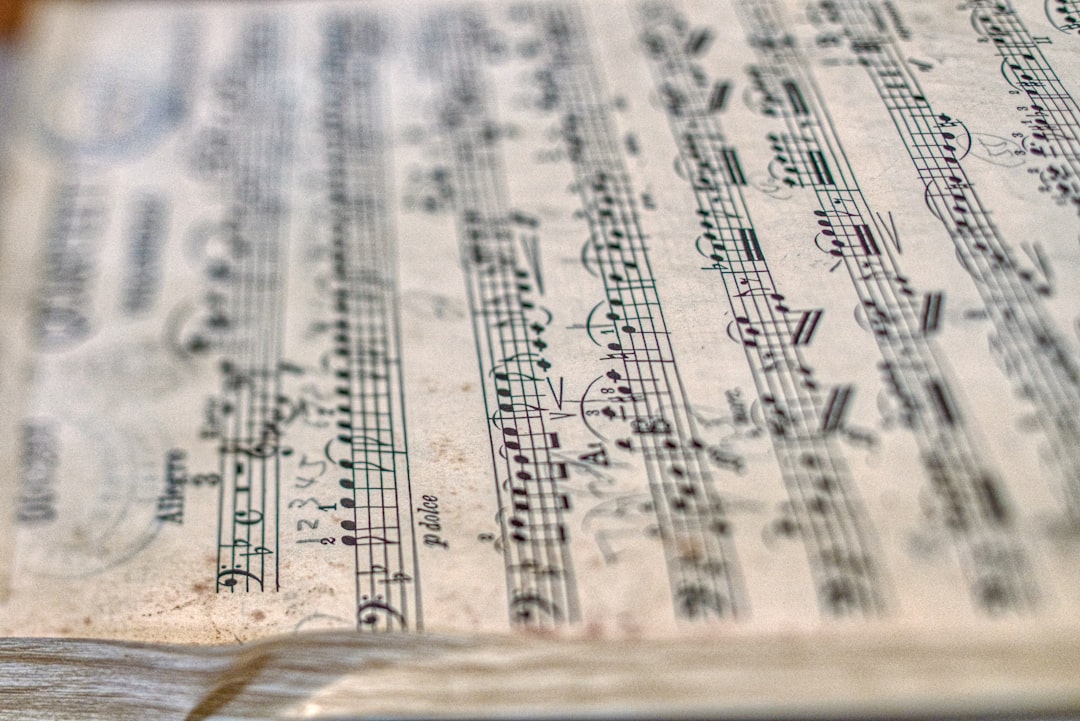
Here are key signatures explained without the headache: a key signature is the group of sharps or flats printed at the start of each staff line, just after the clef. It tells you which notes are sharp or flat for the whole piece, so the music doesn’t have to mark every single one. Read it once and you know the key — and therefore which notes and chords belong.
🔧 Free tool: try our Circle of Fifths.
A key signature does two jobs at once. It saves ink (no accidental on every F sharp), and it instantly signals the key the piece lives in, which shapes the scales and chords you’ll use.
If the idea of a key itself still feels fuzzy, start with our explainer on what a key in music is, then come back to the signatures.
What the sharps and flats mean
If a key signature shows one sharp on the F line, every F in the piece is played as F sharp unless an accidental cancels it. The same goes for flats. The number and identity of those sharps or flats is what defines the key. C major and A minor are the only keys with no sharps or flats at all.
The order of sharps and flats
Sharps and flats always appear in a fixed order, never random. Sharps go in this order: F, C, G, D, A, E, B. Flats go in the exact reverse: B, E, A, D, G, C, F. A common way to remember the sharps is the sentence “Father Charles Goes Down And Ends Battle,” and the flats reverse it to “Battle Ends And Down Goes Charles’ Father.” Because the order is fixed, a key with three sharps always has F sharp, C sharp and G sharp — no guessing.
This fixed order is also why each new sharp or flat is added one at a time. Move from one sharp to two and you keep the F sharp and simply add C sharp; move from two flats to three and you keep B flat and E flat and add A flat. You never rearrange what is already there, so once you know the order you can write out any signature from memory rather than looking it up.
How to name a key from its signature
Two quick tricks cover most cases:
- For sharp keys: take the last sharp and go up one semitone. If the last sharp is C sharp, the major key is D. If the last sharp is F sharp, the key is G.
- For flat keys: the second-to-last flat names the major key. With B flat and E flat, the key is B flat major. (The exception: one flat alone is F major, worth memorising.)
The circle of fifths lays all of this out visually — each step clockwise adds a sharp, each step counter-clockwise adds a flat. If you want a faster method for an unknown piece, our guide on how to find the key of a song combines the signature with the chords you hear.
Major and minor share signatures
Every key signature serves two keys: a major key and its relative minor. No sharps or flats means C major or A minor. One sharp means G major or E minor. They share the same notes but centre on different home notes — the gap between bright and dark that the difference between major and minor scales spells out in full. To tell them apart, look at how the music begins and ends and which chord feels like “home.” Learn this pairing once with our piece on the relative minor, and you can read any signature as both keys at a glance.
Why key signatures matter in practice
Knowing the key tells you which diatonic chords are available — the chords built from that scale that sound naturally “in key.” It also makes transposing to a different key far easier, since you can shift the whole signature up or down and keep the relationships intact. For songwriters, the key signature is the boundary of your sandbox: stay inside it for a settled sound, step outside it deliberately for colour and surprise.
In a recording or production setting the key signature does practical work too. It tells you where to set a capo, which scale to load for a soft-synth or sampler instrument, and which notes to target when you add a harmony or melody part over a bass line. If you are tuning a vocal take, knowing the key lets you correct toward the right notes instead of the nearest chromatic one. And when you bring in a session player or a collaborator, naming the key is the quickest way to get everyone reading from the same page.
Common mistakes to avoid
A few habits trip up musicians who are still getting comfortable with signatures. Keeping an eye on these will save you a lot of confusion:
- Forgetting the signature mid-piece. The sharps or flats apply for the whole piece, not just the first bar. If the signature has an F sharp, that F stays sharp every time it appears, in every octave, until an accidental says otherwise.
- Confusing an accidental with the signature. An accidental written next to a note only lasts to the end of that bar, then the key signature takes over again. It is a temporary change, not a new key.
- Assuming major by default. A signature with no sharps or flats might be A minor, not C major. Always check the opening and closing chords before deciding which of the two related keys is in play.
- Mixing up the naming tricks. The “up a semitone” rule is for sharp keys; the “second-to-last flat” rule is for flat keys. Using the wrong one gives the wrong answer, so pause to notice whether you are looking at sharps or flats first.
Frequently asked questions
What is a key signature?
A key signature is the set of sharps or flats written at the start of a staff, right after the clef. It applies to every matching note in the piece, telling you which notes are consistently raised or lowered and therefore which key the music is in.
How do I read a key signature quickly?
For sharp keys, go up one semitone from the last sharp to find the major key. For flat keys, the second-from-last flat names the major key (with one flat being the exception, F major). Remember each major key also represents its relative minor.
Why do major and minor keys share key signatures?
Because a minor key uses the same set of notes as its relative major — it just starts and centres on a different note. C major and A minor both have no sharps or flats, for example. The surrounding melody and final chord reveal which one is in play.
Do sharps and flats ever appear in the same key signature?
No. A standard key signature is made up entirely of sharps or entirely of flats, never a mix of both. If you see a sharp and a flat together at the start of a staff, you are looking at an accidental near the signature rather than part of it. This is another reason the fixed order matters: it keeps every signature consistent and easy to read.