
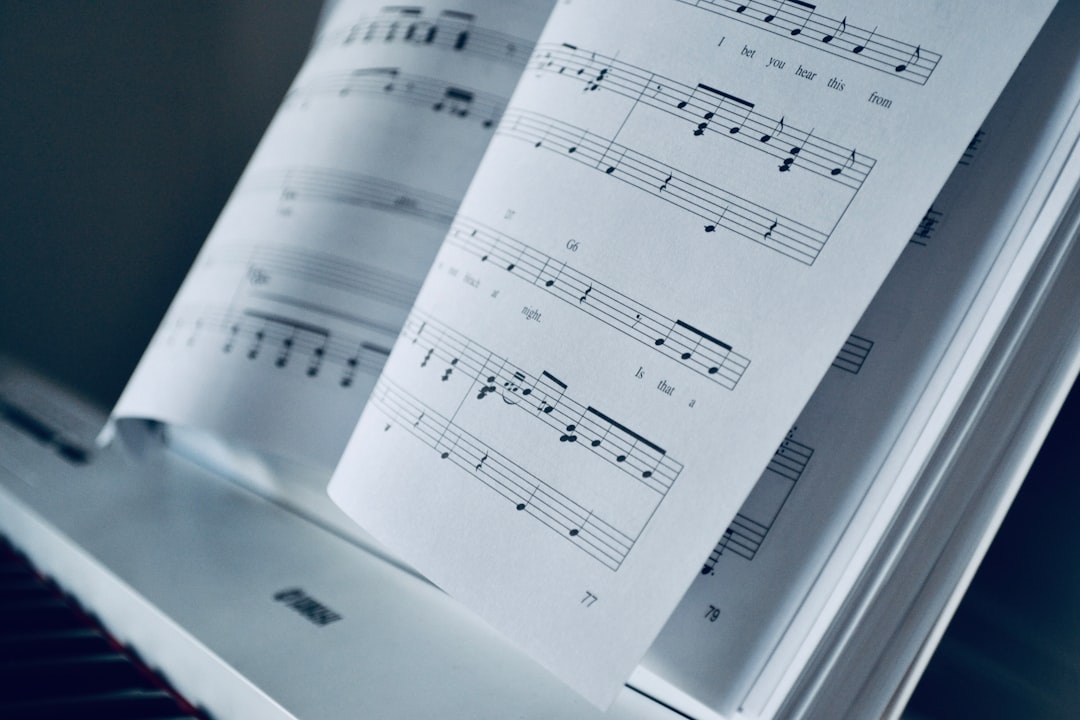
Wondering what is a motif in music? A motif is a short, recognisable musical idea, often just a few notes or a rhythm, that you repeat and develop throughout a piece. It is the smallest building block of a melody, and learning to write and transform motifs is one of the most powerful skills in songwriting. The opening four notes of Beethoven’s Fifth Symphony are the classic example: three short notes and a long one, used everywhere in the movement.
What makes something a motif
A motif is defined by two things: it is short, and it recurs. It can be:
- Melodic a small group of pitches with a distinctive shape.
- Rhythmic a memorable rhythm pattern, even without fixed pitches.
- Both most strong motifs combine a melodic shape and a rhythm.
Because it is so short, a motif is easy for the listener to remember, which is exactly why it works as a unifying thread. A motif is smaller than a phrase and much smaller than a full melody.
The two qualities that make a motif memorable are contour and interval. Contour is the overall up-and-down shape of the idea, the silhouette your ear traces even when you cannot name the notes. Interval is the distance between those notes, which gives the motif its character: a leap of an octave or a fifth feels bold and open, while a step of a tone or semitone feels smooth and conversational. A motif built on a striking interval, such as a falling fourth or a rising sixth, tends to lodge in memory faster than one made of small steps, which is part of why so many famous themes open with a clear jump. If you are shaky on how those distances are named, music intervals explained walks through them from the ground up.
Motif vs hook vs riff
These terms overlap. A motif is the underlying short idea; a hook is a motif (or phrase) crafted specifically to grab attention and stick in the listener’s head, usually in the chorus; a riff is typically an instrumental motif, often on guitar or bass, that repeats as a groove. All three rely on the same principle: a small, memorable idea repeated with purpose.
The difference is mostly one of role rather than substance. A riff usually sits low in the arrangement and locks in with the drums to drive the groove, so its rhythm matters as much as its pitches. A hook is engineered to be the part a listener hums after one play, so it is often the catchiest motif in the song promoted to the spotlight. A motif, by contrast, can stay in the background, quietly recurring in the harmony or an inner part, doing structural work the listener feels without consciously noticing. Recognising which role you want decides how prominent, how loud, and how often the idea should appear.
How to develop a motif
The real craft is taking one short idea and varying it so a whole section grows from it. Composers use a handful of reliable transformations:
- Repetition: simply play it again, the foundation of memorability.
- Transposition (sequence): play the same shape starting on a higher or lower note. See how to transpose music for the mechanics.
- Inversion: flip the contour upside down, so a rising motif now falls.
- Rhythmic change: keep the pitches but stretch or compress the rhythm (augmentation makes it slower, diminution makes it faster).
- Fragmentation: use just part of the motif, often the most distinctive piece.
Using these, you can build an entire melody from one tiny seed, which keeps your music coherent without sounding repetitive.
Two further transformations are worth adding to your toolkit. Retrograde plays the motif backwards, so the last note becomes the first; it rarely sounds obvious to the ear but is a useful way to generate fresh material that still belongs to the same family. Re-harmonisation keeps the motif exactly as it is but places it over different chords, which can make a familiar idea feel completely new, lift it from sad to hopeful, or build tension before a chorus. The skill is not knowing every technique but choosing one transformation at a time so the listener can still hear the connection to the original. Change too much at once and the thread snaps; the motif stops feeling like a return and just sounds like a new idea.
How to write with a motif
- Create a short, distinctive idea. Two to five notes with a clear rhythm is plenty. Sing it, and if you can remember it after one listen, it is working.
- Repeat it early. State the motif, then immediately repeat or vary it so the listener locks on.
- Develop it across the song. Transpose it for the next phrase, invert it in the bridge, or fragment it in a solo. This is a practical way to build a melody over chords.
- Let it tie sections together. Reusing a motif in the verse and chorus, even in disguise, gives a song a satisfying sense of unity, which is one of the quiet tricks behind a catchy chorus.
Motifs also pair beautifully with counterpoint: you can layer a motif against a delayed copy of itself, or against an inverted version, to create interplay between lines.
Common mistakes to avoid
The most frequent problem is a motif that is too long. If your idea takes more than a few seconds to state, it behaves like a full phrase and becomes hard to repeat without the song feeling laboured. Trim it to its most distinctive gesture and let development do the rest.
- Repeating without varying. Stating the same motif identically too many times tips from memorable into monotonous. Alternate exact repeats with transposed or fragmented versions to keep interest alive.
- Varying so heavily the link is lost. The opposite trap. If every appearance is transformed beyond recognition, the listener never feels the satisfying return. Keep at least one anchor, usually the rhythm or the opening interval, constant.
- Burying the motif in the mix. A motif can only unify a song if it is audible. When it returns, make sure the arrangement gives it room rather than masking it under busier parts.
- Ignoring rhythm. Writers often obsess over pitches and forget that a strong rhythmic identity, sometimes sharpened with a touch of syncopation, is what makes a motif recognisable even when the notes change.
Frequently asked questions
How long is a motif?
A motif is short by definition, usually just two to about five notes or a brief rhythmic pattern. The point is that it is small enough to remember instantly and to repeat and develop throughout a piece.
Is a motif the same as a hook?
Not quite. A motif is the underlying short musical idea, while a hook is a motif or phrase deliberately crafted to be catchy and grab the listener, usually in the chorus. Every hook contains a motif, but not every motif is written to be a hook.
Can a motif be just a rhythm?
Yes. A motif can be purely rhythmic, with no fixed pitches. The opening of Beethoven’s Fifth is often remembered as a rhythm (short-short-short-long) that is then applied to different pitches throughout the music.
How many motifs should a song have?
There is no fixed rule, but one strong, well-developed motif is usually more effective than several competing ones. Many memorable pieces are built almost entirely from a single idea that is transformed across sections. If you do use more than one, give each a clearly different rhythm or contour so the listener can tell them apart.