
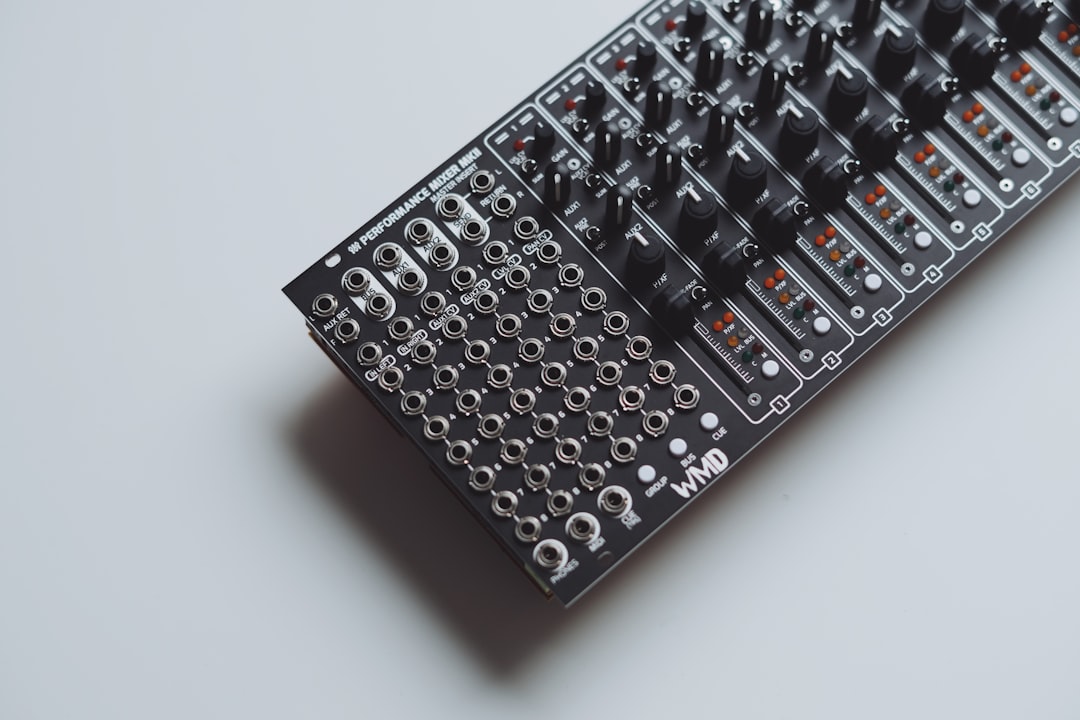
To start a Eurorack system, plan a complete voice first: a case with power, a sound source, a filter, envelopes, VCAs and a way to play or sequence notes. Build that minimum first, learn it well, then add modules one at a time to fill the gaps you actually run into. That disciplined approach saves money and gives you an instrument you understand rather than a half-patched puzzle.
This guide gives you a concrete order of operations. If the basics are still fuzzy, read what Eurorack is and our Eurorack for beginners guide first.
Step 1: Decide how you’ll play it
Before buying any synthesis modules, decide where notes come from. This shapes everything else:
- Keyboard with CV out for traditional playing.
- A sequencer such as those from Make Noise or Intellijel for patterns and generative music; our roundup of the best Eurorack sequencers covers the popular options.
- MIDI-to-CV if you want your DAW or a MIDI keyboard to drive the modular.
Many people combine a sequencer with MIDI-to-CV so they can work standalone or with a computer.
Step 2: Choose a case and power
Pick a case that is big enough to hold a complete voice plus utilities, but not so big you feel pressure to fill it. A single-row case in the 84–104HP range, or a two-row case, is a sensible start. Cases from Tiptop, Intellijel and Doepfer come with integrated power, which removes most early headaches. Make sure the supply has comfortable current headroom on each rail. Our roundups of the best Eurorack cases and best Eurorack power supplies cover sizing in detail.
Step 3: Build one complete voice
A voice is everything needed to turn a note into sound. The classic chain:
- Oscillator (VCO) — a Doepfer or Make Noise oscillator, or a flexible voice like Mutable Instruments Plaits.
- Filter (VCF) — to shape timbre.
- VCA — to control level. Get at least two VCAs; you will use them constantly.
- Envelope — to shape amplitude and modulate the filter.
- LFO — for movement and modulation.
The VCO, VCF and VCA guide explains why these three are the backbone, and our essential Eurorack modules list expands the rest.
Step 4: Don’t skip utilities
Utilities are the unglamorous modules that make a system flexible: multiples (mults) to split signals, attenuators and attenuverters to scale CV, a mixer to combine signals, and a clock or trigger source. They are cheap, small and quietly essential. A system without utilities feels rigid; with them, every other module becomes more useful.
Step 5: Patch, learn, then expand
Resist buying ahead of your skills. Patch your starter voice daily for a few weeks and note where you keep wishing for something — more modulation, a second voice, randomness (a module like Mutable Instruments Marbles), or effects. Those real gaps tell you exactly what to buy next, which is far more reliable than a wishlist built from videos.
Step 6: Get sound out cleanly
Modular runs at a hot “modular level,” so use an output module or set your interface input gain low to avoid clipping. Our guides to recording a hardware synth and gain staging show how to capture clean takes into your DAW. If you are blending modular with other gear, a small mixer keeps everything tidy.
How to plan your first rack before you buy
The single most valuable habit before spending anything is to lay the system out on paper. Free planning tools let you place virtual modules into a case, see how much HP you have left and add up the current draw on the +12V, -12V and +5V rails. Doing this before you order catches the two most common beginner mistakes: running out of horizontal space and overloading the power supply. Aim to leave roughly a fifth of your HP and at least that much current headroom free, so the rack can breathe and you have room for the utilities you will inevitably want.
When you plan, think in signal types rather than brand names. Eurorack mixes two kinds of signals over the same cables: audio (the actual sound) and control voltage (CV, the instructions that modulate it). A pitch CV from a sequencer, a gate that says “note on,” an envelope that opens a VCA and an LFO that wobbles a filter are all just voltages — if that distinction is new, our primer on CV and gate makes it click. Once you see your patch as a flow of audio shaped by control voltages, deciding what each new module contributes becomes far easier.
Common mistakes that cost beginners money
A handful of avoidable errors trip up almost everyone starting out. Knowing them in advance is the cheapest upgrade you can make:
- Buying too many sound sources, too few VCAs and envelopes. Oscillators are exciting, but without enough VCAs and envelopes to shape them you cannot articulate notes. Modulation and level control are what make a patch musical.
- Skipping utilities. A rack stuffed with feature modules but no mults, attenuators or mixer feels stuck. Utilities are the connective tissue that lets everything talk to everything.
- Undersizing or overloading power. Cheap or marginal power leads to noise, instability and modules that misbehave. Respect the current ratings and keep headroom.
- Chasing trendy modules from videos. A module that sounds incredible in someone else’s 64HP system may do nothing useful in your three-module starter. Let your own patches reveal what you actually need.
- Filling the case immediately. An empty row is not wasted money; it is space to grow into deliberately rather than all at once.
A realistic mindset
Eurorack grows over time, and that is part of the fun. Budget for the case and power up front, then add modules gradually. For a sense of overall spend and what drives it, see how much Eurorack costs — just remember the totals vary a lot with your choices.
Frequently asked questions
What’s the minimum I need for a working Eurorack system?
A powered case, one oscillator, a filter, a VCA, an envelope and a way to play notes (sequencer, MIDI-to-CV or keyboard). That makes sound and teaches the fundamentals. Add utilities like mults and attenuators early to keep it flexible.
Should I start with a semi-modular instead?
It is a great option. A Moog Mother-32 or similar semi-modular makes sound out of the box and fits a Eurorack case, so it can anchor a growing system. See our modular vs semi-modular comparison.
How do I avoid overspending early?
Buy a complete voice plus utilities, then only add modules that solve a problem you have actually hit while patching. Letting your patches dictate purchases prevents expensive modules from sitting unused.
How big should my first case be?
Big enough for a complete voice plus a handful of utilities, with some room to grow — a single 84–104HP row or a small two-row case suits most beginners. Going much larger early on tends to create pressure to fill empty space with modules you have not yet learned to use.
Do I need a computer or DAW to use Eurorack?
No. A sequencer or CV keyboard lets a modular run entirely standalone. A computer becomes useful when you want to record, sequence from your DAW via MIDI-to-CV, or add software effects, but it is never required to make sound.