
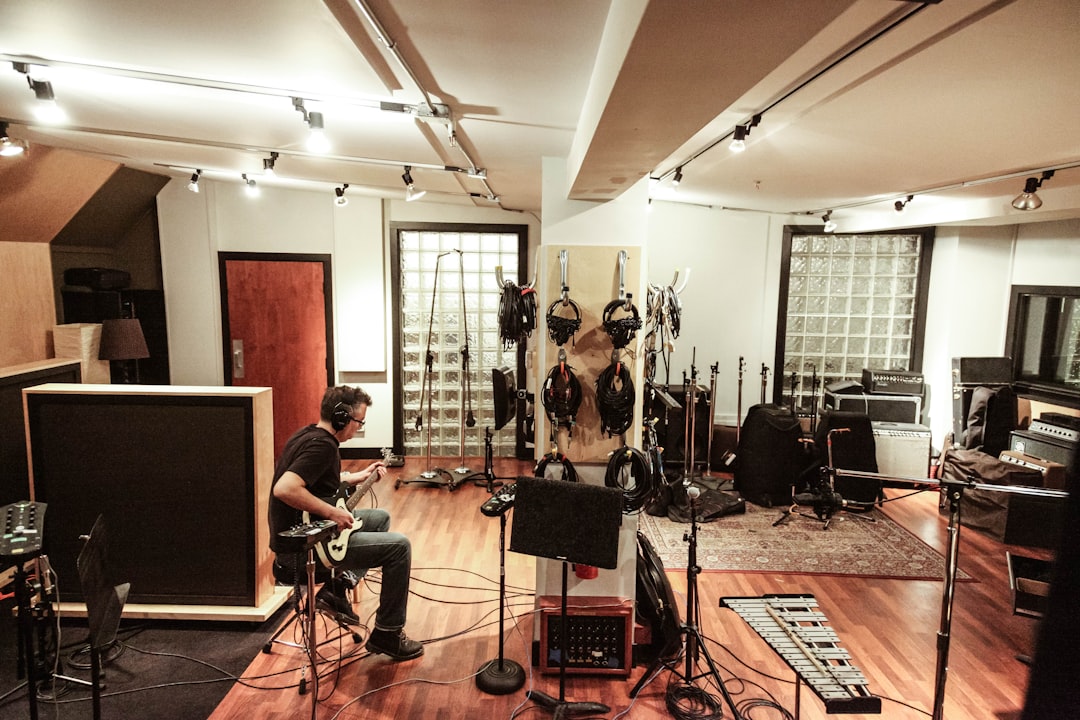
The best budget headphones for music production give you an honest enough sound to track and mix without spending a fortune. Trusted names like Audio-Technica, Sennheiser, Sony, AKG, Beyerdynamic, and Samson all make affordable models that punch above their cost for home recordists.
Violet Recording is reader-supported — we may earn a commission from links on this page, at no extra cost to you.
Quick answer
For tracking, you want closed-back headphones that block bleed: the Audio-Technica ATH-M series, Sony MDR-7506, and Sennheiser HD 280 Pro are the classics. For mixing, an open-back pair like the Sennheiser HD 560S, AKG K240/K702, or Beyerdynamic DT 990 gives a wider, more natural soundstage. Many producers own one closed pair and one open pair.
Closed-back vs open-back: pick the right tool
This is the first decision. Closed-back headphones isolate sound, so a mic will not pick up the click track or backing while you record — essential for tracking vocals and instruments. Open-back headphones leak sound but reward you with a more spacious, accurate image that is better for mixing. Our guide to open-back vs closed-back headphones explains the trade-offs in full.
It also helps to understand what reference headphones are and why a flat, uncoloured response matters more than bass that sounds impressive in the shop.
Compared at a glance
| Pick | Why it stands out |
|---|---|
| Audio-Technica ATH-M series | The ATH-M20x, M30x, M40x, and M50x are a staple of home studios. |
| Sony MDR-7506 | A studio standard for decades. |
| Sennheiser HD 280 Pro | Strong isolation and a robust build make these a reliable tracking workhorse. |
Full picks and details below.
Best closed-back picks for tracking
If you want a wider field of options here, our roundup of the best closed-back headphones for recording goes beyond the budget classics below.
Audio-Technica ATH-M series
The ATH-M20x, M30x, M40x, and M50x are a staple of home studios. They isolate well, are comfortable for long sessions, and the higher models lean toward a flatter, more reference-friendly sound. The M40x in particular is a long-time value favourite, and if you are torn between the flagship and a rival, our ATH-M50x vs Beyerdynamic DT 770 comparison breaks down the differences.
Sony MDR-7506
A studio standard for decades. The 7506 is light, folds up, isolates well, and has a detailed (slightly bright) top end that makes it great for catching edits, clicks, and noise. If it is on your shortlist against the Audio-Technica flagship, our Sony MDR-7506 vs ATH-M50x head-to-head will help you decide.
Sennheiser HD 280 Pro
Strong isolation and a robust build make these a reliable tracking workhorse. They clamp fairly firmly, which helps block bleed during loud sessions.
Best open-back picks for mixing
For more choices at this end, see our pick of the best open-back headphones for mixing.
Sennheiser HD 560S
A neutral, analytical open-back pair aimed squarely at people who want an honest mixing reference on a budget. Detailed and even across the spectrum.
AKG K240 and K702
The semi-open K240 is a long-running studio favourite, while the open-back K702 offers a wider soundstage and very even response. Both are comfortable for long sessions.
Beyerdynamic DT 990
Open-back with a lively, spacious sound and famously plush velour pads. The treble is on the bright side, which some find revealing and others find fatiguing, so it pays to know your own ears.
How to choose on a budget
- Decide your main use. Mostly recording? Buy closed-back first. Mostly mixing? Open-back wins.
- Check comfort. Clamp force and pad material matter over long sessions. Velour breathes; pleather isolates.
- Mind the impedance. Some higher-impedance models (often the 250-ohm versions) want a proper headphone amp or interface output to reach full volume; our roundup of the best headphone amps for the studio covers options that won’t break the budget.
- Look at replaceable parts. Models with swappable cables and ear pads last far longer. See our guide on cleaning and replacing ear pads.
What “budget” actually buys you
Spending more does not automatically buy a flatter response — it usually buys better build quality, more comfortable pads, replaceable parts, and a slightly more refined treble. For home recording, the affordable classics listed above already get you close enough to neutral that your mixing decisions will translate well to other systems. If your ceiling is tighter still, our pick of the best studio headphones under $50 shows how far a small budget can stretch. The bigger limiting factor is rarely the headphones themselves; it is how well you know them.
That is the real secret to working on a budget: pick one honest pair and learn it inside out. Listen to commercial tracks you love on them until you understand where they exaggerate or hide things. A producer who knows a modest pair of headphones intimately will out-mix someone who keeps buying new gear and never builds that reference in their head.
Getting the most from a budget pair
A few practical habits go a long way once you have chosen your headphones:
- Set sensible levels. Mixing loud feels exciting but tires your ears and skews your bass and treble judgement. Work at a moderate, consistent volume and take regular breaks.
- Mind ear fatigue. Bright pairs like the DT 990 or MDR-7506 can wear you down over a long session. If a mix sounds harsh after an hour, rest your ears before making big tonal calls.
- Keep the pads fresh. Worn, flattened ear pads change both the seal and the frequency response, especially in the bass. Replacing tired pads can make a pair sound almost new.
- Watch the seal. Glasses, long hair, or a loose fit break the seal on closed-back pairs and thin out the low end. A consistent fit gives you consistent low-frequency information.
Common mistakes to avoid
The most common error is buying headphones tuned for fun listening rather than honest monitoring. Hyped bass and sparkly treble sell well in shops and sound great on your commute, but they mask problems in your mix, so you end up over- or under-correcting. A flatter pair feels less impressive at first and serves you far better.
There is nothing wrong with owning a fun-sounding pair for everyday listening; just keep it separate from your studio cans, and see our pick of the best headphones for music listening if that is what you are after.
Two more traps catch beginners. The first is expecting any headphone to fix room or technique problems — they reveal issues, they do not solve them. The second is chasing endless “burn-in” or expensive cables in the hope of a magic improvement; sensible level matching, fresh pads, and learning your pair will do far more than any of that.
Don’t mix only on headphones
Even great budget headphones have quirks, so cross-check your work. Reference your mix on monitors if you have them, on your phone, and against commercial tracks you know. For the broader picture, our monitors vs headphones comparison and the home studio setup hub are good next reads. If you are still building out the room, the essential gear checklist shows where headphones fit in the wider setup.
Frequently asked questions
Can I use one pair for both tracking and mixing?
You can, and many people start with a single closed-back pair like the ATH-M40x. But open-back headphones give a more natural image for mixing, so a second pair is a worthwhile later upgrade.
Do budget headphones need a headphone amp?
Most low-impedance models run fine straight from an audio interface or computer. Higher-impedance versions benefit from a dedicated amp or a stronger interface output to hit comfortable levels.
Are gaming or consumer headphones fine for production?
They tend to hype bass and treble, which hides problems in your mix. Studio-style headphones with a flatter response give you more reliable decisions.
Do I need to “burn in” new headphones before mixing on them?
Any change from burn-in is small and debated. The bigger shift is your own ears adjusting to a new pair, so simply use them on familiar tracks and you will adapt within a few sessions.
Are wireless or noise-cancelling headphones suitable for production?
Generally no. Bluetooth adds latency that makes tracking awkward, and active noise cancellation colours the sound. For recording and mixing, stick to wired studio-style headphones.



