
A subwoofer extends what your monitors can reproduce in the low frequencies, letting you hear bass and kick detail your nearfields miss. Tempting – but in a typical home studio, a sub is often the wrong first move.
What a sub actually does
It reproduces the lowest octaves (roughly below 80 Hz) that small monitors roll off. Done right, it gives you a fuller, more accurate picture of your low end for mixing.
The key word is “extends”. A sub is not there to make your music louder or boomier – it fills in the bottom end that a typical five- or six-inch nearfield simply cannot move enough air to reproduce. A small monitor might be solid down to around 50 Hz and then fall away quickly below that, which means the rumble of a sub-bass synth, the body of a kick drum, or the lowest notes of a five-string bass can be partly invisible to you. When that information is missing, it is easy to leave too much low energy in a mix without realising, then discover the problem only when the track is played back on a bigger system.
If you are adding low end to a living-room or hi-fi setup rather than a mix position, our guide to the best subwoofers for music covers subs voiced for listening.
Why it can backfire
Low frequencies are exactly what untreated rooms get wrong. Add a sub to a room with no bass trapping and you’ll hear peaks and nulls that aren’t really in your mix – leading to worse decisions, not better.
This happens because long bass wavelengths interact with the dimensions of the room itself. At certain frequencies the reflections reinforce each other and you get a loud peak; at others they cancel and you get a null where the bass almost disappears. Move your head a metre and the picture changes completely. A sub adds energy precisely in the region where these room modes are strongest, so in an untreated space it tends to make the low end less trustworthy, not more. You end up chasing a bass balance that exists only at your listening position, and your mixes translate worse on other systems as a result.
When a sub makes sense
- Your room has real bass treatment (corner traps).
- You produce bass-heavy genres and need to hear the sub-bass.
- You can position and calibrate it properly (level and crossover).
If those three things are true, a sub can genuinely improve your monitoring. Producers working on electronic, hip-hop, dub, or any style where the lowest octave carries musical content benefit most, because that material lives in a range small monitors barely touch. The same goes for anyone mixing for club or cinema playback, where sub-bass is part of the experience rather than an afterthought. If you decide a sub is right for your work, it pays to compare the best studio subwoofers for home studios rather than grabbing the first one you find. Outside those situations, the honest answer for many home setups is that a sub solves a problem you do not yet have.
How to set one up properly
Buying the sub is the easy part – integrating it with your monitors is where most people go wrong. A few principles make the difference between a sub that helps and one that muddies everything:
- Crossover. Set it where your main monitors start to roll off, commonly somewhere around 80 Hz, so the sub and monitors hand over smoothly rather than overlapping or leaving a gap.
- Level. The sub should blend in, not announce itself. If you can clearly point to the sub as a separate source of sound, it is almost certainly turned up too far.
- Position. Bass response changes dramatically with placement. The classic trick is to play a track with steady bass, crawl around the room on your hands and knees until you find where the bass sounds most even, and put the sub there.
- Phase and polarity. Check that the sub and monitors are pushing in the same direction at the crossover point, otherwise they partly cancel and the low end goes thin instead of fuller.
If you want to get the level, crossover, and phase exactly right, it is worth following a proper routine for how to calibrate your studio monitors and sub together rather than setting everything by ear.
Common mistakes
The most common error is treating a sub as a fix for thin-sounding monitors when the real issue is the room. The second is setting the level by ear in a way that flatters playback – a bass-heavy monitoring chain feels exciting but pushes you to mix the low end too quiet, so your tracks sound weak everywhere else. Tucking the sub into a corner because it is out of the way is another trap, since corners reinforce bass and exaggerate room modes. And finally, skipping calibration altogether: a sub you have not matched in level, crossover, and phase to your monitors is a guess, not a reference.
The better first step for most
Treat your room and learn your monitors first. A well-treated room with good monitor placement beats an untreated room with a subwoofer almost every time.
Spend on bass traps in the corners, get your monitor placement right, and put in the listening hours to learn how your speakers represent the low end. Reference your mixes against tracks you know well and check them on headphones, in the car, and on a phone speaker. Most translation problems that people hope a sub will solve actually come down to an untreated room and unfamiliar monitors – and both of those are cheaper to fix than a sub, and worth fixing first whether or not you ever add one.
Frequently asked questions
Will a subwoofer make my mixes better automatically?
No. A sub only helps if your room is treated and the sub is calibrated to match your monitors. In an untreated room it usually makes the low end harder to judge, not easier, because it adds energy right where room modes are worst.
Can I mix without a subwoofer at all?
Yes, and most home studios do. With well-placed, full-range monitors in a treated room and the habit of referencing your mixes on other systems, you can make low end that translates well without ever owning a sub.
Should I buy a sub or bigger monitors?
If your room is large enough and untreated low end is not yet under control, a pair of larger full-range monitors for bigger rooms is often the more useful upgrade, since it extends your low end while keeping a single, coherent stereo image to mix from.
Shop related gear
Extend your low end the right way:

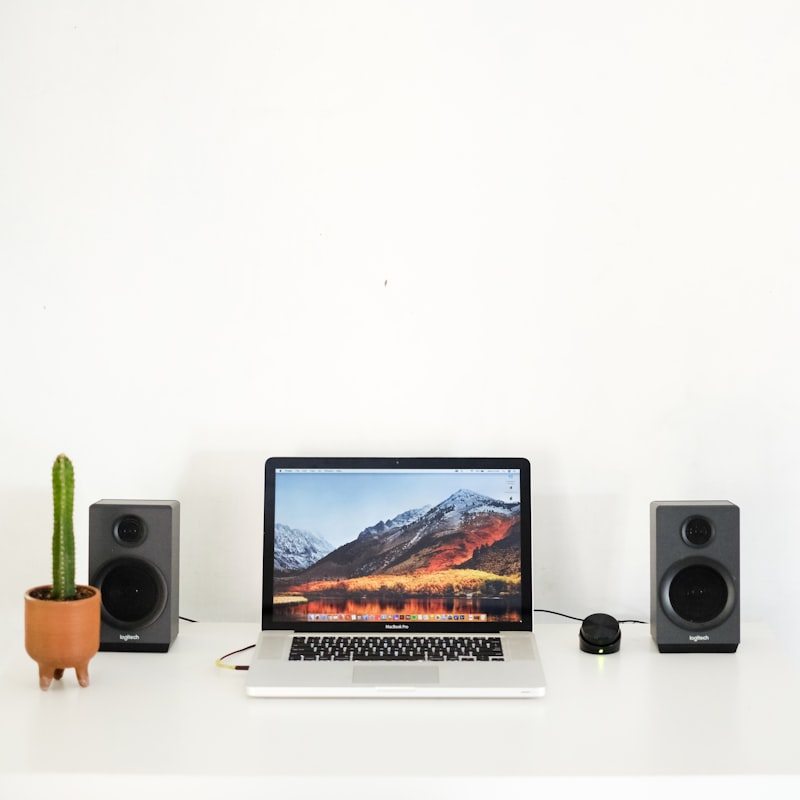
Larger nearfield/midfield monitors with extended low end for bigger rooms.



