
Once your room is large enough, an 8-inch woofer gives you the low-end extension and headroom that smaller monitors can’t. The best 8-inch studio monitors reach deeper into the bass, play louder cleanly, and let you sit further back for a wider sweet spot. Here’s how to choose them and which real models to shortlist.
Quick answer
The Yamaha HS8 is the default reference-style pick — and if you’re weighing it against the smaller model, our Yamaha HS5 vs HS8 comparison breaks down the trade-offs. The Adam Audio A8H and T8V bring detailed ribbon-style highs, the KRK Rokit 8 is the value option, and the JBL 308P and Focal Alpha/Solo6 ranges round out strong choices for bigger rooms.
When 8-inch monitors make sense
An 8-inch woofer moves more air, so it extends lower and stays composed at higher volumes. That pays off in a medium-to-large treated room where you sit further from the speakers. In a small bedroom, an 8-inch monitor can overload the space with bass and actually be harder to mix on than a 5-inch model — see the best studio monitors under $200 for smaller-room picks. To understand listening distance, read nearfield vs midfield monitors.
How to choose 8-inch studio monitors
- Room size and treatment: 8-inch monitors need space to breathe and a treated room to control the extra bass energy. Don’t oversize for a tiny room.
- Frequency response: Look for honest, fairly flat response. The extra woofer size buys low-end extension; you still want neutral mids and highs.
- Tweeter type: Soft-dome tweeters are smooth and common; ribbon-style tweeters (as on Adam) give airy, detailed highs. Both can be excellent.
- Room-tuning controls: Rear-panel filters for high and low shelving help you compensate for wall proximity and room character.
- Inputs: Balanced XLR or TRS inputs are standard and preferred for noise rejection over a desktop run.
- Power and headroom: Active 8-inch monitors have ample power; the benefit is clean output at higher SPL without strain.
Compared at a glance
| Pick | Why it stands out |
|---|---|
| Yamaha HS8 | The big brother of the ubiquitous HS series, the HS8 is prized for its honest, slightly unforgiving voicing — what… |
| Adam Audio T8V and A8H | Adam’s ribbon-style tweeters deliver detailed, airy highs that many engineers love for mixing. |
| KRK Rokit 8 | A popular value option with a punchy low end that suits bass-heavy and electronic genres. |
| JBL 308P and Focal ranges | JBL’s 3 Series 308P offers wide dispersion and a generous sweet spot at a friendly price. |
Full picks and details below.
The best 8-inch studio monitors
Yamaha HS8
The big brother of the ubiquitous HS series, the HS8 is prized for its honest, slightly unforgiving voicing — what sounds good here usually translates well elsewhere. A reliable reference for bigger rooms and a safe starting point.
Adam Audio T8V and A8H
Adam’s ribbon-style tweeters deliver detailed, airy highs that many engineers love for mixing. The T8V is the value entry point; the A series sits above it with more refinement and control. Great for detailed mid and high work.
KRK Rokit 8
A popular value option with a punchy low end that suits bass-heavy and electronic genres. KRK includes room-tuning DSP and an app to help dial it into your space, making it an accessible 8-inch choice.
JBL 308P and Focal ranges
JBL’s 3 Series 308P offers wide dispersion and a generous sweet spot at a friendly price. Focal’s Alpha and Solo6 monitors deliver refined, musical detail and are a strong step up for those investing more in their main monitoring.
How much room do you actually need?
There’s no hard rule, but a useful guide is to match the woofer to your listening distance. With an 8-inch monitor you typically sit somewhere in the region of 1.5 to 2 metres back, which usually means a room with a free floor area of at least a few square metres rather than a desk shoved against a wall. The drivers in an 8-inch monitor are physically further apart, so they need a little distance to integrate into a single coherent image — sit too close and you can hear the woofer and tweeter as separate sources.
Just as important is what’s behind and around you. A bigger woofer excites room modes more strongly, so the same untreated room that sounded merely uneven with 5-inch monitors can sound genuinely misleading with 8-inch ones. If you can’t commit to bass trapping and first-reflection control, you may get more honest results from a smaller pair. The size of the speaker is only ever as useful as the room letting you hear it.
Setting up 8-inch monitors
Most of the work happens after the boxes arrive, not before. A few practical steps make a bigger pair behave:
- Decouple them: Put the monitors on stands or isolation stands and pads rather than directly on the desk. This stops low frequencies from coupling into the surface and smearing the bass.
- Match heights and angles: Aim the tweeters at ear height and toe the speakers in so they point at your head, forming an equilateral triangle with your listening position.
- Mind the front wall: Pulling the monitors away from the wall reduces bass build-up. If you can’t, use the rear-panel low-shelf filter to trim some of that boundary boost.
- Level-match the pair: Set both monitors to the same output level and the same room-tuning settings so the stereo image stays centred.
- Calibrate by ear and reference: Play familiar mixes at a moderate, consistent level and adjust until the balance feels right against tracks you know well — our guide on how to calibrate studio monitors covers a repeatable method.
Common mistakes with 8-inch monitors
The most frequent error is buying the biggest woofer the budget allows for a room that can’t support it, then chasing the resulting boom with EQ. A second is mixing too loud: 8-inch monitors invite high volume, but extended loud sessions skew your perception of balance and tire your ears, so keep levels conversational for most of the work. A third is skipping room treatment entirely and assuming a respected brand name will compensate — it won’t. Finally, leaving the rear-panel filters flat regardless of placement wastes controls that exist precisely to fix wall-proximity issues.
Getting accurate results from bigger monitors
Bigger monitors expose room problems faster, so treatment and placement matter even more. Position them in an equilateral triangle at ear height and pull them off the front wall — our monitor positioning guide walks through it. Treat first reflections and bass build-up using our acoustic treatment guide. And remember to cross-check on headphones, as covered in studio monitors vs headphones for mixing. The studio monitors hub has more.
Frequently asked questions
Are 8-inch monitors too big for a bedroom studio?
Often, yes. In a small, untreated room an 8-inch woofer puts out more bass than the space can handle, creating boom and uneven low end. For most bedrooms, 5- or 6.5-inch monitors are easier to mix on. Reserve 8-inch models for larger, treated rooms.
Do I still need a subwoofer with 8-inch monitors?
Usually not for most genres, since 8-inch woofers already extend reasonably low. A sub can help if you produce sub-bass-heavy music and your room is treated well enough to integrate it cleanly — we weigh this up in do you need a subwoofer in your home studio.
Will bigger monitors automatically sound better?
No. They offer more low end and headroom, but accuracy depends on the monitor’s voicing, your room and placement. A well-placed 5-inch monitor in a treated room can outperform a poorly set up 8-inch pair.
Should I buy 8-inch monitors or add a subwoofer to smaller ones?
Either can work. A pair of 8-inch monitors gives you full-range sound from two well-integrated boxes, which is simple to set up. A 5- or 6.5-inch pair plus a sub gives you more flexible placement and a crossover you can tune, but it’s fussier to get right. In an untreated room, neither will be accurate until you address the acoustics.
Shop related gear
Larger monitors for bigger rooms:
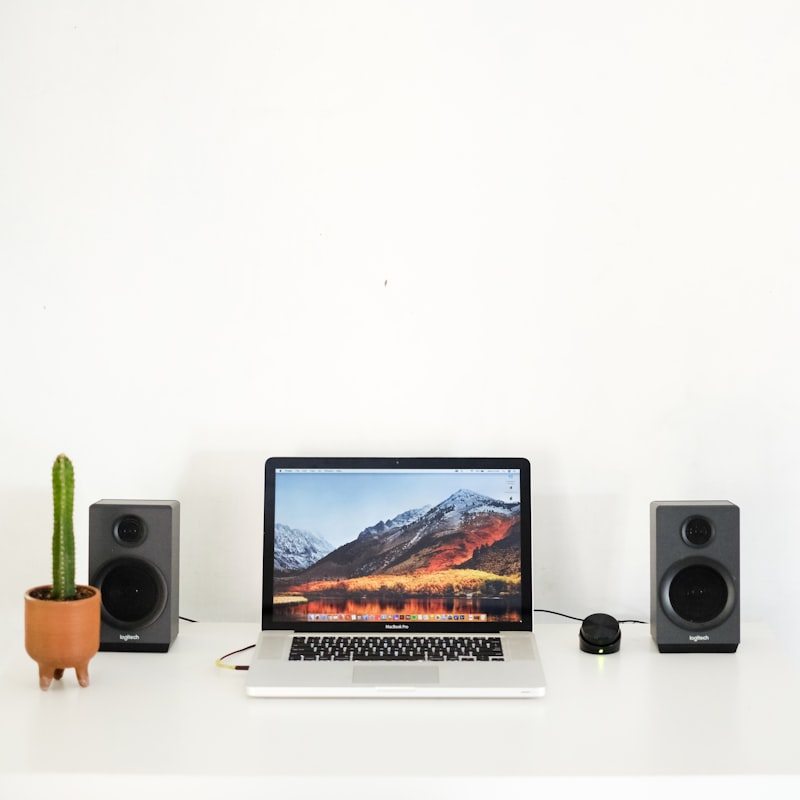
Larger nearfield/midfield monitors with extended low end for bigger rooms.



