
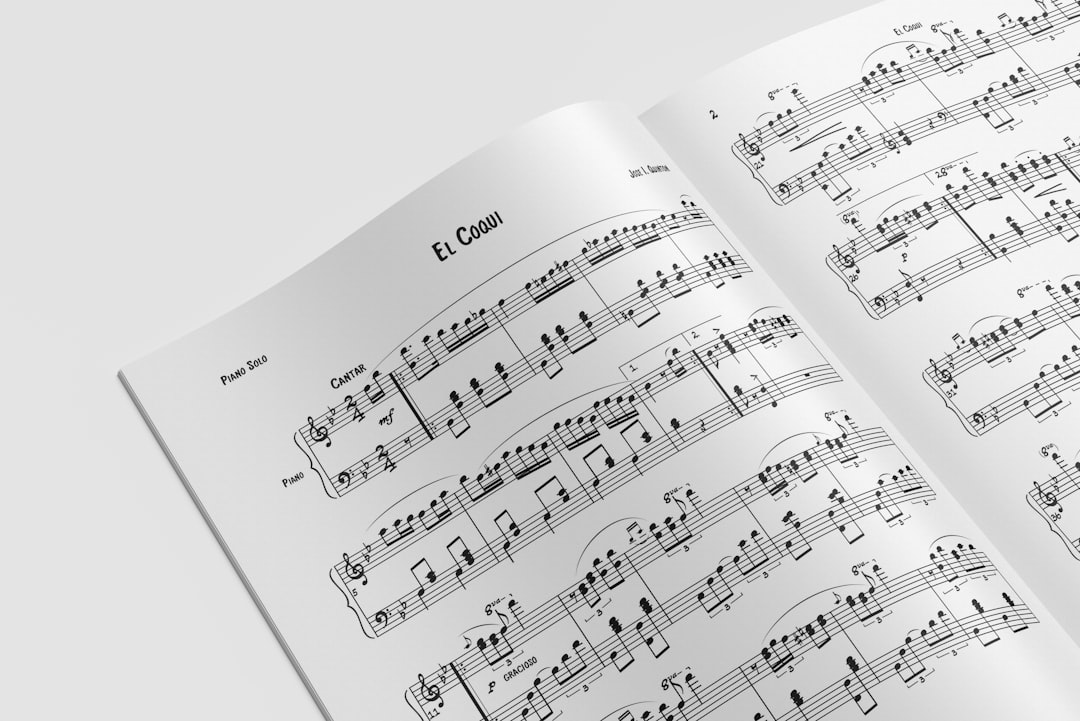
The key to how to write a melody for lyrics is to let the natural rhythm and stress of the words lead the tune. Say your lyric out loud first. The syllables you naturally emphasise in speech are the ones that should fall on strong beats and higher notes in your melody. Do that and the melody will sound like the words were born to be sung.
Here is a process you can repeat for any verse or chorus.
Step 1: Read the lyric out loud
Before any notes, speak the line naturally and listen to where the stress lands. In “I never thought you’d leave me here,” the words “never,” “leave” and “here” carry the weight. Mark the stressed syllables. These become your rhythmic and melodic anchors.
Step 2: Find the speech rhythm
Tap the rhythm of the line as you say it. Some syllables are quick, some held. That spoken rhythm is the foundation of your melodic rhythm. Forcing words into an even, mechanical rhythm is the fastest way to make a melody feel awkward and hard to sing. If you want to push beyond straight rhythms, our guide to syncopation shows how off-beat phrasing adds character.
Step 3: Match stress to pitch and beat
Strong syllables want strong placements: beat 1, beat 3, and higher pitches. Weak syllables (like “the,” “a,” “and”) want weaker beats and lower or passing notes. A classic mistake is stressing the wrong syllable, singing “GUI-tar” instead of “gui-TAR.” Line up the natural stress with the strong beats and the lyric stays intelligible.
Step 4: Shape the phrase with contour
A melodic phrase has a shape: it rises, peaks, and falls, much like a spoken sentence rises into a question or falls into a full stop. Put your highest note on the most important word in the line, often near the end of a phrase. A rising contour creates anticipation; a falling one creates resolution. Use this to match the emotion of the words.
Step 5: Use chord tones for stable words
If you already have chords, land important lyric syllables on chord tones so they sound resolved, and use passing notes for the in-between words. Our guide on how to write a melody over chords covers this anchoring technique in detail. If you write melody before chords, harmonise it afterwards.
Step 6: Repeat and develop
Memorable songs reuse a melodic idea. Give your first lyric line a clear shape (a motif), then reuse that shape for the next line with small changes. This is why hooks stick: repetition. If you are writing a catchy chorus, the hook-writing approach pairs perfectly with this step.
Step 7: Sing it many ways
Record yourself singing the lyric several different ways without overthinking. Improvise five takes, then steal the best moments from each. Your instinctive first melody is often stronger than anything you labour over. If you get stuck, switching instruments or keys can shake loose a fresh idea, and our notes on beating songwriter’s block can help.
Matching the melody to the mood of the words
Beyond stress and rhythm, the actual notes you choose carry emotional weight, and they should agree with what the lyric is saying. A line about longing or sadness usually wants a smaller range, more stepwise movement, and a tendency to fall at the end. A line about triumph or release can leap upward and sit higher in the voice. When the melody and the words pull in the same direction, listeners feel the meaning without having to think about it.
Pay attention to your intervals too. Stepwise motion (moving to the next note up or down) feels smooth and conversational and is easy to sing. Larger leaps feel dramatic and grab attention, so save them for important words. A useful habit is to follow a big leap with movement in the opposite direction; this resolves the tension the leap created and keeps the phrase from sounding scattered. Vowels matter as well: open vowels like “ah” and “oh” sustain and project far better than closed sounds like “ee” or “it,” so try to place your highest, longest notes on words with open vowels where the lyric allows.
Common mistakes when setting lyrics to melody
Most weak vocal melodies fail for a handful of predictable reasons. Knowing them in advance saves you a lot of rewriting.
- Cramming too many syllables in. If a line has more words than the phrase can comfortably carry, it turns into a tongue-twister. Cut words or spread them over more bars.
- Ignoring where the singer breathes. A melody with no gaps leaves nowhere to inhale. Build small rests into the phrasing so the line is physically singable.
- A range that is too wide. If the lowest and highest notes are more than an octave or so apart, parts of the line will sit awkwardly in the voice. Keep most of a phrase within a comfortable range and reach for the extremes only on key moments.
- Flat, even rhythm. Setting every syllable to the same note length sounds robotic and buries the natural shape of the words. Let long and short syllables breathe as they do in speech.
- Burying the hook. The most important phrase should be the easiest to remember. If your catchiest line is hidden on weak beats or a dull contour, lift it onto a stronger placement.
How to choose a melody when you have several
It is common to end up with three or four candidate tunes for the same lyric. Rather than agonising, test each one against a few practical questions. Can you sing it back from memory an hour later without the recording? Does the most important word land on the highest or strongest note? Could a friend hum it after one listen? The melody that scores best on memorability and singability is almost always the right one, even if a more complicated version felt cleverer in the moment.
Quick checklist
- Do the stressed words land on strong beats?
- Is the most important word on the highest note?
- Can you sing the whole line in one breath?
- Does the rhythm match how you would speak the line?
Frequently asked questions
Should I write lyrics or melody first?
Either works, but writing melody for existing lyrics is great when the words already have a strong rhythm. Many writers do both at once, humming gibberish until words and tune appear together. If words are your sticking point, our guide to writing song lyrics walks through the lyric-first approach.
How do I avoid stressing the wrong syllable?
Speak the line, mark the natural stress, and make sure those syllables fall on beats 1 and 3 or on higher notes. If a word sounds mispronounced when sung, the stress is misplaced.
My melody is hard to sing. What is wrong?
Usually the range is too wide or there is nowhere to breathe. Narrow the leaps between notes, keep phrases within an octave, and add small rests so the singer can take a breath.
How do I make a melody more memorable?
Lean on repetition and contrast. Establish a short melodic shape early, then bring it back so the ear recognises it, and change just enough to keep it fresh. Place your catchiest phrase on a strong beat with a clear contour rather than hiding it in the middle of a line.
Does the key I choose matter for the lyric?
It matters mainly for the singer’s comfort. Pick a key that puts the emotional peak of the lyric in a strong, confident part of the voice, not straining at the very top or mumbling at the very bottom. Transposing the same melody up or down can completely change how a line lands.