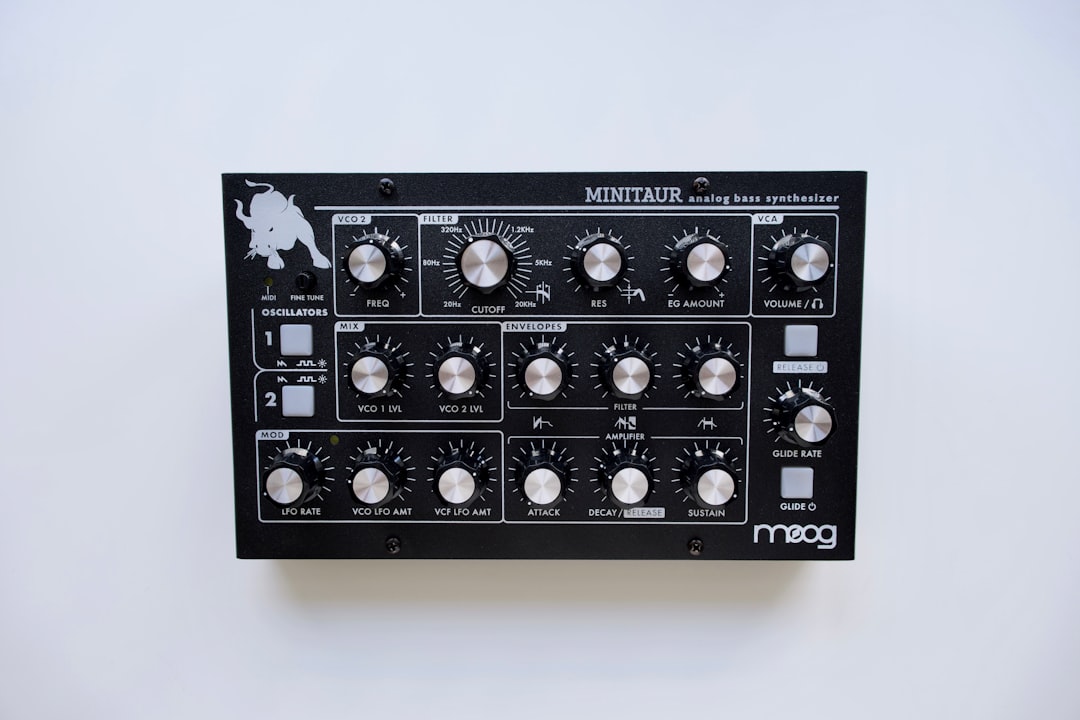
The best polyphonic synths let you play full chords, lush pads and layered textures that a single-voice instrument cannot. This guide covers the standout analog and digital polysynths and explains how to pick the right one for your music.
Violet Recording is reader-supported — we may earn a commission from links on this page, at no extra cost to you.
Quick answer
For warm analog poly, the Korg Minilogue, Sequential Prophet and Novation Summit lead the field. For deep digital poly, the ASM Hydrasynth and Korg Opsix stand out. Decide how many voices you need and whether you want analog warmth or digital range.
What is polyphony, and how much do you need?
Polyphony is the number of notes a synth can sound at once. A four-voice synth plays four-note chords; an eight-voice synth handles wider voicings and held notes that overlap. More voices cost more, so match the count to your playing. If you only need single notes, our monophonic synths guide is the better fit.
When choosing a polysynth, weigh:
- Voice count. Four is fine for basic chords; six to eight gives room for sustained, overlapping parts.
- Analog vs digital. See our analog vs digital synths guide to decide.
- Effects. Built-in reverb, delay and chorus make pads bloom without extra gear.
- Expression. Aftertouch and mod options bring pads to life.
Compared at a glance
| Pick | Why it stands out |
|---|---|
| Korg Minilogue | A four-voice analog polysynth with a friendly panel and an oscilloscope display. |
| Sequential Prophet | A benchmark for lush analog pads, rich brass and expressive modulation, with a heritage that runs through decades of… |
| Novation Summit | A two-part polysynth with hybrid oscillators and analog filters, capable of enormous modern pads and powerful basses… |
Full picks and details below.
The best analog polyphonic synths
Korg Minilogue
A four-voice analog polysynth with a friendly panel and an oscilloscope display. It is one of the most popular ways into analog polyphony.
Four-voice analog polyphony and a beginner-friendly panel make it one of the most accessible true analog polysynths, and the oscilloscope helps you learn as you go. A single oscillator per voice keeps it focused rather than maximal.
Sequential Prophet
A benchmark for lush analog pads, rich brass and expressive modulation, with a heritage that runs through decades of records.
Multi-voice analog polyphony, premium build and expressive modulation make it a benchmark for pads and brass. It is a flagship-tier instrument, so it suits players ready to commit to a long-term poly. If you want to compare it against mono-focused designs, our best analog synths roundup is a useful companion.
Novation Summit
A two-part polysynth with hybrid oscillators and analog filters, capable of enormous modern pads and powerful basses in a single instrument. The smaller Novation Peak shares the engine in mono-timbral form.
Two independent parts, hybrid oscillators and analog filters let it produce huge, modern pads and powerful basses in one box. That depth means more programming than a simpler synth, which is the trade for its scope.
The best digital polyphonic synths
ASM Hydrasynth
A deep digital polysynth with a wavetable engine and a famously expressive polyphonic-aftertouch keyboard. It covers ground analog cannot. For more in this vein, see our wavetable hardware synths guide.
The wavetable engine and polyphonic aftertouch make it extraordinarily expressive for evolving, modern textures, with keyboard and desktop versions to suit different rigs. Its deep menus reward players who enjoy sound design.
Korg Opsix
An FM polysynth with a modern, hands-on interface that makes a famously tricky synthesis method approachable. Excellent for bells, electric pianos and metallic textures.
The hands-on interface makes FM synthesis approachable, opening up bells, electric pianos and metallic tones that analog struggles to reach. It is digital by design, so it complements an analog poly rather than replacing one.
Analog or digital: which suits your music?
The analog-versus-digital question matters more on a polysynth than almost anywhere else, because you will use it for the harmonic backbone of a track rather than a single hook. Neither approach is better in the abstract; they simply behave differently under your fingers and in a mix.
Analog polysynths generate each voice with real voltage-controlled oscillators and filters. Because no two voices are ever perfectly identical, a held chord drifts and breathes in a way that sits naturally behind a vocal and glues to acoustic sources. The trade-offs are practical: analog instruments cost more per voice, often need a short warm-up to settle in tune, and rarely store the full patch state with the same total recall a digital synth gives you.
Digital polysynths build voices with wavetables, FM or sample-based engines and digital filters. That opens up bell tones, glassy pads, metallic timbres and complex evolving textures that analog circuits struggle to reach, and every parameter saves to a preset so a session recalls perfectly months later. If you produce in the box and value consistency and range over raw warmth, a digital poly is frequently the smarter first purchase. Many writers end up owning one of each, using analog for the warm core and digital for colour and movement.
How to set up a polysynth patch that sits in a mix
A polysynth can quickly dominate a track because chords occupy a wide frequency range. A little programming discipline keeps it musical rather than overwhelming.
- Set the voice mode deliberately. Poly mode spreads notes across voices; unison stacks every voice on one note for a thick lead or bass. Use unison sparingly, since it sacrifices your chord count.
- Tame the low end. Wide chords build up mud below roughly 200 Hz. Roll off the sub region on pad patches and let the bass part own that space.
- Use the amp envelope to define the role. Slow attack and long release for evolving pads; faster attack and shorter release for rhythmic stabs and plucks.
- Add movement, not just effects. A slow LFO on the filter or a touch of oscillator detune gives a chord life before you reach for reverb. Effects should enhance an already-interesting patch, not rescue a static one.
- Mind the stereo width. Built-in chorus and unison spread sound huge in solo but can swallow a mix. Check pads in mono to confirm the chord still reads.
Common mistakes when buying a polysynth
Most regret comes down to a handful of avoidable errors:
- Buying more voices than you play. A high voice count is expensive. If you write four-note chords and rarely overlap parts, you are paying for headroom you will not use.
- Ignoring the keybed. Aftertouch, key feel and octave range shape how expressive the instrument is in your hands far more than the brochure spec sheet suggests.
- Overlooking connectivity. Stereo outputs, USB and MIDI determine how cleanly the synth fits your interface and DAW. A mono output undersells a stereo instrument.
- Chasing presets over the engine. Factory sounds fade fast. The architecture, modulation routing and filter character are what you will live with for years.
Polysynths for pads and ambient
Polyphony is the heart of ambient music, where slow, overlapping chords build evolving textures. Our best synths for ambient music guide focuses on instruments built for exactly that.
Recording a polysynth
Polysynths often sound their best in stereo, so capture both outputs through your interface. The home studio setup hub covers monitoring and gain, and our recording a hardware synth guide walks through the signal chain.
Frequently asked questions
How many voices do I need in a polysynth?
Four voices cover basic chords. If you hold pads while playing new notes, or layer parts, six to eight voices give you the headroom to avoid notes cutting out.
Are analog or digital polysynths better for pads?
Both excel. Analog gives warm, organic pads; digital offers evolving, complex textures and total recall. The choice depends on the character you want.
Can a monosynth play chords at all?
No — a true monosynth sounds one note at a time. Some have a duophonic or paraphonic mode for limited multi-note playing, but full chords require a polysynth.
What does voice stealing mean on a polysynth?
When you play more notes than the synth has voices, it silences the oldest sounding note to free a voice for the new one. You hear this as pad notes cutting out under busy playing, which is the main reason to choose a higher voice count for sustained, overlapping parts.
Should my first polysynth be hardware or a software plugin?
Software polysynths are cheaper, recall perfectly and give you huge variety, which makes them a sensible starting point. Hardware adds hands-on control, a dedicated keybed and a workflow many players find more inspiring; our hardware vs software synths guide weighs the trade-offs in full. If budget is tight, start in software and move to hardware once you know the sound and features you actually reach for, and if this is your very first instrument our guide to what your first synth should be can point you in the right direction.
Shop related gear
Play rich chords on a hardware polysynth: