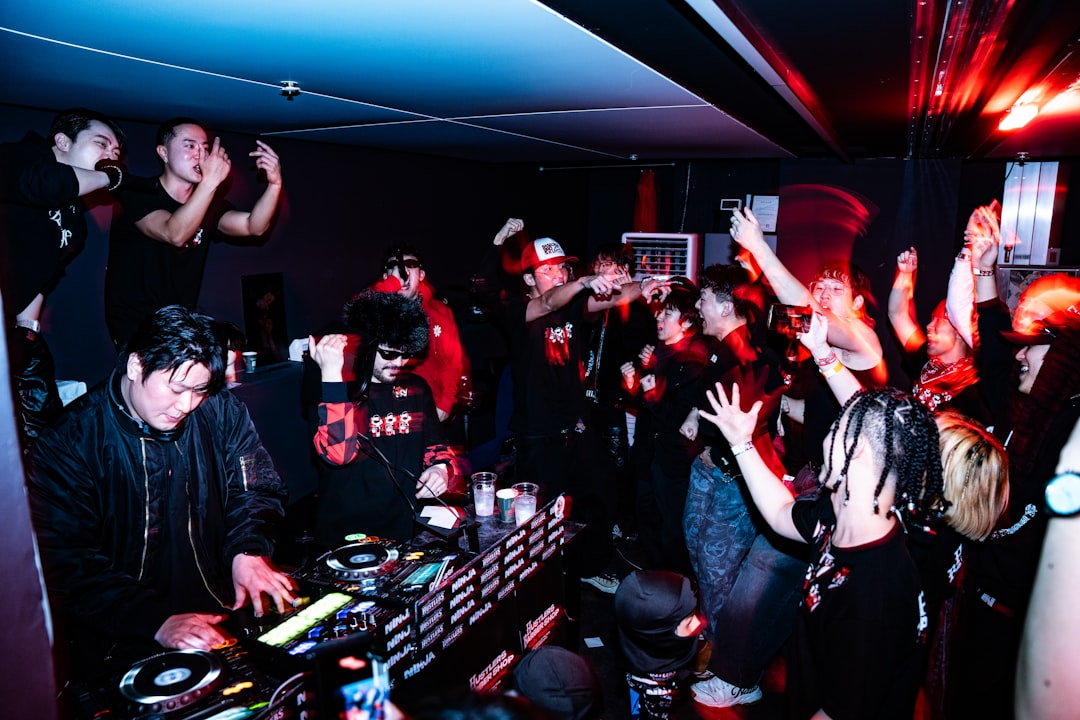
To DJ a party well, prepare a versatile playlist across genres and energy levels, read the room as the night develops, and keep transitions smooth enough that the music never stops moving people. House parties and private events are forgiving stages to grow on — the crowd wants to have fun, not judge your blends — but a few core skills make the difference between background noise and a packed floor. Here’s how to nail it.
Prep a flexible playlist
A party crowd is unpredictable, so don’t lock yourself into one rigid set. Build a deep, flexible pool of tracks you can pull from in any direction:
- Warm-up tunes — lower energy, familiar, easy to vibe to early.
- Floor-fillers — the big, recognisable songs that get everyone up at once.
- Curveballs — a few crowd-specific tracks for the people actually in the room.
Organise it all so you can find anything fast — tagged by energy, genre and BPM. Our guide to organising your music library for DJing shows the system, and planning a DJ set helps you map the arc of the night.
Build the energy gradually
Don’t open at full throttle. Early in a party the floor is empty and people are arriving, talking and getting drinks — play warmer, familiar music that sets a mood without demanding attention. As more people gather, lift the energy step by step toward peak time. Drop your biggest tracks when the room is full, not when three people are standing by the snacks. Pacing is everything: if you peak too early, you’ve got nowhere left to go.
Read the room and adjust
The crowd tells you what’s working — watch the dance floor, not your screen. If a track fills the floor, follow it with something similar. If it clears the room, get out of it and pivot. Reading energy in real time is the core party skill; develop it with our guide to reading a crowd as a DJ. The goal isn’t to play your favourite tracks; it’s to keep this specific crowd dancing.
Keep transitions clean
At a party you don’t need surgical beatmatching, but you do need to avoid dead air and clumsy clashes. Smooth fades, quick cuts on the right phrase, and good timing keep momentum up. Where BPMs line up you can blend properly; where they don’t, a clean cut or a quick echo out works fine. If you want tighter blends, our guide to smooth DJ transitions covers the techniques, and mixing two songs together walks through the fundamentals.
Handle requests without losing control
At parties, people will request songs constantly. The trick is to honour the vibe while staying in charge of the set. Play requests that fit the moment, politely defer the ones that don’t (“good shout, I’ll find a spot for it”), and never let one pushy guest derail the whole floor. You’re curating the night, not running a jukebox — but a little flexibility keeps everyone on your side.
Match the music to the occasion
Not every party wants the same energy, and a big part of the job is reading the brief before you ever press play. A birthday with a wide age range needs more crowd-pleasers and recognisable classics than an underground house party of dedicated club-goers. A wedding reception has clear gears — dinner, first dance, then the floor opening up — and is a different job again, with its own running order; our guide to DJing a wedding breaks that down. A casual house party drifts more organically. Ask the host a few questions in advance: roughly how many guests, what age spread, any genres they love or can’t stand, and whether there are must-play or do-not-play tracks. Five minutes of conversation saves you guessing on the night, and it tells you how adventurous you can afford to be.
Volume sits inside this too. Early on, keep the level low enough that people can talk over it without shouting — nobody wants to be blasted while they’re still saying hello. As the floor fills and conversation gives way to dancing, you can push the level up to match the energy. The room’s mood should lead the volume, not the other way round.
Avoid the common party mistakes
Most party-DJ disasters come from a short list of avoidable errors. Knowing them in advance is half the battle, and many of them overlap with the wider DJ mistakes to avoid that trip up beginners everywhere:
- Playing for yourself, not the crowd — your favourite deep cuts mean nothing if they empty the floor. Serve the room first.
- Peaking too early — drop every anthem in the first half hour and the rest of the night feels flat. Hold something back.
- Killing momentum mid-banger — cutting a track that’s working to “show off” a clever transition breaks the spell. Let winners ride.
- Letting silence creep in — even a couple of seconds of dead air drops the energy. Always have the next track cued.
- Ignoring the warm-up — a thoughtful early set builds the floor you’ll later fill. Don’t treat it as throwaway time.
- No backup plan — one corrupted file or flat laptop battery can end the night. Carry spares and download everything locally.
Sort your gear and backups
Keep the setup simple and reliable. A compact controller like a Pioneer DJ DDJ-FLX4, a prepped laptop, decent speakers for the space, and a spare cable or two will handle most house parties. Make sure your tracks are downloaded locally so you’re not depending on Wi-Fi. New to building a rig? Start with a DJ setup for beginners. Parties are also a great low-pressure way to earn while you learn — see making money as a DJ.
If you do not have a PA, a good portable speaker is often enough for a house party. Our guide to the best party speakers compares options that fill a room without a lot of extra gear.
Whatever you bring, set it up and test it before the first guest arrives. Check both channels play, the master level is sensible, and your headphones cue correctly. Find a stable surface away from the dance floor so a stray elbow can’t knock a deck, and tuck cables out of foot traffic. A calm, sound-checked start lets you focus entirely on the music once the room fills up.
Frequently asked questions
What should I play first at a party?
Start lower-energy with familiar, easy tunes while people arrive and settle in. Save your biggest floor-fillers for when the room is full. Opening at peak energy leaves you nowhere to build, so think of the night as a gradual climb toward peak time.
How do I keep the dance floor full?
Watch the floor constantly and follow what’s working. When a track fills the room, play something similar; when one clears it, pivot fast. Read the specific crowd in front of you rather than playing only your favourites, and keep transitions smooth so momentum never drops.
Do I need expensive gear to DJ a party?
No. A compact controller, a prepped laptop, decent speakers for the room and a couple of spare cables will handle most house parties. Reliability and a well-organised, locally downloaded library matter far more than expensive equipment.
How long should a party set be?
Most house parties run two to four hours, but plan for more music than that and stay flexible — good nights overrun. Pace your energy across the whole window rather than a fixed length: build through a warm-up, push toward a peak when the floor is busiest, then ease down gently as people start to drift off.