To plan a DJ set, you map out an energy arc — where it starts, builds and peaks — then choose and organise tracks that move through that journey while leaving room to adapt on the night. A good plan gives you direction and confidence; the trick is to plan a DJ set tightly enough to flow but loosely enough to read the room.
Here is a practical way to prepare, whether it is your first house party or a club slot.
Start with the context
Before you pick a single track, answer a few questions:
- What is the event? A warm-up set, a peak-time club slot and a wedding all need different approaches.
- How long is your slot? An hour and a four-hour marathon are planned very differently.
- Who is the crowd? Match the music to who will actually be there, not just what you love.
- Where do you sit in the night? If you are warming up, you build energy and hand over; if you are peak-time, you carry it.
If you are playing a specific kind of event, our guides to DJing a wedding and DJing a party go deeper on those contexts.
Build an energy arc
The single most useful planning concept is the energy arc. Most sets follow a shape:
- Open with lower-energy, groovier tracks to ease people in.
- Build steadily, lifting tempo and intensity.
- Peak with your biggest, most energetic tracks.
- Resolve by easing off near the end or handing over smoothly.
Avoid playing all your biggest tracks at once — you leave nowhere to go. Save some peaks for later and let the energy breathe with the occasional dip before the next climb.
It helps to think of the arc in terms of tempo as well as feeling. A common pattern is to open a touch slower, ease the BPM up as the room fills, and hold your highest tempos for the peak before drifting back down to close. The numbers matter less than the direction of travel: every selection should either lift the energy, hold it or release it on purpose. If you ever feel unsure where to go next, ask yourself which of those three things the floor needs right now, and pick a track that does it.
Organise your music first
A plan is only as good as the library behind it. Before building a set, get your collection in order: tag tracks by genre, energy, BPM and key, and build playlists or crates. Our guide to organising your music library for DJing covers this in detail, and it pays off every time you play. Knowing where to buy music from stores and pools like Beatport, Bandcamp and Beatsource keeps fresh tracks flowing into that library.
Prep your tracks
For the tracks you expect to play, do the prep work in advance:
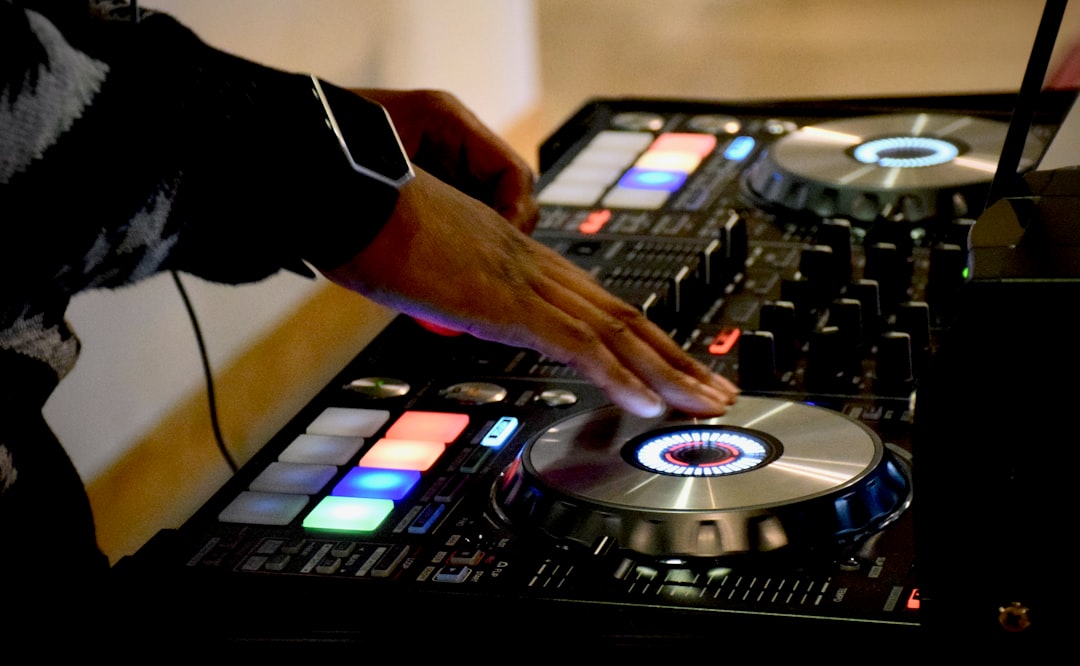
- Set hot cues on intros, drops and vocals so you can launch cleanly — see what is a hot cue.
- Check beat grids so sync and looping behave.
- Confirm keys if you plan to mix harmonically.
- Note good intro/outro points for smooth blends.
Plan transitions, not just tracks
A set is the sum of its transitions, so think about how tracks connect, not only the order. Group tracks that beatmatch easily and sit in compatible keys, and you give yourself smooth options on the night. The mechanics of those handoffs live in our guide to smooth DJ transitions.
Plan a structure, not a fixed playlist
Here is the balance that separates good DJs from rigid ones: plan the shape, not every track in order. A set list locked beat-for-beat falls apart the moment the crowd reacts differently than you expected. Instead:
- Prepare more tracks than you need — a deep pool to choose from.
- Group them into energy bands or crates (openers, builders, peak-time, closers).
- Decide your opening few tracks and a couple of likely peaks, then improvise the path between them.
This way you always have a direction but can react in real time. Reading the dancefloor and adjusting is a skill in itself — our guide to reading a crowd pairs perfectly with a flexible plan.
How to choose what to play next
Even with a structure in place, the hardest moment is often the one right in front of you: what comes next? A few habits make that decision easier and keep the set moving with intent.
- Cue ahead while the current track plays. Use the spare hand and headphones to audition two or three candidates so you are never scrambling at the last bar.
- Pick the contrast you need. If the floor is flagging, reach for a lift; if it is over-cooked, give it a groovier breather before climbing again.
- Mind the key and tempo gap. Big jumps can work as a deliberate reset, but for smooth blends keep neighbouring tracks close in BPM and harmonically compatible.
- Hold a couple of safety tracks back. Keep two or three reliable crowd-pleasers you know will work, so you always have a rescue if a risk does not land.
Common mistakes to avoid
Most planning problems come down to a handful of recurring errors, and they overlap with the wider DJ mistakes worth steering clear of. Watch for these:
- Front-loading every banger. If you peak in the first twenty minutes, the rest of the set feels like a comedown.
- Over-planning the order. A rigid, track-by-track list cannot survive contact with a real crowd. Plan the shape, keep the order loose.
- Playing for yourself, not the room. Your favourite obscure cuts are great, but the set has to work for the people in front of you.
- Skipping the prep. Missing hot cues and ragged beat grids turn smooth transitions into stressful ones. Do the boring prep so the night feels easy.
- No fresh material. Leaning entirely on the same tracks every set gets stale fast for you and for regulars; keep topping up the library.
Frequently asked questions
Should I plan a DJ set track by track?
It is usually better to plan the structure and energy arc than to lock every track in order. Prepare a deep pool of organised tracks and a rough shape, then adapt the exact selections live based on how the crowd responds.
How many tracks should I prepare for a set?
Prepare well more than you expect to play so you have options. A rough guide is around 12 to 16 tracks per hour at typical lengths, but bring a much larger pool so you can change direction if the room demands it.
How do I plan the energy of a set?
Think in an arc: open lower, build gradually, hit your peaks, then resolve. Spread your biggest tracks out rather than front-loading them, and allow small dips so each climb feels rewarding.
How far in advance should I prepare a set?
Give yourself enough time to organise your library, set hot cues and audition transitions without rushing. A little prep across the week beats a panicked hour beforehand, and it leaves your attention free for the crowd on the night rather than your screen.