
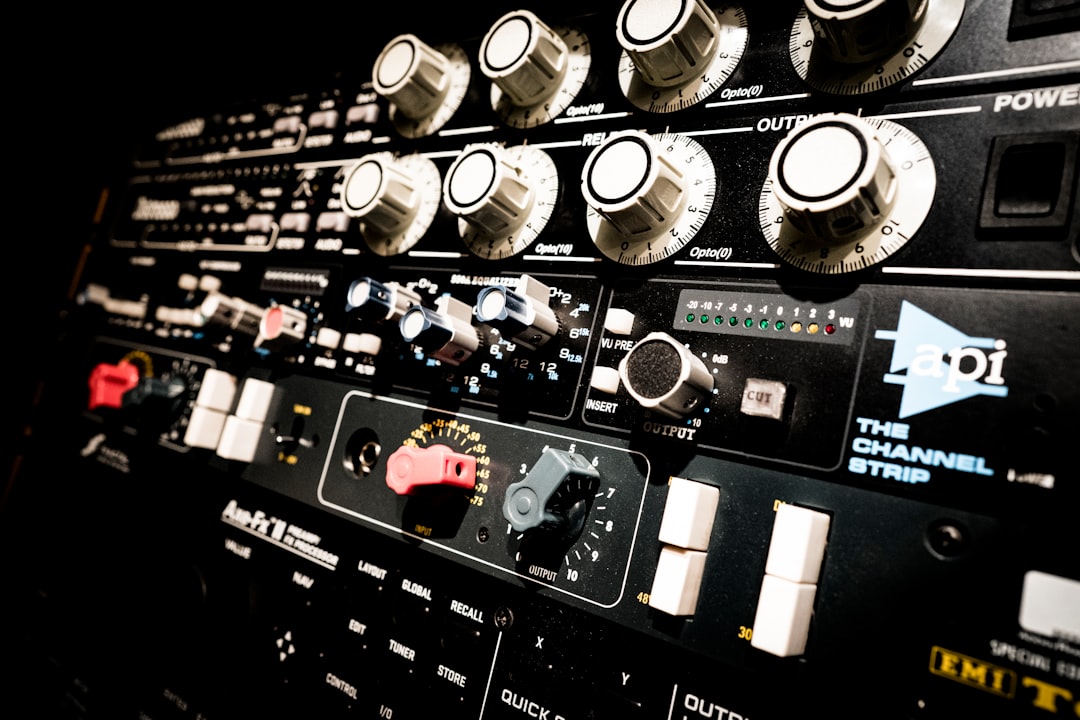
So what does a sound designer do? In short, they create and shape the sounds a project needs — from a bass patch in a song to a laser blast in a game to the swell behind a film’s title card. A sound designer sources or synthesises raw audio, edits and layers it, and processes it until it fits the music, scene or interaction perfectly. The exact day-to-day depends heavily on the industry, but the core craft is the same everywhere.
What does a sound designer do day to day?
The work usually moves through the same stages, whatever the medium:
- Sourcing — recording real sounds with a field recorder, pulling from libraries like Freesound or Splice, or generating sounds in a synth.
- Editing — trimming, cleaning and tuning raw clips so they’re usable.
- Designing — layering and synthesising elements into the final sound.
- Processing — applying EQ, distortion, reverb and modulation to shape tone and space.
- Syncing — for film and games, placing sounds precisely to picture or hooking them to in-game events.
If you’re new to all this, our overview of what sound design is sets the foundation.
It’s worth being honest about where the hours actually go. The glamorous part — inventing a sound nobody has heard before — is a small slice of the job. Most of the time is spent auditioning takes, cleaning up noise, organising files and naming them sensibly, and bouncing dozens of variations so a director, producer or game team can pick the one that fits. Good housekeeping is part of the craft: a designer who can find the right asset in seconds, and deliver it correctly labelled and at the right format, is far more valuable than one with a flashier patch and a chaotic session.
The job changes by industry
Music
In music production, a sound designer creates patches — basses, leads, pads, plucks, drums — and textures that give a track its identity. They work in synths like Serum, Vital and Ableton Wavetable, then layer and resample sounds, and often blur the line with producing. Many producers are their own sound designers. Try designing a bass sound to see this side of the work.
Film and TV
Here a sound designer builds the sonic world the camera can’t capture: ambiences, effects, textures and the big cinematic hits. They record original material, layer it, and sync it to picture, often working alongside Foley artists and dialogue editors. The goal is sound that feels invisible and inevitable, supporting the story without drawing attention.
Video games
Game sound designers create interactive audio that responds to a player in real time. A footstep changes with the surface; a weapon sounds different up close versus far away. Beyond designing the sounds themselves, they work in audio middleware to define how and when sounds trigger, which adds a programming-adjacent layer to the role in game audio.
Product, apps and brands
Short, functional sounds — notifications, confirmations, startup chimes — fall to UI sound designers. These need to be instantly recognisable, pleasant on repeat, and tiny in length. It’s a precise, detail-driven corner of the field.
What skills does the job need?
- A strong ear — the ability to hear detail and know what’s missing.
- Synthesis and sampling — comfort with oscillators, filters, envelopes, LFOs and samplers.
- Editing and processing — clean, fast work with EQ, distortion, reverb and automation.
- Recording — capturing usable source material in the field.
- Problem-solving — figuring out how to build a sound that doesn’t exist yet.
The technical fundamentals of clean processing, like EQ and compression, underpin everything a designer does.
What tools does a sound designer use?
A typical kit includes a DAW, synths (Serum, Vital, Massive X, Omnisphere), samplers (Kontakt, Ableton Sampler), a field recorder (Zoom or Tascam), quality effects (Valhalla reverbs, FabFilter, Soundtoys), and sound sources (Freesound, Splice). Game designers add audio middleware; film designers add tools for working to picture. You don’t need all of it to start — a DAW and one of the best free synths are plenty.
How to start working like a sound designer
You don’t need a finished setup or a brief from a client to begin building the skill. The fastest way to learn is to give yourself a small, concrete target and try to hit it from scratch.
- Pick one sound and recreate it. Choose a single noise you like — a sci-fi door, a sub bass, rain on a window — and try to build it from raw material. Reverse-engineering trains your ear faster than open-ended noodling.
- Record your own source. Even a phone in a quiet room gives you original audio nobody else has. Tapping, scraping, blowing and crumpling everyday objects is the backbone of countless screen effects.
- Layer two or three elements. Most convincing designed sounds are a stack: a body, a transient or “click” for impact, and a tail. Learning to combine layers is more useful early on than mastering any one synth.
- Process with intent. Reach for EQ, distortion and reverb to solve a specific problem — too thin, too dull, too dry — rather than adding effects out of habit.
- Finish and label it. Bounce the result, name it clearly and move on. A folder of finished sounds is worth more than a hundred half-built sessions.
Common mistakes to avoid
A few habits trip up almost everyone starting out:
- Buying tools instead of building skill. A new synth or plug-in rarely fixes a sound that isn’t working. The ear and the technique matter far more than the kit.
- Skipping the edit. Raw recordings and presets are a starting point, not a finished sound. Trimming, cleaning and tuning is where most of the quality comes from.
- Over-processing. Piling on effects to “improve” a sound usually buries it. Often the fix is to remove something rather than add.
- Ignoring context. A sound that’s stunning in isolation can be wrong in the mix or against picture. Always audition designed audio in the project it’s meant for.
- Designing too loud. Bright, aggressive sounds feel impressive solo and then dominate everything around them. Check at sensible levels and in context.
Is a sound designer the same as a producer or engineer?
Not quite. A producer shapes the overall direction of a track. An engineer focuses on recording, mixing and the technical signal chain. A sound designer specifically creates and shapes individual sounds. The roles overlap constantly, and one person often wears all three hats in a home setup. If the job appeals, see how to become a sound designer.
Frequently asked questions
What does a sound designer do in a typical project?
They take a brief, source or synthesise the needed sounds, edit and layer them, process them to fit, and deliver finished audio synced to the music, picture or game events. Much of the time is spent sourcing and editing rather than the flashy creative part.
Is sound design a good career?
It can be, especially across music, film, games and product audio, where demand for original sound is steady. It rewards a strong ear and a solid portfolio more than formal qualifications. Like most creative fields, breaking in takes persistence and good work to show.
Can one person do all types of sound design?
The core craft transfers across fields, but each has specialist tools and conventions — game audio uses middleware, film work is tied to picture. Many designers specialise in one area while keeping general skills. Starting broad and narrowing later is a sensible approach.
Do you need expensive gear to start?
No. A DAW, a free synth, headphones and a way to record source audio cover the essentials. Most of the skill lives in your ear and your editing, not your kit, so it makes sense to learn the craft first and add tools only when a real limitation forces the decision.
Hiring rather than becoming one? Our sound design services match your project with a vetted sound designer, free.



