
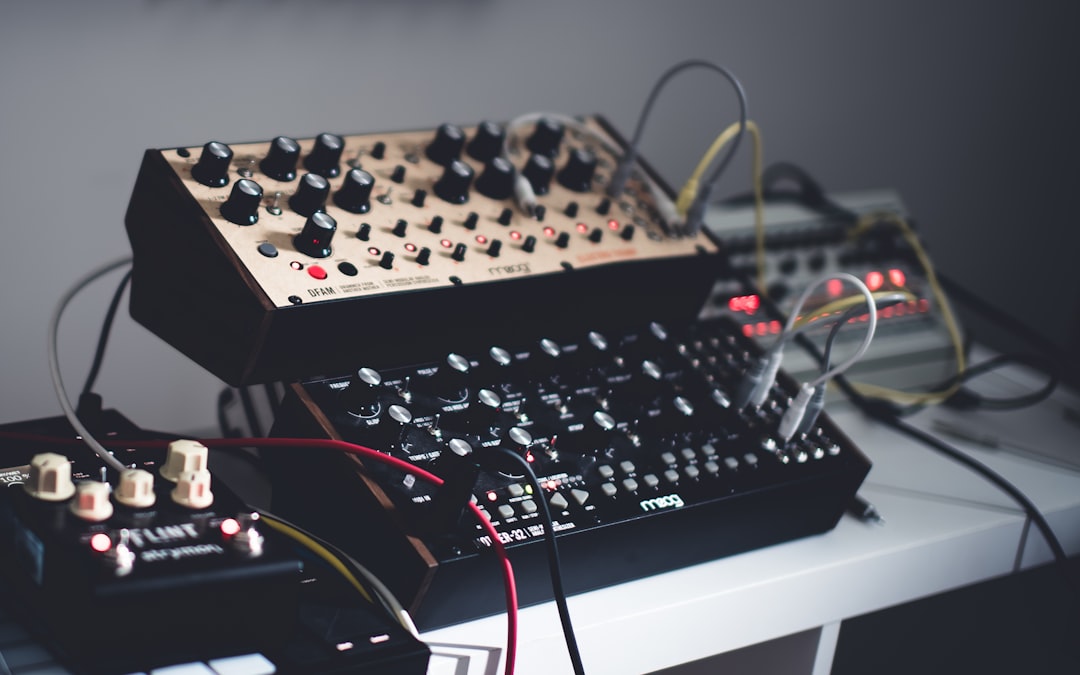
To become a sound designer, you need three things: a solid grip on the craft of creating sounds, a portfolio that proves it, and a clear idea of which field you want to work in — music, film, TV, games or product design. There’s no single licence or degree required. What gets you hired is a body of work that shows you can deliver the sounds a project needs. This guide lays out the realistic route from beginner to working sound designer.
Try the free White Noise Generator →
What it really takes to become a sound designer
A sound designer is part technician, part creative problem-solver. You’ll be expected to create sounds from scratch, edit and clean recordings, layer elements convincingly, and process them to fit a mix or a scene. Underneath that sits a strong ear and patience. The good news is that all of these are learnable at home, and the barrier to entry is low: a computer, a DAW and free tools are enough to build real skill.
Step 1 — Learn the craft
Before titles and portfolios, you need ability. Learn synthesis (oscillators, filters, envelopes, LFOs) and sampling, then practise constantly. If you’re starting cold, work through how to get into sound design and sound design for beginners first. Get comfortable in a synth like Vital, Serum or Ableton Wavetable, and practise designing sounds with a synth from a blank patch, then move on to a sampler like Kontakt or Ableton Simpler. Then learn to record your own material with a field recorder such as a Zoom H-series or Tascam unit, because original recordings make your work stand out.
Step 2 — Pick a field
“Sound designer” means different things in different industries:
- Music — designing patches, drums and textures for producers and artists, often as a freelancer or as part of your own production work.
- Film and TV — creating effects, ambiences and textures, frequently alongside Foley and dialogue editing.
- Games — designing interactive, reactive sound that triggers from player actions, often using audio middleware.
- Product and UI — short functional sounds for apps, devices and brands.
Each has its own tools and expectations, so it pays to specialise once you know what you enjoy. See what a sound designer does for a closer look at day-to-day work.
Step 3 — Build a portfolio
Your portfolio is your CV. It should show range and finish, not just experiments. Strong portfolio pieces include:
- Redesigns — take a short film, game trailer or animation clip and replace all the audio with your own design. This is the single most respected portfolio piece.
- Sound packs — a small, well-organised collection of original sounds (basses, impacts, ambiences) shows craft and consistency; learning how to make your own sample pack is a practical way to assemble one.
- Music examples — if you’re aiming at production, finished tracks that showcase your own designed sounds.
Host your work somewhere clean and easy to scrub through. Quality over quantity: three excellent pieces beat twenty rough ones.
Step 4 — Build the right tool habits
You don’t need a huge plugin collection to get hired, but you should be fluent in a core set: a wavetable synth, a sampler, a quality reverb such as the Valhalla range, an EQ and compressor (FabFilter is an industry favourite), and creative tools like Soundtoys. More important than owning them is knowing signal flow cold — how a sound moves from source through shaping to effects. Learn the principles in EQ and compression fundamentals, since clean processing underpins every professional sound.
Step 5 — Get experience and contacts
Work begets work. Collaborate with indie game developers, filmmakers and animators who need audio — these projects build both your reel and your network. Share redesigns publicly, contribute to game jams, and offer to design sounds for student films. Many working sound designers got their first credits this way long before any formal job.
A realistic first-year roadmap
It helps to turn “learn the craft” into something you can actually schedule. A sensible structure for your first twelve months looks like this:
- Months 1–3 — master one synth and one sampler properly rather than dabbling in five. Recreate sounds you hear: a kick from a record, a sci-fi door, a rain ambience. Reverse-engineering trains your ear faster than anything else.
- Months 4–6 — start recording your own source material and learn to edit it cleanly. Build your first short sound pack so you have something finished to show.
- Months 7–9 — commit to your chosen field and complete a full redesign in it. For games, learn the basics of an audio middleware such as Wwise or FMOD; for film, study how picture cuts drive your edits.
- Months 10–12 — tidy your three best pieces into a portfolio and begin reaching out to collaborators. Treat outreach as a skill you practise, not a one-off favour you ask for.
Progress is rarely this neat in practice, but having a shape to aim at stops you from drifting between tutorials without ever finishing anything.
Common mistakes to avoid
Most people who stall do so for predictable reasons. Watch for these:
- Collecting tools instead of making sounds — a new plugin will not fix a thin portfolio. Use what you have until you hit its real limits.
- Tutorial loops — watching is not doing. For every hour you learn, spend two or three creating something of your own.
- Never finishing — unfinished experiments do not get anyone hired. A rough but complete redesign teaches and demonstrates far more than a folder of clever fragments.
- Ignoring loudness and context — a sound that is beautiful in isolation can vanish in a busy mix or scene. Always audition your work against the picture or track it is meant to serve.
- Spreading across every field at once — the tools and expectations for games, film and music genuinely differ. Going deep in one beats being shallow in all.
Do you need a degree?
Not necessarily. A degree in sound design or audio can help with structure, contacts and access to studios, but plenty of working designers are self-taught with strong portfolios. In music and indie games especially, your reel matters far more than your qualifications. Spend your energy on output you can show.
Frequently asked questions
How long does it take to become a sound designer?
Expect a year or more of consistent practice to reach a hireable level, though this varies. The fastest progress comes from building real portfolio pieces — redesigns and sound packs — rather than passively watching tutorials. Working on actual projects accelerates everything.
Can I become a sound designer without expensive gear?
Yes. A computer, a DAW, free synths like Vital and Surge, and an affordable field recorder cover the essentials. Employers and clients care about the sounds you deliver, not your gear list. Invest in skills and a good pair of headphones before fancy plugins.
What’s the difference between a sound designer and an audio engineer?
A sound designer creates and shapes the actual sounds. An audio engineer typically focuses on recording, mixing and the technical chain that captures and balances audio. The roles overlap, and many people do both, but design is about invention while engineering is about capture and balance.
Do I need to be good at music theory to design sound?
For most non-musical work — effects, ambiences, UI and game audio — you can get a long way with little formal theory, because you are shaping timbre and texture rather than writing melodies. If you want to design tonal content like pads, basses and leads for producers, a working grasp of pitch, intervals and tuning will make your sounds sit better in a track. You can learn it gradually as the need arises.



