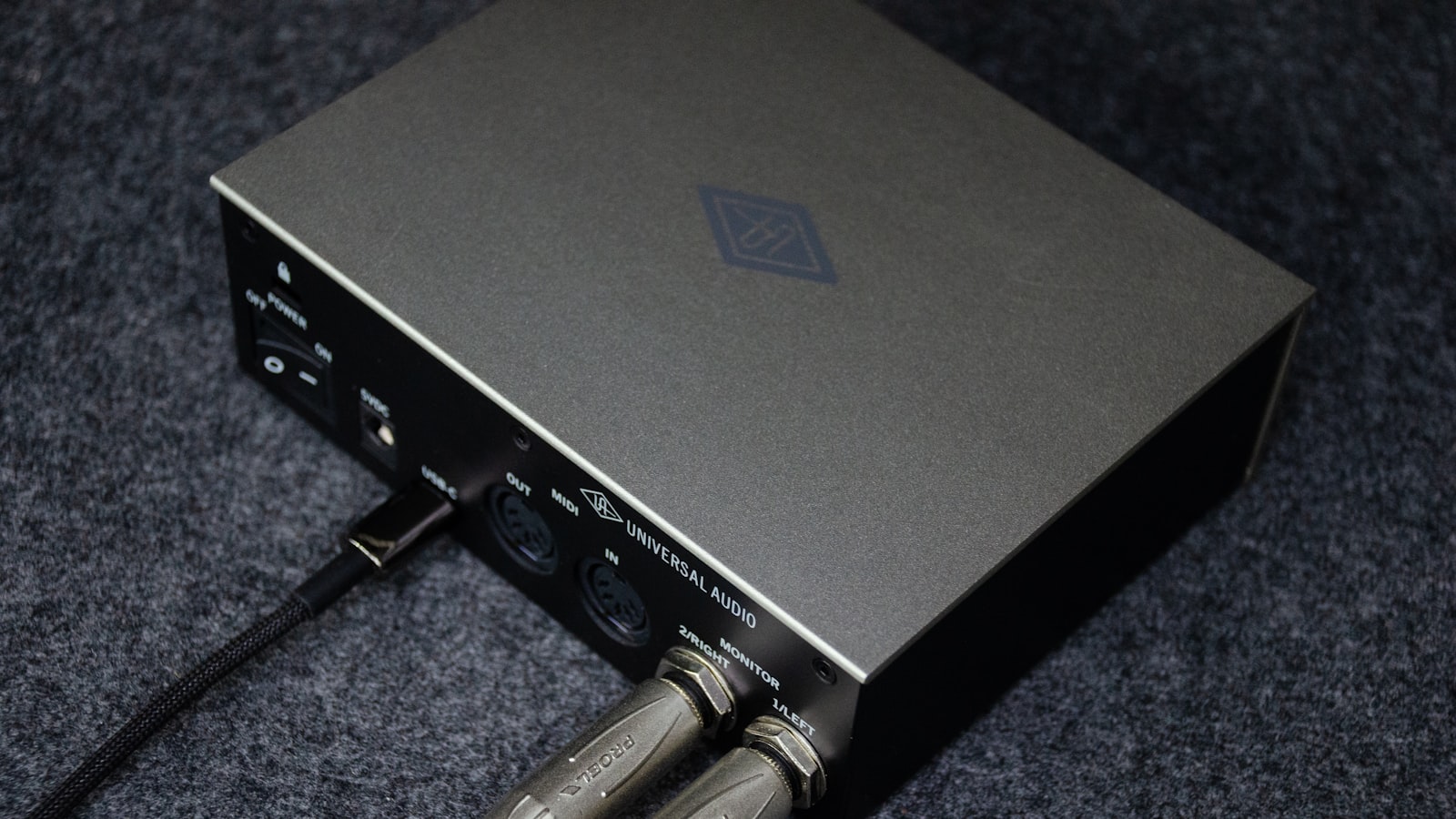
For this starting-point category, our pick is the Focusrite Scarlett 2i2. It’s arguably the most recommended audio interface in home recording, the default answer whenever someone asks what to buy for their first proper setup, and there’s a reason it has stayed there through multiple hardware generations.
The 2i2 keeps things simple: two combo inputs for a mic and an instrument (or two mics), two outputs for stereo monitoring, and Focusrite’s well-regarded Scarlett preamps driving the signal in between. Each input has its own gain halo that changes colour as you approach a good recording level, which makes setting levels correctly far more intuitive than reading a small meter, especially for anyone recording without an engineer looking over their shoulder.
Its popularity also brings practical advantages beyond the hardware itself: extensive tutorials, wide software compatibility, and a large secondhand and accessory market, so it’s rarely the hardest part of the puzzle to figure out if something goes wrong.
- Two combo inputs covering mic and instrument sources
- Gain halos for quick, visual level-setting
- Direct monitoring switch to track without latency
- USB-C connectivity on current models
It’s the natural choice for solo songwriters, podcasters recording with a guest, and anyone setting up their very first home recording rig. Browse the full shortlist for current options.