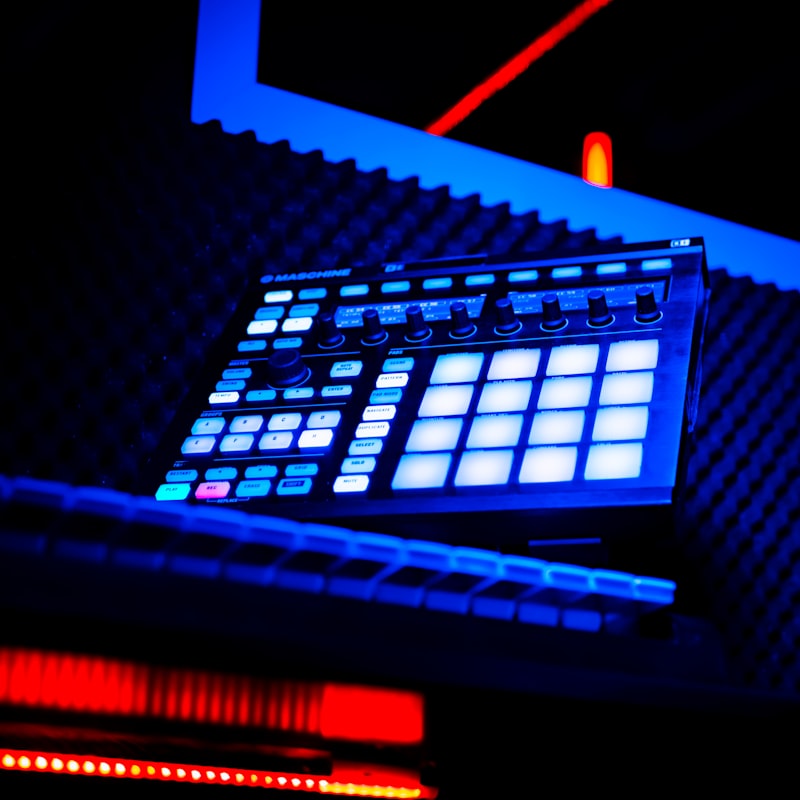
For MIDI drum pads, the Akai MPD218 is a longstanding, safe recommendation. It’s a compact USB pad controller built around 16 velocity-sensitive pads split across three assignable banks, giving you 48 addressable pads in total without extra hardware. Akai has kept this exact formula — MPC-style pads paired with straightforward pad and knob assignment software — in the lineup for years, which is a big part of why it keeps showing up in “best MIDI drum pad” roundups.
The pads themselves are the reason it holds up: full-size, pressure-sensitive rubber pads that respond differently to a light tap versus a hard hit, which matters the moment you’re finger-drumming instead of just triggering one-shots. Alongside the pads sit assignable knobs for shaping a sound in real time, and the whole unit is bus-powered over USB, so there’s no separate power brick to carry.
- Bank switching — three banks give real capacity, but only one is visible at a time
- Pad size and spacing for your playing style
- Software mapping, since MPC Software/Editor is straightforward but still a setup step
- Knob assignment flexibility for shaping sounds beyond note triggering
It’s a fit for beatmakers, producers building drum patterns by feel, and anyone layering percussion into a track who wants more human-feeling results than a quantized grid. If you need to trigger full clips and loops across a session rather than just drum hits, a grid-style pad controller is the better match. See the full shortlist to compare.