
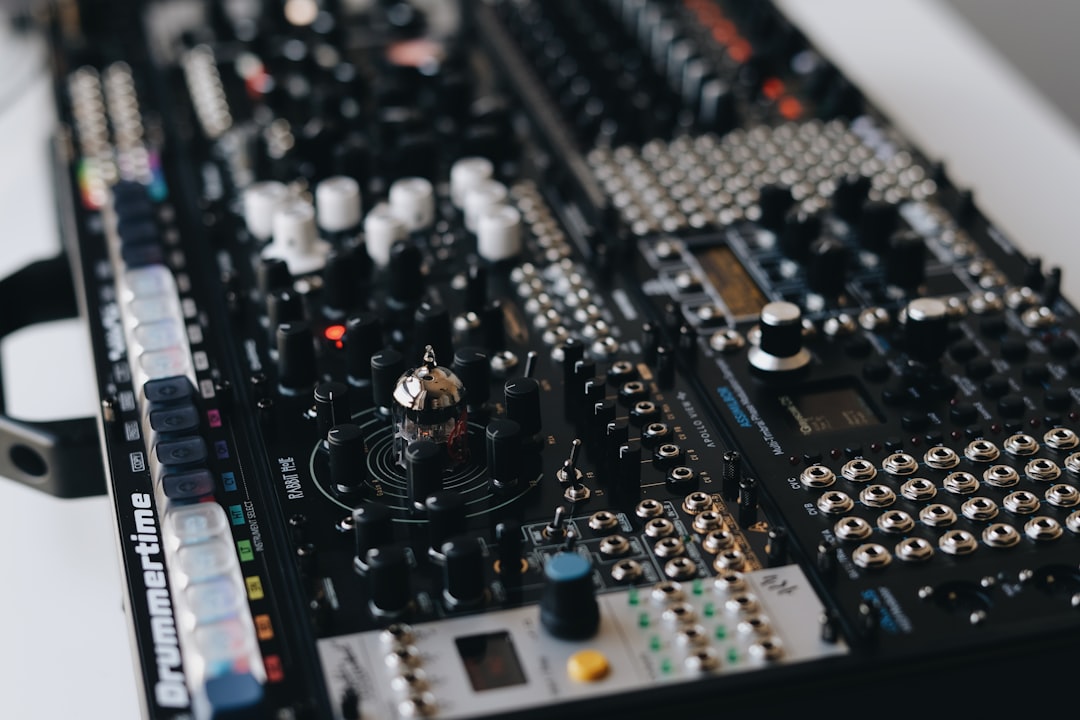
To design UI sounds, keep them short, clean and consistent — most interface cues last under 300 milliseconds, sit in a pleasant mid-high frequency range, and share a common tonal family so the whole app feels like one product. UI sound design is about restraint: the best clicks, taps and notifications are barely noticed but feel satisfying.
UI (user interface) sounds are the tiny audio cues in apps, websites, smart devices and games — button taps, toggles, success chimes, error buzzes and notifications. This guide shows how to build them so they feel polished and don’t annoy the user.
What makes good UI sounds
Before you design anything, follow these principles:
- Short: taps and clicks are 30–150 ms; notifications can stretch to around 500 ms.
- Clean: minimal noise, controlled low end, no harsh peaks that fatigue the ear over hundreds of uses.
- Consistent: all sounds in one product should feel related — same reverb, similar tone, a shared “voice”.
- Meaningful: rising pitch reads as positive (success, confirm); falling or dissonant pitch reads as negative (error, cancel).
Step 1: Start with a clean synth source
UI sounds are perfect for simple synthesis. Open Vital (free), Serum, or Ableton Operator and start with a sine or triangle wave — they are smooth and harmonically clean. Set a very fast attack and a short decay so the note pops and disappears. A single tuned blip is already a usable tap, and the same workflow for designing sounds with a synth applies directly here. If you want a metallic or bell-like tone for chimes, FM synthesis excels here; our FM synthesis guide shows how to get those clean digital timbres.
Step 2: Shape the envelope tightly
The envelope is everything in UI design. A click is mostly attack and almost no sustain. A confirmation chime might have two quick notes rising in pitch. Keep release times short so sounds never overlap when a user taps quickly. Understanding amplitude envelopes is the core skill — go deeper in our piece on essential sound design techniques.
Step 3: Design a family of cues
Build your sounds as a set, not in isolation:
- Tap / click: one short blip, neutral pitch.
- Confirm / success: two notes rising in pitch.
- Error / cancel: a lower, slightly detuned or falling tone.
- Notification: a short, pleasant two- or three-note motif.
Reuse the same synth patch and just change pitch and envelope. That shared DNA is what makes an interface feel coherent.
Step 4: Layer textures for realism
Pure synth tones can feel sterile. Layer a tiny recorded element — a finger tap on a desk, a soft mechanical click — under the synth blip to add a tactile, physical quality. A Zoom or Tascam recorder, or free clips from Freesound, gives you those organic textures. Blending synthetic and recorded sources is the same skill covered in how to layer sounds.
Step 5: Polish and export
Finish each sound with light processing:
- EQ: high-pass the rumble below ~120 Hz and tame any harsh peaks around 2–5 kHz.
- Reverb: a tiny, short reverb (a stock room or Valhalla) adds polish — keep it subtle so cues stay tight, and our guide on using reverb for sound design covers how to keep it tasteful.
- Limiting: normalise levels so every cue feels equally loud.
Export short, trimmed files with no silence at the start so they trigger instantly. Save them into your sound effects library so you can reuse the family across projects.
How to choose the right tone for each cue
Most UI sound briefs come down to one question: what should this cue make the user feel? Once you answer that, the design choices follow. Map each emotion to a musical gesture and you will rarely go wrong:
- Positive and complete: use consonant intervals and rising pitch. A major third or perfect fifth moving upward feels like an answered question — ideal for “sent”, “saved” or “payment successful”.
- Neutral and acknowledging: a single, unmoving tone. Taps, toggles and selections should not editorialise; they simply confirm that the device registered the input.
- Negative but recoverable: a soft falling tone or a mild dissonance. The goal is to flag a problem without alarming the user, so keep it gentle rather than buzzy.
- Urgent or critical: reserve sharper, more dissonant or repeating tones for genuine alerts. If every cue shouts, nothing does.
Pitch height also signals hierarchy. Higher, brighter cues feel lightweight and frequent; lower, fuller cues feel weightier and should be used sparingly, so a deep tone never fires on something as routine as a keystroke.
Common mistakes to avoid
Most amateur UI sound sets fail for the same handful of reasons. Watch for these before you ship:
- Sounds that are too long. A cue that overstays its welcome becomes grating after the tenth trigger. When in doubt, trim it shorter than feels natural in isolation — in context it will play often.
- Too much low end. Bass-heavy cues sound fine on studio monitors but turn muddy or disappear entirely on phone and laptop speakers, where most users will actually hear them. High-pass aggressively.
- Inconsistent loudness. If your error buzz is twice as loud as your tap, the interface feels unbalanced. Match perceived loudness across the whole family, not just peak levels.
- Ignoring small speakers. Always audition your final cues on the cheapest playback you can find. A sound that only works on good headphones is a sound most users never hear properly.
- No silence trim. Even a few milliseconds of dead air at the start of a file delays the cue and makes the interface feel laggy. Trim every export to the first transient.
Designing for accessibility and context
Good UI audio respects the listener’s environment. Many people use apps in quiet shared spaces, so every cue should have a clear visual or haptic equivalent and should never be the only way information is conveyed. Keep cues distinct enough that a user can tell a success from an error without looking at the screen, and avoid frequencies so high that they become piercing on a tinny speaker. Where the platform allows, let users mute or reduce interface sounds independently of media volume — a sound set that cannot be turned down quickly becomes a sound set people resent. Many of these same principles carry straight over when you design sound effects for games, where players hear cues hundreds of times per session.
Frequently asked questions
How long should a UI sound be?
Taps and clicks should be roughly 30–150 ms. Notifications and success chimes can run up to about 500 ms. Anything longer starts to feel intrusive when a user triggers it repeatedly.
What synth is best for UI sounds?
Almost any synth works because UI sounds are simple. Vital and Surge are excellent free choices, and FM-capable synths like FM8 or Operator are great for clean, bell-like chimes. The key is tight envelopes, not a fancy synth.
How do I make UI sounds feel “premium”?
Keep them clean and consistent, layer a subtle organic texture under the synth tone, add a touch of short reverb, and design every cue as part of one tonal family so the whole interface feels intentional.
What file format and sample rate should I export?
Export uncompressed WAV at 44.1 or 48 kHz for the cleanest source, then let the platform or engine convert if it needs a compressed format. Keep the files mono unless a cue genuinely benefits from stereo width, since mono is smaller and plays back identically on a single speaker.



