
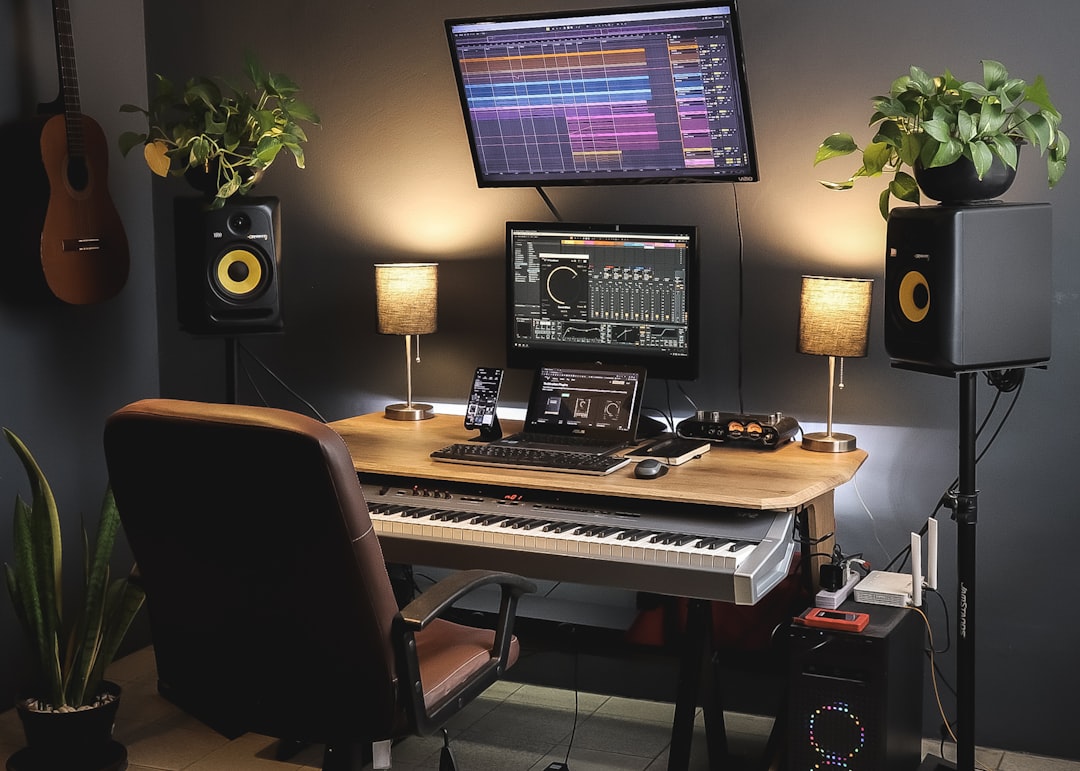
To make money from your music, you combine several income streams rather than chasing one: streaming and download royalties from distribution, sync licensing for film and games, live performance, merch, and direct fan support. No single channel usually pays the bills on its own, so the artists who earn a living stack them and treat the whole thing like a small business.
Violet Recording is reader-supported — we may earn a commission from links on this page, at no extra cost to you.
Key takeaways before you start
- Distribution is the front door. You need your tracks on Spotify, Apple Music and the rest before most income can flow.
- Streaming pays per-stream and it is small — payouts vary by platform and country, so treat it as one layer, not the whole cake.
- Sync licensing, merch and direct fan support often out-earn streaming for independent artists.
- Own your masters and your mailing list. The assets you control are the ones that keep paying.
- Quality matters. Well-mixed, properly mastered tracks get playlisted, licensed and shared far more often than rough uploads.
Get your music distributed and earning streaming royalties
Before you can make money from your music on streaming platforms, your tracks have to be there. A distributor takes your finished, mastered files and delivers them to Spotify, Apple Music, Amazon Music, YouTube Music, Tidal and dozens of stores, then collects the royalties and pays them through to you. The big names independent artists use are DistroKid, TuneCore, CD Baby and Amuse. They differ in how they charge — some take a flat annual fee per release, some take a cut, some offer a free tier with limits — so check the provider’s current pricing before you commit, because the terms change often.
Two things matter more than which logo you pick. First, keep 100% of your rights and royalties wherever possible; a good distributor is a delivery service, not a label taking ownership. Second, upload music that is actually ready. A track that has been properly mastered for streaming sits at the right loudness and translates across earbuds, phone speakers and car systems, which makes it far more likely to get added to editorial and algorithmic playlists — and playlisting is where streaming income quietly compounds. If you are not paying a mastering engineer for every single, an online service like LANDR can master a track quickly and affordably.
One honest caveat: streaming royalties are paid per stream and the rate is small and variable by platform and listener country, so don’t expect one viral playlist add to change your life. Think of streaming as the steady base layer that also feeds every other income stream by growing your audience.
License your tracks for sync — film, TV, ads and games
Sync licensing means placing your music in visual media: a TV show, a YouTuber’s video, an advert, an indie film, a video game or a podcast. It is one of the most overlooked ways independent artists earn, and a single placement can pay meaningfully more than a year of streams — figures vary enormously depending on the usage and the buyer. You get paid a licence fee up front and, for broadcast, potential performance royalties on the back end.
To chase sync, you need clean, instrumental-available, well-produced tracks and clear ownership (you can’t license what you don’t fully control). Music libraries and sync marketplaces connect artists with music supervisors; some are curated, some are open. Instrumental and stem versions widen your chances, because editors often need a version without vocals. If your productions aren’t quite broadcast-clean yet, tightening up your mixing and mastering is the highest-leverage fix you can make.
Sell directly to fans: merch, downloads and physical formats
The money you keep the most of is the money fans hand you directly. Bandcamp built its reputation on artist-friendly direct sales of downloads, vinyl, cassettes and CDs, and it remains a favourite for exactly that reason. Print-on-demand merch — shirts, hoodies, tote bags, enamel pins — lets you sell physical goods without holding stock, and a design fans actually want to wear turns listeners into walking billboards.
Direct sales work because your most dedicated fans want to pay you more than a stream is worth. A limited vinyl run, a signed CD, a name-your-price download or a bundle at a show captures that willingness. The catch is you have to build the relationship first, which is why the mailing list and your social channels are assets, not vanity metrics. A thousand true fans who buy directly will out-earn a million passive streams.
Earn from live shows, teaching and recurring fan support
Playing live still pays — through ticket splits, guarantees, and the merch table, which is often where the real profit of a gig hides. Even at a small scale, house shows, support slots and local festivals build the audience that every other income stream depends on. If performing isn’t your thing, your skills still have value: producers and engineers earn steady income mixing, mastering, producing and teaching other artists. If that appeals, our guide to the best sites to find mixing clients is a good starting point.
Recurring support platforms — Patreon and the like, plus channel memberships and live-stream tips — let your most committed fans pay you monthly in exchange for early tracks, behind-the-scenes content, stems or lessons. Recurring income is the most stabilising money an independent artist can have, because it doesn’t depend on the algorithm noticing you this month. Pair it with YouTube, where ad revenue, memberships and Super Thanks add up once you build a catalogue of watchable content around your music.
Collect every royalty you are owed — including the hidden ones
A lot of money that artists earn is simply never collected, because they don’t know it exists. Beyond the streaming royalties your distributor pays, there are publishing and performance royalties generated whenever your song is played on radio, in venues, on TV or streamed. These are collected by performing rights organisations (PROs) — such as ASCAP, BMI, PRS and their equivalents worldwide — and by mechanical rights bodies. You have to register as a songwriter and register your works to receive them.
The practical move: sign up with the PRO in your country, register every song you write, and consider a publishing administrator to chase the international royalties that slip through the cracks. It is unglamorous admin, but it is money you already earned sitting unclaimed. Combined with a solid release workflow, collecting your full royalties turns a hobby catalogue into an income-producing asset.
Put it together: your realistic path to make money from your music
Here’s the honest order of operations. Finish and master your tracks to a professional standard. Get them distributed everywhere through a reputable distributor. Register with your PRO so no royalty goes uncollected. Build a mailing list and sell directly to fans through Bandcamp and merch. Pitch instrumental-ready versions for sync. Play live where you can, and open a recurring-support channel for your true fans. Each layer is modest alone; stacked together, they become a real income.
The single biggest multiplier across all of it is production quality, because playlists, sync buyers and paying fans all reward music that sounds finished. If your masters are the weak link, a fast, affordable option like LANDR gets every release up to standard so it competes. For more on the release side of the business, browse the rest of our Music Business hub.
Frequently asked questions
How much money can you actually make from your music?
It varies enormously and depends on your catalogue size, audience and how many income streams you stack. Streaming alone pays little per play, but artists who combine distribution, sync licensing, direct sales, live shows and recurring fan support can build a real income. Treat it as a portfolio, not a single lottery ticket.
Do I need a record label to make money from my music?
No. Independent distribution through services like DistroKid, TuneCore, CD Baby or Amuse puts you on every major platform while you keep your rights and royalties. Many artists earn more by staying independent, because they don’t split income with a label. A label mainly helps with funding, marketing muscle and connections — useful, but not required to start earning.
What’s the fastest way to start earning from a track I’ve already made?
Make sure it’s properly mastered, then distribute it everywhere and put it on Bandcamp for direct sales. Register the song with your PRO the same week so performance royalties start accruing. If it’s cinematic or vocal-light, prepare an instrumental version and pitch it for sync. Those steps can be done in days, not months.



