
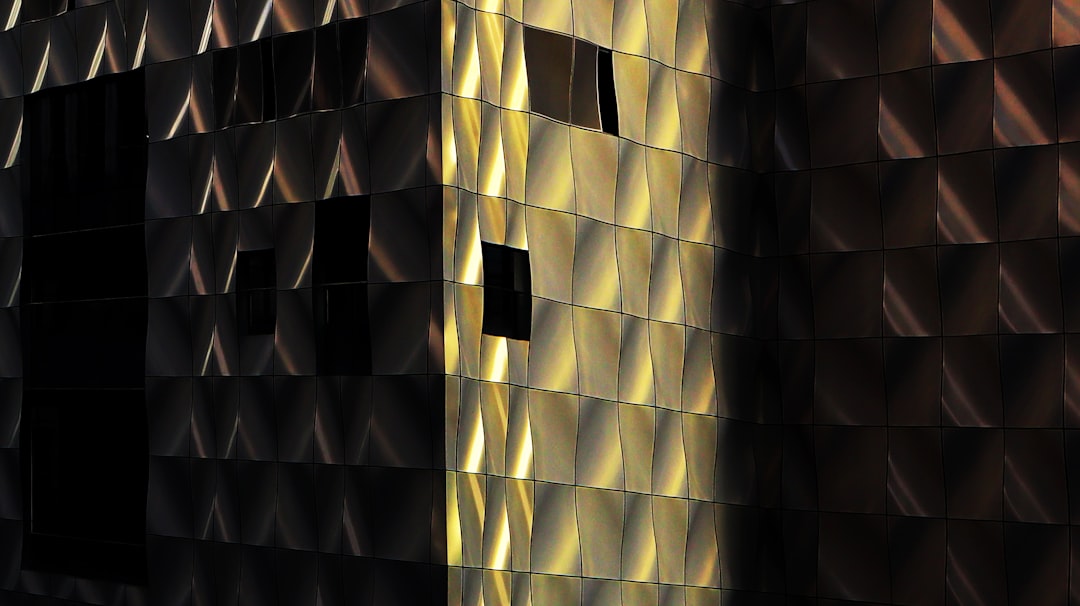
A diffuser is an acoustic device that scatters sound reflections in many directions instead of absorbing them. Where an absorber soaks energy up, a diffuser breaks up a strong, focused reflection into many weaker ones spread across the room. The result is a space that sounds spacious and even without becoming dead. Understanding what a diffuser does — and what it doesn’t — is the key to using one well.
Like all acoustic treatment, diffusers shape how sound behaves inside a room. They are not soundproofing and won’t stop sound leaving.
Diffusion vs Absorption
These are two different tools for two different jobs:
- Absorption removes reflected energy. It shortens reverb and tames problem reflections, but too much makes a room sound lifeless.
- Diffusion keeps the energy in the room but scatters it so no single reflection dominates. It preserves a sense of space and “air” while still fixing focused-reflection problems.
The fuller comparison is in absorption vs diffusion. Most home studios need mostly absorption first; diffusion becomes useful once the basics are handled.
How a Diffuser Works
A diffuser has a shaped, uneven surface — wells of varying depth, curved faces or pyramids — that reflects different frequencies at slightly different times and angles. This scattering prevents a strong specular reflection from bouncing straight back at you, which is what causes problems like flutter echo and comb filtering. Common engineered types include quadratic-residue diffusers (the deep “well” panels you’ll have seen on studio rear walls) and simpler curved or skyline designs.
Because the scattering depends on physical depth, diffusers are only effective above a certain frequency. A diffuser can’t usefully scatter deep bass — that still needs the absorption and corner trapping described in how to treat room corners.
There is also a difference between scattering and pure diffusion that is worth knowing. A simple curved or angled surface mainly redirects a reflection — it sends it somewhere other than back at your ears, but the reflection stays fairly intact. A true engineered diffuser, such as a well-type panel, splits the reflection into many time-smeared copies so the energy arrives gradually rather than as one sharp echo. Both are useful; the redirecting kind is simpler and cheaper, while the engineered kind gives a more convincing sense of even, enveloping space. For most home rooms either is a step up from a bare, flat wall.
When You Actually Need a Diffuser
Diffusion shines in specific places:
- The rear wall of a mixing room, behind your listening position, to break up the reflection without deadening the room. This is the classic use.
- Larger or live rooms where you want to keep some natural ambience instead of absorbing everything.
- Replacing some absorption when a room is at risk of becoming over-damped and dull.
In a small bedroom studio, diffusion is usually a later step. You generally won’t have enough distance for a diffuser to work properly directly beside the mix position, and absorption solves more of the early problems first. Sort the bass and first reflections — per where to place acoustic panels — before adding diffusion.
How to Choose and Place a Diffuser
Once the basics are in place and you decide a diffuser is worth adding, a few practical points keep it from being a wasted purchase:
- Mind the distance. A diffuser needs space to do its job — the scattered reflections have to spread before they reach you. As a rough guide, allow at least a metre or so between the panel and your head. Pressed up close beside the desk it can do more harm than good, so the rear wall is usually a better home than a side wall in a tight room.
- Match the depth to the problem. A diffuser’s lowest effective frequency is set by how deep its wells or curves are. Shallow, decorative panels only scatter the upper mids and highs; deeper panels reach further down. Decide which range you actually need scattered before buying.
- Balance it with absorption. Diffusion and absorption work together. A common approach is absorption at the early reflection points and on the front wall, with diffusion on the rear wall to keep the room from going dead. Aim for a blend rather than covering every surface with one or the other.
- Don’t overdo coverage. A single well-placed diffuser, or a small array on the rear wall, is usually enough in a modest room. Tiling every wall with diffusers is unnecessary and can leave a room sounding oddly diffuse and hard to localise.
Common Mistakes
A handful of misunderstandings come up again and again:
- Expecting a diffuser to fix bass. It can’t. Low-end problems are about room modes and need traps and absorption, not scattering.
- Buying diffusion before absorption. In an untreated room, flutter echo and harsh first reflections are the bigger issues, and absorption tackles those more directly.
- Placing it too close. A diffuser with no room to spread its reflections behaves almost like a flat wall.
- Treating bumpy foam as diffusion. Egg-crate or pyramid foam is an absorber with a textured face, not a diffuser. It does not scatter the way an engineered panel does.
Diffusers vs Bass Traps vs Panels
These often get confused, so to be clear:
- Bass traps absorb low frequencies in corners. If you want to build a bass trap yourself, it is one of the most worthwhile DIY treatments.
- Broadband panels absorb mids and highs at reflection points.
- Diffusers scatter mid and high reflections without removing them.
They complement each other; a good room often uses all three. Diffusers do nothing for bass and shouldn’t be your first purchase — that priority belongs to the bass and reflection control in acoustic treatment for home studios.
DIY and Real Products
Commercial diffusers come from brands like GIK Acoustics and others, and a real engineered diffuser’s geometry is carefully calculated, so a random bumpy surface won’t behave the same way. A bookshelf packed with irregularly sized books acts as a crude, broadband-ish scatterer and is a perfectly reasonable free starting point in a home room. If you build your own, follow a proven well-depth design rather than guessing, and don’t expect a shallow one to scatter low frequencies.
Frequently Asked Questions
What is a diffuser used for in a studio?
To scatter reflections so a room sounds spacious and even rather than dead, most often on the rear wall behind the mix position or in larger live rooms where you want to keep some natural ambience.
Is a diffuser better than an absorber?
Neither is better — they do different jobs. Absorbers remove energy and tame reverb; diffusers scatter energy while preserving liveliness. Most home studios need absorption first and diffusion later.
Do diffusers help with bass?
No. Diffusers only scatter mid and high frequencies because their effect depends on physical depth. Low-frequency control still requires absorption and corner bass traps.
Can I make my own diffuser?
Yes, within reason. A bookshelf of mixed-size books works as a basic scatterer, and you can build a skyline or well-type panel if you follow a proper, calculated design. The geometry matters, so copy a proven plan rather than improvising a random uneven surface.