
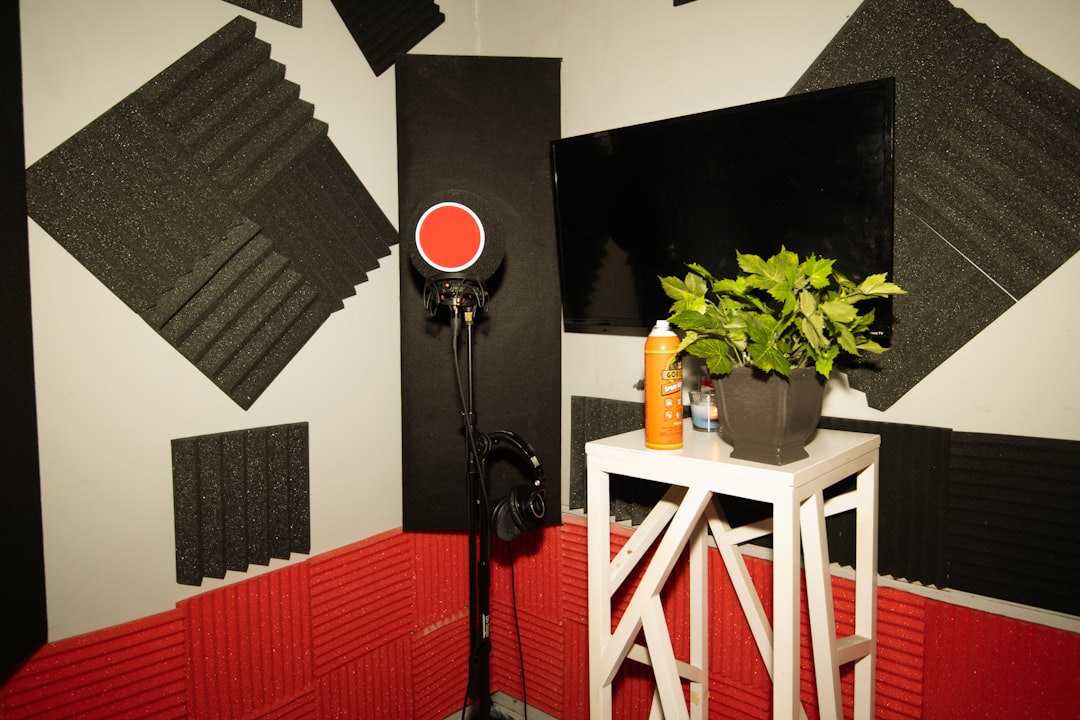
Flutter echo is a rapid, repeating series of reflections that bounces back and forth between two parallel hard surfaces, creating a distinctive metallic, buzzy or ringing sound. When you ask what is flutter echo, the easiest test is to clap your hands in an empty room with bare walls — if you hear a fast “zinging” or “boingy” ring after the clap, that’s flutter echo. It’s one of the most common and most audible acoustic problems in untreated rooms.
🔧 Free tool: try our Delay Time Calculator.
The good news: of all room problems, flutter echo is one of the easiest and cheapest to fix.
What Is Flutter Echo, and Why Does It Happen?
When sound is produced between two parallel, reflective surfaces — two facing walls, or a hard floor and ceiling — it reflects off one, travels across, reflects off the other, and repeats. Each bounce loses a little energy, so you hear a quick succession of decaying reflections in regular time intervals. The brain perceives that regular pattern as a buzzy ring rather than separate echoes. It’s a specific, audible example of how sound behaves in a room.
The pitch of the ring is tied to the distance between the two surfaces. Closer walls produce a faster, higher buzz; walls further apart give a slower, lower flutter. That is because the time between each reflection sets a repetition rate, and a regular repetition rate is heard as a tone. This is why a small, bare bathroom or hallway often has a sharper, more obvious flutter than a larger room: the spacing is tight and the surfaces are usually hard tile or plaster with nothing to soak up the energy.
Flutter Echo vs Reverberation
Flutter echo is not the same as general reverberation. Reverberation is a dense, random wash of reflections from all directions that decays smoothly. Flutter echo is an ordered, repeating pattern between just two surfaces, which is why it has that characteristic metallic colour. A room can have a short overall RT60 and still have an obvious flutter echo if it has bare parallel walls.
The practical takeaway is that the two problems need different thinking. Reverberation is about the total amount and decay of reflected energy across the whole room, so you tackle it by adding the right quantity of absorption spread around the space. Flutter echo is about one specific path between one specific pair of surfaces, so you can often kill it with a single, well-placed panel without changing the overall liveliness of the room at all.
How to Test for Flutter Echo
You don’t need equipment:
- Stand between two bare parallel surfaces and give a single sharp hand clap.
- Listen to the tail. A clean room gives a quick, neutral decay. Flutter echo adds a fast ringing or buzzing “zip” after the clap.
- Move to test different pairs of surfaces — side walls, and floor-to-ceiling.
If you want to see it, a calibrated mic such as the miniDSP UMIK-1 with Room EQ Wizard (REW) will show the regular repeating reflections in the room’s impulse response.
A quick trick to confirm which pair of surfaces is responsible: hold a cushion, folded towel or thick coat against one of the suspected walls and clap again. If the ring vanishes, you have found the offending pair and you know exactly where a panel needs to go. Repeat the clap test in a few spots around the room, because a single space can have more than one flutter path — one between the side walls and another between floor and ceiling.
How to Fix Flutter Echo
Flutter echo only needs one of the two parallel surfaces to be broken up — you don’t have to treat both. Options:
- Absorption. A panel of mineral wool or rigid fibreglass (Rockwool, Owens Corning 703) wrapped in fabric, placed on one of the two facing walls, soaks up the reflection and kills the flutter. Even soft furnishings like a bookshelf, curtains or a thick rug between hard floor and ceiling help.
- Diffusion. A diffuser scatters the reflection in many directions instead of sending it straight back, breaking the repeating pattern while keeping the room lively.
- Break the parallel. Angling a surface or adding furniture and shelving stops the back-and-forth bounce.
Choosing between soaking the reflection up and scattering it is its own decision, and our guide on absorption vs diffusion explains when each makes sense. For where to position panels and how much you need, see our acoustic treatment for home studios guide and the budget-friendly DIY acoustic treatment approach. Treating your first reflection points for monitoring often removes flutter as a bonus.
Common Mistakes When Treating Flutter Echo
The first mistake is using material that is too thin. Thin foam or a light fabric wall hanging may dampen the very top of the ring but leaves the body of the flutter intact, so the room still sounds buzzy. A proper absorptive panel a few centimetres thick handles the mid frequencies where flutter is most audible.
The second mistake is treating the wrong surfaces. Because flutter is a path between two specific facing walls, putting all your panels on a non-parallel surface does nothing for it. Use the clap-and-cushion test first so you spend your material on the surfaces that actually matter.
The third is assuming more is always better. Covering every wall in absorption will stop flutter, but it can also leave a room sounding dead and lifeless to play or sing in. Breaking up just one of each parallel pair — or mixing absorption with a diffuser — usually gives a more natural result.
Don’t Confuse It With Soundproofing
Fixing flutter echo improves how the room sounds — it won’t stop sound escaping to other rooms. That’s a separate job covered in soundproofing vs acoustic treatment. And ignore the old myth that egg cartons fix flutter; their shape does little, while a real absorptive panel or a diffuser solves it properly.
Frequently Asked Questions
Is flutter echo bad for recording?
Yes. If a microphone picks up flutter echo, that metallic ring gets baked into your recording and is very hard to remove later. Treating it before you record gives cleaner, more usable tracks.
Do I need to treat both walls to stop flutter echo?
No. Breaking up just one of the two parallel surfaces with absorption or diffusion stops the back-and-forth reflection. Treating both helps the room overall but isn’t required to kill the flutter.
Will a rug or bookshelf get rid of flutter echo?
They can help significantly, especially for floor-to-ceiling flutter or as a casual fix. A dedicated absorptive panel or diffuser on one wall is more reliable, but soft furnishings and irregular surfaces genuinely reduce the effect.
Why does flutter echo sound metallic or like a pitch?
The reflections arrive at a steady, regular interval set by the distance between the two surfaces. Your ear hears that repetition rate as a tone, which is why the ring has a definite metallic colour rather than sounding like a smooth, random decay.