Yes — you can absolutely learn to DJ at home, and most DJs today do exactly that. A laptop, an entry-level controller and a pair of headphones are enough to learn every core skill, from beatmatching to clean transitions, without ever setting foot in a club. What you can’t fully replicate at home is reading a live crowd, but everything else is well within reach.
Here’s what you need and a realistic plan to follow.
Try the free White Noise Generator →
What you can learn at home
Practically all the technical craft of DJing is learnable in your bedroom:
- Beatmatching — matching tempo and aligning beats by ear.
- EQ mixing — swapping basslines cleanly so tracks don’t clash. It’s worth learning how to EQ mix as a DJ early, since it underpins every clean transition.
- Phrasing — mixing in and out on the natural 8- and 16-bar sections.
- Hot cues, loops and effects — the creative tools on your controller.
- Track selection and set planning — building flow and energy.
What’s harder to practise alone
The main thing a bedroom can’t teach is live crowd-reading — sensing energy in a room and reacting to it. You can prepare by studying how to read a crowd as a DJ, but the real skill comes from playing out. The fix is to start small once your mixing is solid: friends’ parties, open-deck nights, then paid DJ gigs.
The gear you need
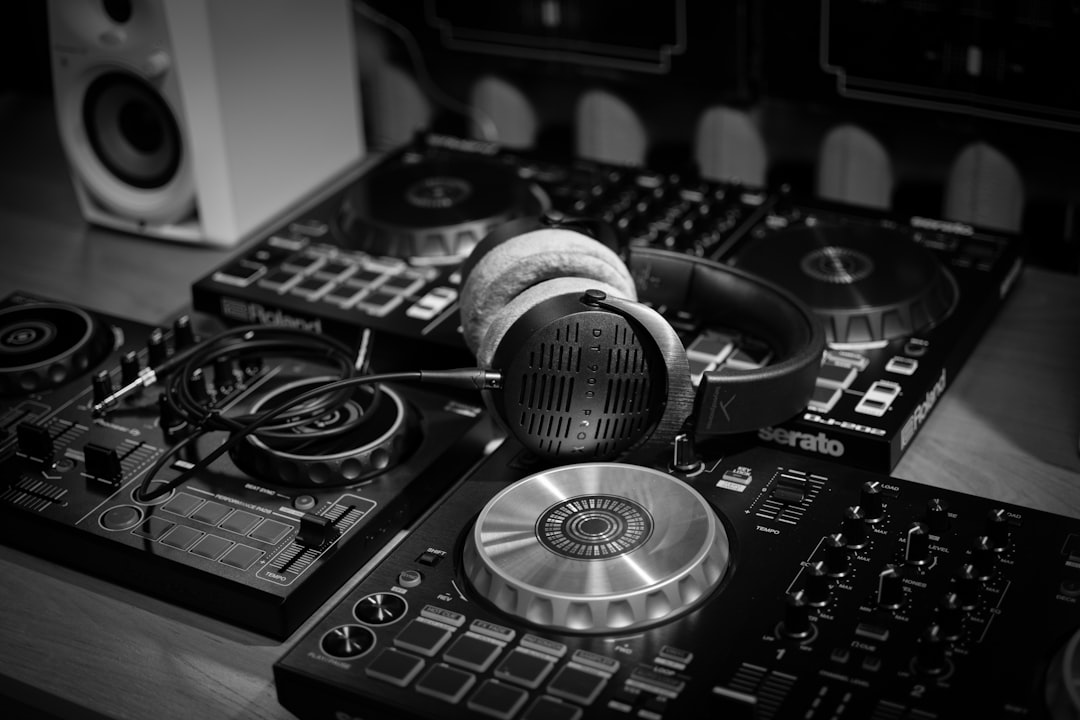
A modest home setup is all it takes: an entry-level controller (Pioneer DJ DDJ-FLX4, a Hercules or Numark model, or the Roland DJ-202), DJ software (Serato DJ Pro, rekordbox, or free Mixxx to start), and closed-back headphones like the Sennheiser HD 25. See a DJ setup for beginners and how much it costs to start DJing.
How to set up your space for practice
You don’t need a treated room or a big rig to make real progress, but a few small choices make practice far more comfortable and effective. Put the controller at a height where your forearms sit roughly level — a desk or a sturdy table is fine, and standing to mix is closer to how you’ll play out. Keep the laptop screen at eye level so you’re not hunched over, and give yourself enough room either side of the jog wheels to reach the EQs and faders without knocking anything.
Monitoring matters more than volume. A pair of small powered speakers or studio monitors will tell you far more about how your bass swaps and transitions sound than laptop speakers ever can, because laptop drivers barely reproduce low end at all. If you’re shopping for a set, our pick of the best DJ speakers is a good place to start. If speakers aren’t an option for noise reasons, closed-back headphones will carry you a long way — just make a point of checking your finished mixes on speakers now and then so you can hear how the low frequencies actually behave in a room.
A realistic practice plan
Short, focused sessions beat occasional marathons. A workable first month:
- Week 1 — gear and library. Set up your software, import tracks you love, learn to load decks and use the cue and headphone controls.
- Week 2 — beatmatching. Practise matching tempo and aligning beats by ear on similar-tempo tracks. Read what is beatmatching.
- Week 3 — EQ and faders. Practise clean bass swaps and smooth fader moves so transitions don’t clash.
- Week 4 — full transitions. String two tracks together on phrase boundaries and record the result.
After that first month, keep the same rhythm but raise the bar each week: tighten your beatmatching by ear before reaching for sync, add a third track to your transitions, and start grouping tunes by key and energy so your sets flow rather than lurch. Twenty to thirty focused minutes most days will take you further than one long weekend session, because skill here is built on muscle memory and repetition.
Wondering when all of this adds up to a confident set? Our realistic timeline on how long it takes to learn to DJ breaks the journey down skill by skill.
Record and review yourself
The single most useful home habit is recording your mixes and listening back critically. You’ll hear timing drift, clashing basslines and abrupt cuts far more clearly as a listener than as a player. Learn the workflow in how to record a DJ mix, and watch out for the usual pitfalls in common DJ mistakes to avoid.
Common mistakes when learning at home
A handful of habits hold most bedroom DJs back, and all of them are easy to avoid once you know to look for them:
- Leaning on the sync button. Sync is a useful tool, but if you never train your ear you’ll be lost the moment you play on gear that drifts or on tracks the software reads wrongly. Learn to beatmatch by ear first, then use sync to save time.
- Mixing at the wrong points. Bringing a new track in mid-phrase is the fastest way to make a mix sound clumsy. Count your bars and blend on the 8- or 16-bar boundaries.
- Ignoring the bass. Two basslines playing at once turns to mud instantly. Pull the incoming track’s bass down before you bring it up, and swap the low end across cleanly.
- Hoarding tracks you don’t know. A smaller library you know inside out beats a huge one you’ve never really listened to. Spend time getting familiar with how each tune is structured.
- Never finishing anything. Recording a full mix from start to end teaches you set-building in a way that endless noodling never will.
Keep yourself motivated
Mix music you genuinely enjoy, set small weekly goals, and share finished mixes to get feedback. Progress in DJing is steady and rewarding when you focus on one skill at a time rather than trying to do everything at once.
Frequently asked questions
Do I need lessons to learn to DJ at home?
No. Plenty of self-taught DJs learn entirely from practice and free resources. Lessons can speed things up if you prefer structure, but they aren’t required.
How loud do I need to play to practise?
Not loud at all. You can practise at modest volume or even mostly in headphones. Just check your mix occasionally on speakers so you can hear how the bass frequencies interact.
How long does it take to get good at DJing at home?
Most people can hold a clean, beatmatched mix together within a few weeks of regular practice, and sound genuinely confident within a few months. The technical basics come quickly; taste, track selection and smooth set-building keep developing for as long as you DJ.
Will home practice prepare me for real gigs?
It prepares you for the technical side completely. For the live side — crowd energy and unfamiliar gear — start with low-pressure events once your mixing is reliable, and you’ll bridge the gap quickly.