
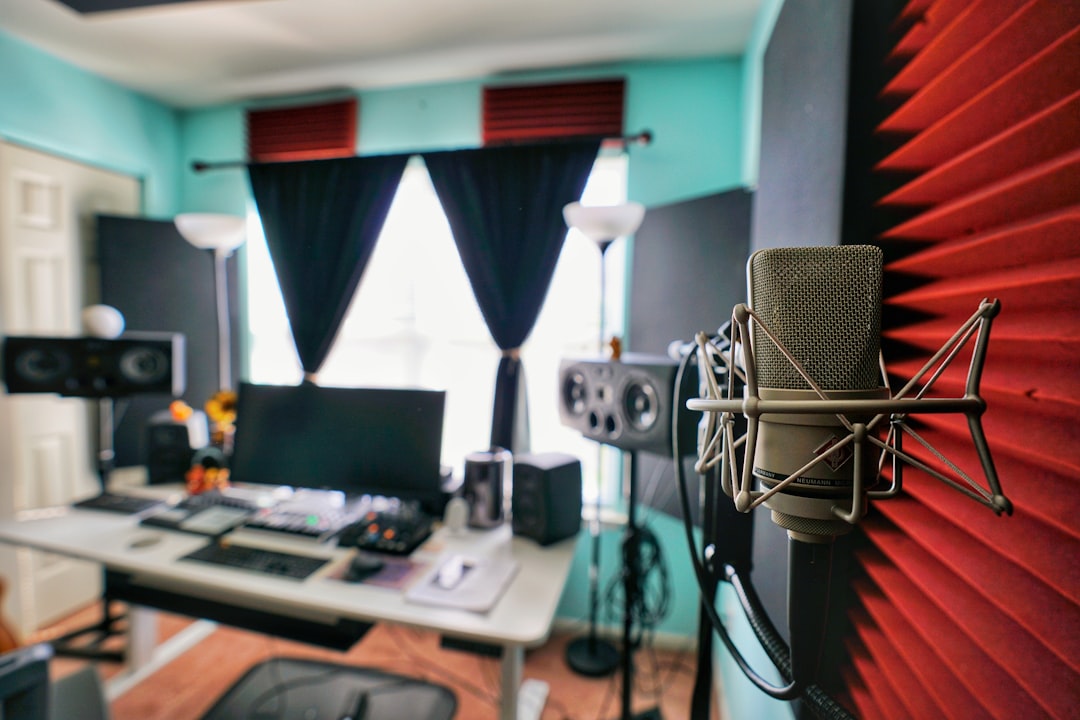
DIY acoustic treatment is the cheapest way to dramatically improve how your studio sounds. By building panels from rigid mineral wool or fibreglass and a simple wooden frame, you get better absorption than most ready-made panels for a fraction of the price. This guide covers what to build, how to build it, and where to put it.
In a hurry? Jump to our studio accessories — or read on for the full breakdown.
Everything below is achievable with basic tools and a free afternoon. The principles are the same as commercial treatment — you’re just supplying the labour.
What DIY acoustic treatment is for
Treatment absorbs reflections inside your room so recordings sound cleaner and mixes translate. It does not block sound from leaving the room — that’s soundproofing, which is a different job covered in how to soundproof a room and soundproofing vs acoustic treatment. If you want the full theory before building, read acoustic treatment for home studios.
The symptoms of an untreated room are easy to recognise once you know them: a hand-clap that rings or flutters, vocals that sound boxy or hollow, and a bass response that seems to lurch from boomy to thin as you move your head a few inches. None of that is your gear’s fault. It’s the room adding its own colour on top of whatever you record or play back, and treatment is how you take that colour back out.
What to build, in priority order
- Corner bass traps — low-frequency build-up in corners is the biggest problem in small rooms, so start here for the most impact.
- First-reflection absorbers — panels on the side walls (and ceiling) where monitor sound bounces to your ears.
- Front and rear wall panels — added as budget and time allow.
Work down that list in order rather than spreading a few thin panels evenly around the room. A handful of pieces placed where the problems actually are will beat a roomful of panels scattered by guesswork every time.
Materials you’ll need
- Rigid mineral wool or fibreglass insulation boards — the absorptive core. Higher-density boards designed for acoustic use work best. This is the single most important material.
- Breathable fabric — to wrap the panels. It must be acoustically transparent (you should be able to blow air through it easily). Cheap, loose-weave upholstery fabric works.
- Timber — basic lengths to build a simple frame.
- Fixings — screws, staples for the fabric, and mounting hardware or picture-hanging cleats for the wall.
Always handle mineral wool with gloves, long sleeves and a dust mask — the fibres irritate skin and lungs.
Choosing the right density
The board’s density matters more than its brand. Very low-density loft insulation is too floppy and lets sound pass straight through, while extremely dense board starts to reflect rather than absorb. For broadband studio panels a medium-rigid acoustic board sits in the sweet spot: stiff enough to hold its shape in a frame, open enough to soak up energy across the mids and highs. If you can only find one product, a rigid acoustic mineral wool board is the safe, all-round choice and is what most DIY builds use.
Thickness is the other lever, and it’s the one that decides how low your panel can reach. Thicker absorbers, and absorbers held off the wall on an air gap, work further down into the bass. That is why a 2-inch panel pressed flat against the wall tames harshness but does little for boom, whereas a 4-inch panel with a gap behind it does real work in the lower mids.
How to build an absorption panel
- Build a frame the same size as your insulation board (or slightly larger) from the timber. A simple rectangle is fine.
- Set the insulation inside the frame. If you want better low-frequency absorption, build the frame deeper than the board so there’s an air gap behind the insulation — this extends the panel’s reach downward at no extra material cost.
- Wrap the fabric tightly over the front and around the frame, then staple it to the back. Keep it taut and wrinkle-free.
- Mount it with cleats or brackets at your reflection points, ideally with a small air gap off the wall.
That’s it. A 2-to-4-inch panel built this way absorbs across a wide range and outperforms thin foam comfortably. If you’d rather buy than build, our roundup of the best acoustic panels for home studios shows what good ready-made versions look like.
How to build a corner bass trap
The simplest effective bass trap is a thick block of mineral wool wrapped in fabric and stood or mounted across a corner, floor to ceiling, with the gap behind the wool left as an air cavity. Straddling the corner this way lets the trap absorb the long low-frequency wavelengths that pile up there. Floor-to-ceiling corner traps in the front two corners are the highest-impact DIY treatment most rooms can get.
Don’t be shy with depth here. Bass energy is the hardest thing in the room to absorb, so the more material you can straddle across a corner and the larger the air cavity you leave behind it, the better the trap performs. Leaving the back of the trap open to the corner cavity, rather than boxing it tight against the walls, is what lets it catch those long wavelengths. If building isn’t for you, see the best bass traps for home studios for solid off-the-shelf options.
Where to place your panels
- First reflection points: use the mirror trick — slide a mirror along the side wall while seated at your mix position; wherever you can see a monitor, place a panel. Repeat for the ceiling.
- Corners: bass traps, prioritising the front corners.
- Front wall: behind your monitors.
- Rear wall: absorption to tame the reflection coming back at you.
Set your monitors up correctly relative to the treatment — see how to position studio monitors.
Common mistakes to avoid
- Using egg-crate foam as your core. Thin acoustic foam and packing foam barely touch the mid and low frequencies where rooms actually misbehave. They tame the very top end and little else, which is why a foamed-out room still sounds boomy — here’s what acoustic foam is and isn’t good for.
- Mounting everything flat against the wall. A small air gap behind a panel meaningfully improves its low-frequency absorption for free. Skipping it throws away easy performance.
- Treating only the walls you can see from your chair. Corners and the ceiling are doing as much damage as the side walls, often more in the bass. Ignoring them leaves the worst problems untouched.
- Wrapping in the wrong fabric. Tightly woven or rubber-backed fabric reflects sound off the front of the panel instead of letting it through. If you can’t breathe through it easily, the panel underneath is wasted.
- Building one giant panel. Several smaller panels spread across the key points outperform a single large slab clustered in one spot, because the problems are spread around the room too.
Even cheaper, no-build options
If you can’t build, these still help:
- Heavy moving blankets hung at first reflection points and behind you.
- A thick rug and underlay on the floor between you and the monitors.
- A loaded bookshelf on the rear wall, which scatters reflections (acts as rough diffusion).
- Heavy curtains over hard windows.
These won’t match purpose-built panels, especially in the low end, but they’re a genuine improvement over a bare, reflective room and cost almost nothing.
Don’t over-treat
The goal is a controlled, even-sounding room, not a dead one. If you cover every surface with absorption, the room loses its life and the highs get dull. Treat the key points, listen, and stop when the flutter echo is gone and your mixes translate better. For where treatment fits in the wider build, see the full home studio setup hub.
Frequently asked questions
Is DIY acoustic treatment as good as store-bought panels?
Often better for the money. Using rigid mineral wool and building thicker panels with an air gap can outperform many commercial panels at a much lower cost. You’re mainly trading your time and a tidy finish for the savings.
What material should I use for DIY panels?
Rigid mineral wool or acoustic fibreglass boards wrapped in a breathable fabric. Avoid thin egg-crate foam or normal soft furnishings as your core — they don’t absorb the mid and low frequencies where rooms struggle most.
Where should I start if I only have time to build one or two pieces?
Build corner bass traps for the front two corners first. Low-frequency build-up is usually the biggest issue in small rooms, so corner traps typically deliver the most noticeable improvement to how your mixes translate.
How much treatment does a small room actually need?
Less than people fear, but more than a couple of panels. Aim to cover your first reflection points, both front corners and some of the rear wall, then judge by ear. When a hand-clap no longer rings and your mixes start translating to other systems, you’ve done enough — adding more past that point mostly just deadens the room.
Should I treat the ceiling as well as the walls?
Yes, the ceiling above and slightly in front of your mix position is a first reflection point just like the side walls, and it is easy to overlook because you can’t see it from your chair. A single panel mounted there as a “cloud” is one of the higher-value pieces in a small room.



