
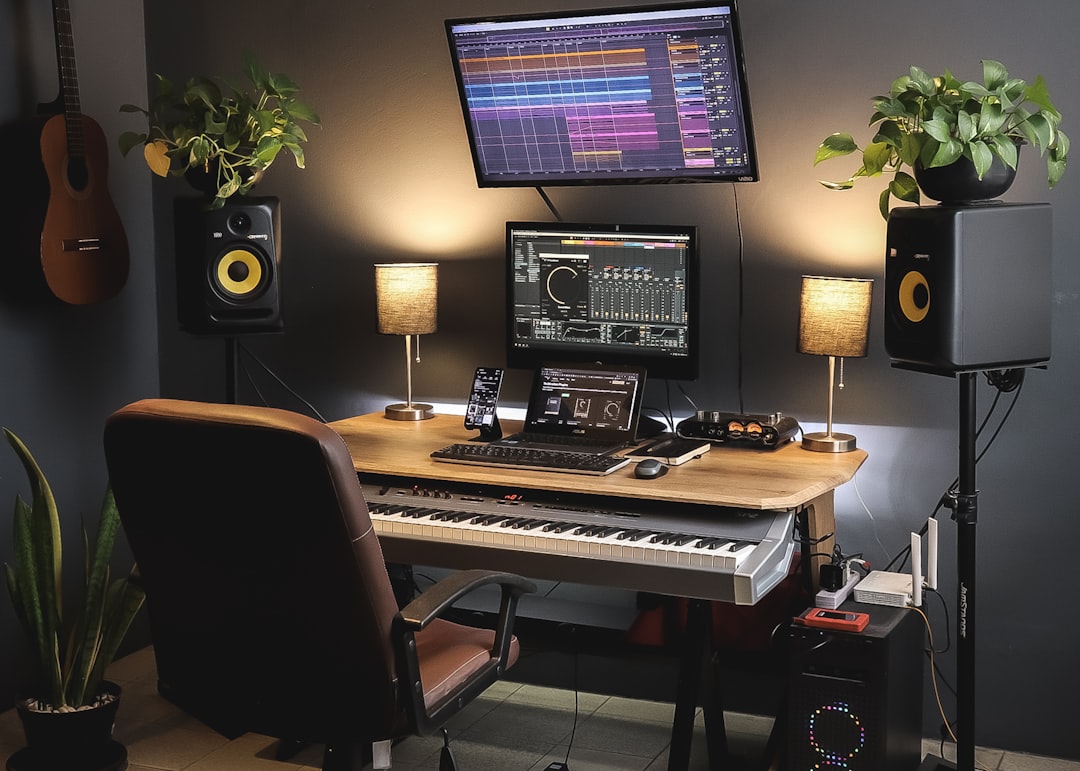
The honest answer to how much selling beats can earn you is: anywhere from nothing to a full-time living, and the gap between those two outcomes is almost never about how good the beats are. Most producers who sell online make a modest side income — think coffee money to a few hundred a month — while a small, disciplined minority turn it into thousands. This guide breaks down what actually moves the numbers, so you can set realistic targets instead of chasing screenshots.
Violet Recording is reader-supported — we may earn a commission from links on this page, at no extra cost to you.
The short version: what most beat sellers actually earn
Here is the TL;DR before we get into detail:
- Beginners (0–6 months): Usually $0–$50 a month. You’re building a catalogue and learning the platforms. Most sales are cheap non-exclusive leases.
- Consistent hobbyists: Roughly $50–$500 a month once you have a steady catalogue and some marketing habit.
- Serious part-timers: $500–$3,000 a month is achievable with a large catalogue, a real audience, and repeat buyers.
- Full-time producers: A few thousand and up, but this almost always means multiple income streams — leases, exclusives, sound kits, mixing services and placements — not beats alone.
These are ranges, not promises. Income from selling beats varies enormously by genre, marketing effort and luck, so treat any single figure with suspicion — especially the ones in YouTube thumbnails.
How much selling beats really pays per sale
To understand the totals, you have to understand the two things you’re actually selling. Producers rarely sell “a beat” — they sell a licence to use it, and there are two broad kinds.
Non-exclusive leases are the bread and butter. You sell the same beat to many artists, each paying a smaller fee for limited usage rights (a capped number of streams, sales or video views). Because you can sell the same instrumental dozens or hundreds of times, low prices add up. Lease pricing varies a lot between producers and platforms, so check current market rates rather than copying an old figure — but leases are generally the cheapest tier and the highest volume.
Exclusive licences mean you sell the beat once, hand over broader rights, and typically stop selling it afterward. A single exclusive can be worth many times a lease, but the trade-off is obvious: one sale, then that product is gone. Exclusives are where a lot of the real money sits for producers with a reputation, because a serious artist who wants a beat to themselves will pay for that certainty.
The math that matters is simple. Your monthly income is roughly catalogue size × how easily each beat is found × conversion rate × price. Weak on any one of those and the total stays small no matter how strong the other three are.
The levers that decide your income
If two producers make equally good beats and one earns ten times more, the difference is almost always in these levers.
Catalogue size and consistency
Selling beats is a numbers game before it’s an art game. A store with 15 beats and a store with 300 beats are not in the same business. More beats means more search entries, more landing pages, more chances to match what a specific artist is typing into a search bar today. Producers who earn steadily almost always upload consistently — often several beats a week — for months or years.
Discoverability and traffic
A beat nobody hears cannot sell. Most sales come from either a marketplace’s internal search or from traffic you drive yourself (YouTube type-beat videos, Instagram, TikTok, an email list). Tagging beats accurately — genre, mood, BPM, and “type beat” artist references — is what makes them findable. The producers who complain that “nobody buys beats anymore” are usually invisible, not untalented.
Reputation and repeat buyers
The most profitable customer is one who has already bought from you. A rapper who liked your beat and delivered a finished song will come back. Fast communication, clean files, and clear licensing build the trust that turns a one-off lease into a long relationship — and eventually an exclusive sale or custom work at a much higher rate.
Presentation and product quality
This is where your studio skills finally matter for the bottom line. A beat that’s mixed cleanly, loud enough to compete, and delivered with usable stems sounds professional in a crowded market. If your mixdowns are muddy or quiet, buyers scroll past within seconds. Sharpening your EQ and compression fundamentals and getting your loudness right for streaming does more for conversions than another plugin ever will.
Where you sell changes what you keep
The platform you use shapes both your reach and your take-home pay. There are two broad routes, and most serious producers eventually use both.
Beat marketplaces put you in front of a built-in audience of artists actively searching for instrumentals. The trade-off is that you’re one of thousands of producers, you may pay a subscription or a per-sale cut, and you’re renting the audience rather than owning it. Check each platform’s current pricing and fee structure before committing, because the terms change.
Your own store — a beat-store platform connected to your own domain — means you keep more of each sale and own the customer relationship, but you have to bring the traffic yourself. This is the long game: it’s slower to start but compounds, because every YouTube video and social post sends buyers to a store you control rather than to a marketplace that also shows them a hundred competitors.
A practical path is to start on a marketplace for discovery while building your own store and audience in parallel, then gradually shift your best customers to the store where your margins are healthier.
The income streams that stack on top of beats
Almost every producer earning real money has stopped relying on beat sales alone. Selling beats is the front door; these are the rooms behind it.
- Sound kits and sample packs: Drum kits, loop packs, MIDI packs and presets. You make them once and sell them repeatedly at near-zero marginal cost — often a bigger earner than the beats themselves.
- Mixing and mastering services: Artists who buy your beat frequently need the finished record mixed. If you can deliver a polished master — or route it through a service — that’s a natural upsell. Our guides to the best online mastering services and AI vs human mastering are a good starting point.
- Exclusive and custom work: Bespoke beats for established artists command the highest fees.
- Placements and royalties: The lottery ticket — if a beat lands with an artist who blows up, publishing and master royalties can dwarf every lease you ever sold. Rare, but real, and framed honestly as a long-shot rather than a plan.
Getting paid: distribution and delivering finished tracks
Once a beat becomes a released song, two things decide whether that success loops back to you: the quality of the final master and getting it onto streaming platforms cleanly. Many producers now offer a “beat plus mix and master” package to stand out, and a service like LANDR can handle both the mastering and the distribution side without you having to build that pipeline from scratch.
If you release your own instrumental projects — type-beat compilations, lo-fi loops, or ambient tracks do surprisingly well on streaming — you’ll need a distributor to get them onto Spotify and Apple Music. Services like DistroKid, TuneCore, CD Baby and LANDR all do this, each with different fee models, so check the provider’s current pricing to see which suits your release schedule. The right mastering approach for streaming matters here too, because a weak master undercuts everything else.
A realistic first-year expectation
If you’re starting today, here’s an honest arc. Months one to three: expect near-zero income while you build a catalogue and learn to tag and market. Months four to six: your first trickle of leases as your store gains a few beats that rank in search. Months seven to twelve: if you’ve uploaded consistently and put out YouTube or social content, a few hundred dollars a month is a reasonable target, with the occasional exclusive spiking a good month.
The producers who quit at month three because they “only made $12” are the norm, not the exception — and that’s exactly why the ones who keep going eventually stand out. Selling beats rewards patience and volume far more than raw talent. For more on turning studio skills into income, browse the rest of our music business guides.
Frequently asked questions
Can you make a living just selling beats?
A small number of producers do, but nearly all of them combine beat sales with sound kits, mixing services, exclusives and custom work. Relying on lease sales alone to pay every bill is possible but rare; treat multiple income streams as the realistic route to full-time.
How many beats do I need before I make consistent money?
There’s no magic number, but most producers don’t see steady sales until they have a sizeable, well-tagged catalogue — often well over a hundred beats — combined with a traffic source. Consistency of uploading matters more than any single total, because each beat is another entry point for search.
Is it better to sell leases or exclusives?
Both, at different stages. Leases give you volume and passive income from selling the same beat many times; exclusives give you larger one-off payments from serious buyers. Most producers price a tiered menu so a beat can earn small lease sales for months and then a big exclusive when the right artist appears.



