
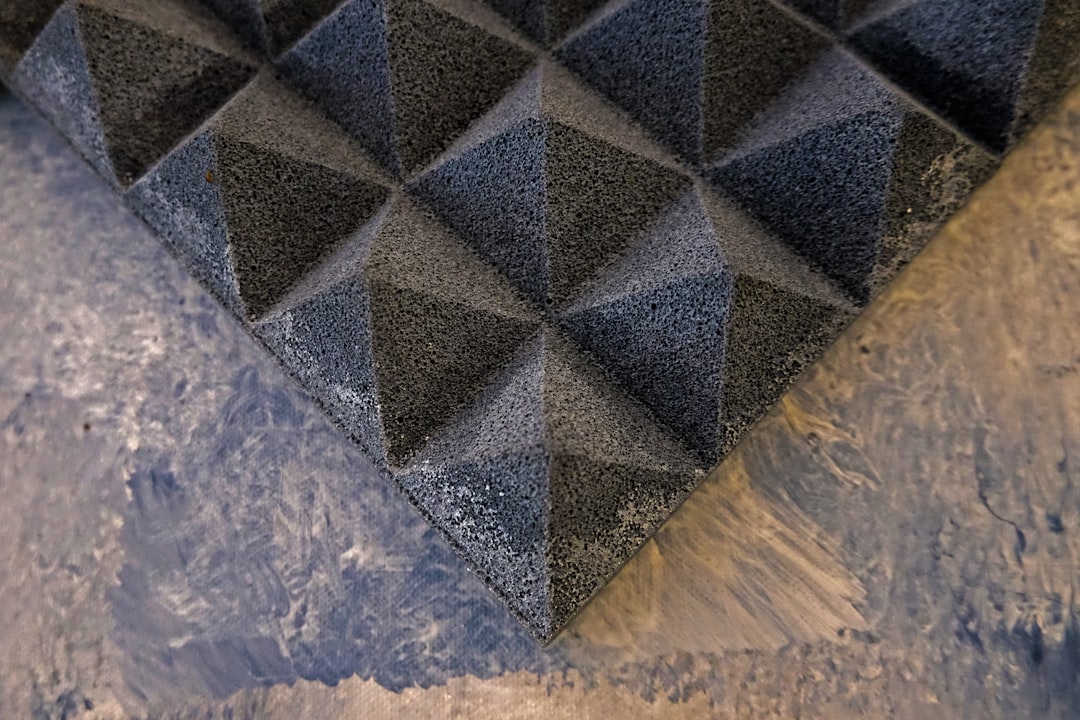
To reduce noise from neighbors you first have to find how the sound is reaching you, then block that path with mass, decoupling and sealing. This is a soundproofing (isolation) problem, not an acoustic-treatment problem — foam and panels will not help, because they manage reflections inside your room rather than sound coming through the structure.
Quick answer: identify whether the noise is airborne (voices, music) or structural (footsteps, bass through the building), seal every air gap, add mass to the shared surface, and decouple where you can.
Airborne vs structure-borne noise
Two very different problems, and the fix differs:
- Airborne — speech, TV, music in the air. Fought with mass and sealing on the shared wall, ceiling or floor.
- Structure-borne (impact) — footsteps, doors slamming, bass energy travelling through the building frame. This flanks around barriers and is much harder; it needs decoupling and breaking the rigid connection between structures.
Low-frequency noise (a neighbour’s sub-bass) is the hardest of all, because long wavelengths pass through mass easily and travel through the structure. Be realistic about that. For the underlying physics, see how sound behaves in a room and what is soundproofing.
How to find the path the noise is taking
Before you spend anything, spend ten minutes diagnosing. The fix is only as good as your understanding of where the sound gets in, and the wrong fix wastes money.
- Listen and locate. Press an ear (or a cardboard tube) against different surfaces — the shared wall, the floor, the ceiling, around the door and window — while the noise is happening. The surface where it is loudest is your main path. Often it is not the wall you assumed.
- Decide airborne or impact. If you mostly hear voices, TV and music, it is airborne and responds well to sealing and mass. If you feel thuds, footfalls or bass in the structure, it is impact noise and only decoupling will move the needle.
- Look for flanking paths. Sound rarely travels in a straight line. It sneaks through shared ductwork, back-to-back electrical boxes, the gap under the skirting, junction at the floor, and the window reveal. Treating one wall while ignoring these leaves an open back door.
Write down the one or two dominant paths. You will get far more reduction from fully fixing the main path than from half-treating four of them.
Step 1: Seal every air gap
Sound follows air. Before spending on materials, close the cheap leaks: gaps around the door, vents, electrical outlets on the shared wall, and any holes where pipes or cables pass through. Acoustic sealant and weatherstripping go a long way. This alone can noticeably reduce airborne noise.
Step 2: Add mass to the shared surface
If the noise comes mainly through one wall, adding mass reduces transmission. Options include a second layer of drywall, ideally with a damping compound such as Green Glue between layers, or mass loaded vinyl under a new surface layer. A deep, full bookshelf against the wall is the no-build version and genuinely helps. See how to soundproof walls for the full method.
Step 3: Decouple to fight structure-borne noise
Mass alone does not stop vibration travelling through the frame. Decoupling — resilient channel, isolation clips, or a room-within-a-room — separates the two sides so vibration cannot cross directly. This is more involved and usually means losing a little room size, but it is the only thing that meaningfully addresses footsteps and bass coming through the building. For floors and ceilings specifically, see how to soundproof a floor and how to soundproof a ceiling.
Step 4: Don’t ignore the door and window
Even with a treated wall, a hollow door or single-glazed window will leak. A solid-core door, good seals, and a heavy curtain or window plug close those paths. If those are your weak points, see how to soundproof a door and how to soundproof a window for the detail.
Quick wins if you rent and can’t build
If you cannot alter the structure, you still have options that help airborne noise:
- A tall, deep bookshelf packed full against the shared wall adds free mass and breaks up the surface.
- Heavy curtains over windows and even over a wall add modest mass and a useful seal.
- A solid-core door (or a heavy moving blanket over the existing one) plus a door sweep closes the biggest air path.
- Thick rugs with underlay reduce impact noise you transmit to neighbours below, which is good etiquette and may reduce complaints.
None of these are isolation-grade, but stacked together they take the edge off everyday airborne noise without building work.
Common mistakes to avoid
Most disappointing soundproofing jobs fail for the same handful of reasons. Sidestep these and your money goes much further:
- Buying foam to block noise. Acoustic foam is the most common wasted purchase here. It is light, so it has almost no blocking effect; it only tames reflections inside your own room.
- Adding mass but leaving gaps. A heavy wall with an unsealed gap around the door behaves like a small open window for sound. Seal first, then add mass — both matter, and one without the other underperforms.
- Treating the wrong surface. Spending on the shared wall when the noise is actually coming through the ceiling or a shared duct is a frequent and expensive miss. Diagnose first.
- Expecting mass to stop bass and footsteps. These are structure-borne. Without decoupling, more drywall barely helps.
- Forgetting flanking paths. Even a well-built barrier is undone if sound routes around it through the floor junction, an outlet or a vent.
Manage expectations
You can substantially cut typical airborne noise. You will rarely eliminate heavy bass or impact noise through a shared structure without significant building work. If you cannot modify the structure (a rental), focus on sealing, mass via furniture and curtains, and timing — and remember that good acoustic treatment still improves what you record, even though it does not block the neighbours.
Frequently asked questions
Will acoustic foam block noise from my neighbours?
No. Foam absorbs reflections inside your room; it has almost no mass and does not stop sound passing through the wall. You need mass, sealing and decoupling.
Why can I still hear bass after soundproofing?
Low frequencies have long wavelengths and pass through mass easily, and bass often travels through the building structure rather than the air. Without decoupling and serious mass, some bass usually remains.
What is the cheapest first step?
Seal air gaps on the shared wall and around the door. Sound leaks through the smallest openings, so closing them is the highest-value, lowest-cost move.
Should I talk to my neighbour before soundproofing?
Yes, where it is reasonable to. Many noise issues ease with a polite conversation about timings, moving a speaker off a shared wall, or adding a rug. It costs nothing, can solve the problem outright, and tells you how much isolation you actually still need to build.