
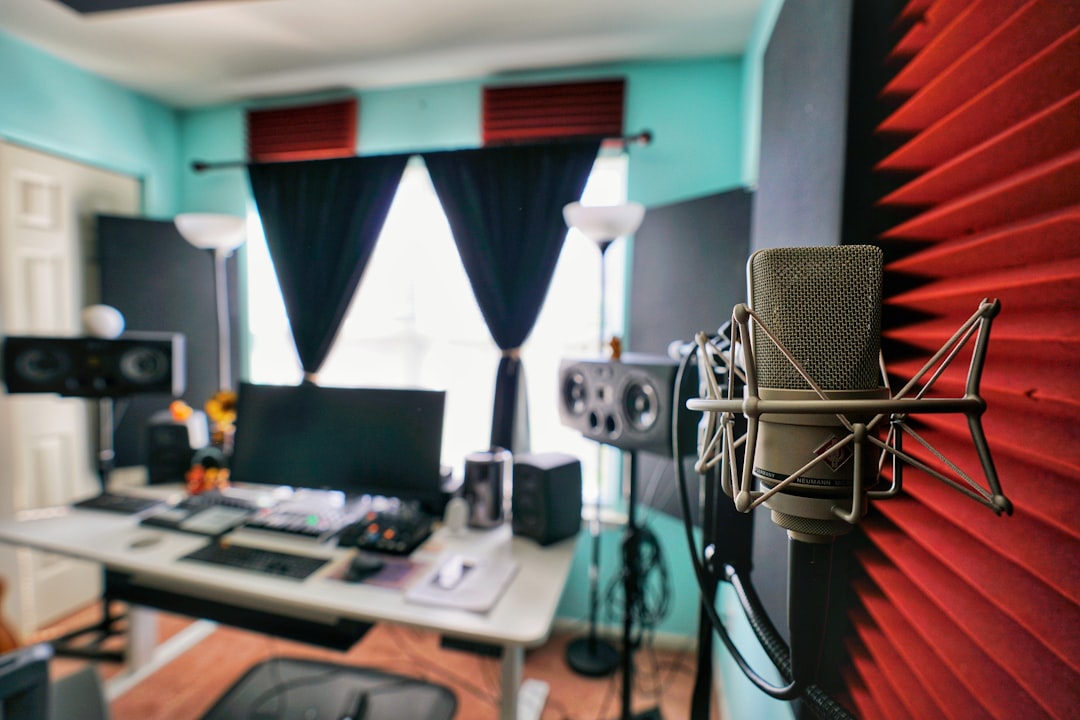
To treat a studio well, you first need to understand how sound behaves in a room. Sound leaves your speaker or instrument as a pressure wave, travels through the air, and then meets walls, floor and ceiling that reflect, absorb or scatter it. What reaches your ears is a blend of the original sound and dozens of delayed copies — and that blend is what makes a room sound good, bad or simply wrong.
Here’s the quick version: you hear direct sound, then early reflections, then a tail of reverberation. Low frequencies also resonate between parallel surfaces. Every one of these stages can be shaped with treatment and placement.
Direct Sound, Reflections and Reverberation
When you understand how sound behaves in a room, it helps to split the arrival of sound into three stages:
- Direct sound — the wave that travels straight from the source to your ears. This is the sound you want to hear cleanly.
- Early reflections — copies that bounce off one nearby surface and arrive a few milliseconds later. They combine with the direct sound and can blur stereo imaging. See early reflections explained for detail.
- Reverberation — the dense, decaying tail of thousands of later reflections. How long it lasts is measured as RT60.
How Reflections Cause Problems
When a reflected wave meets the direct wave, the two add together. Depending on the timing, some frequencies reinforce (get louder) and others cancel (get quieter). This is interference, and over a range of frequencies it produces a series of regular peaks and dips known as comb filtering. The result is a coloured, uneven response that changes as you move your head. Hard parallel walls can also produce a buzzy, metallic ringing called flutter echo.
The single most important reflection to deal with is the one that bounces off the wall or surface directly between you and each speaker — the first-reflection point. Because that copy arrives only a millisecond or two after the direct sound, your ear can’t separate the two and the imaging smears. The classic fix is the mirror trick: have someone slide a small mirror along the side wall while you sit in the listening position, and wherever you can see a speaker in the mirror is a point that needs absorption or diffusion. If you want a step-by-step method, our guide on how to find your first reflection points walks through it. The same idea applies to the ceiling above and the desk surface in front of you, which both bounce sound straight back at your head.
How Low Frequencies Behave Differently
Bass behaves nothing like treble in a room. Long bass wavelengths — several feet or metres — set up resonances between opposite walls. These resonances are room modes, and they create positions where bass is far too loud and others where it almost disappears. This is why your mix can have thumping bass at the desk and none on the sofa. Closely related are standing waves, the physical pressure patterns the modes create. Bass problems need thick absorbers, not thin foam.
The reason thin foam fails on bass comes down to wavelength. A porous absorber only does real work where the air is actually moving fast, and that happens a quarter-wavelength out from a hard surface. For a 100 Hz tone that quarter-wavelength is well over half a metre, so a two-centimetre foam tile sits in completely the wrong place to touch it. That is why low end is tackled with deep porous bass traps — often a third of a metre or more thick, straddling the room corners where pressure builds up — rather than with surface tiles. Corners are the target because every room mode has a pressure maximum there, so a single trap in a corner influences several modes at once, which is why treating room corners gives you the most bass control for your effort.
Absorption, Reflection and Diffusion
Every surface does one of three things to sound that hits it:
- Reflects it — hard surfaces like glass, plaster and bare drywall.
- Absorbs it — porous materials like mineral wool (Rockwool, Owens Corning 703) convert sound energy into a tiny amount of heat.
- Diffuses it — shaped surfaces scatter sound in many directions, keeping a room lively without harsh single reflections.
A good-sounding room balances all three. Too much absorption makes a space feel dead and unnatural; too little leaves it echoey. Our acoustic treatment for home studios guide shows how to get that balance.
A Simple Way to Read Your Own Room
You don’t need measurement gear to start hearing what your room is doing. Stand in the middle of the empty space and clap your hands once, sharply. A clean, quick decay is a good sign; a ringing, metallic “boing” after the clap is flutter echo between parallel surfaces, and a long wash that hangs in the air points to too much untreated reflection overall. Next, play a piece of music you know well and walk slowly around the room: notice how the bass swells and drops as you move, which maps out where the room modes are pushing energy around. Finally, sit in your normal listening or recording position and pay attention to whether the stereo image feels solid and centred or smeared and wide — smearing usually means untreated early reflections on the side walls, ceiling or desk.
Common Mistakes to Avoid
Most home studios go wrong in the same few ways. The biggest is covering the walls in thin foam and expecting it to fix bass — it only ever tames the highs, leaving a room that sounds dull on top but still boomy and uneven underneath. The second is over-treating: blanket the whole space in absorption and you get an oppressive, lifeless “dead room” that is tiring to work in and flatters nothing. A third is ignoring the listening position entirely; even a perfectly treated room sounds wrong if you sit in a null where the bass cancels, so where you place yourself matters as much as what you hang on the walls. Lastly, people confuse making a room sound better with stopping sound getting out — those are separate jobs that need different materials, as covered below.
Why This Matters for Your Mixes
If your room emphasises certain frequencies, you’ll make EQ and level decisions to “fix” sounds that are actually fine — and your mix will be wrong everywhere else. Understanding how sound behaves in a room is what lets you separate the room’s contribution from your music’s. To go further, learn what room acoustics covers as a whole, and remember that controlling sound inside the room is treatment, while keeping sound from escaping is soundproofing — two different jobs.
Frequently Asked Questions
Why does my room sound different depending on where I stand?
Because reflections and room modes create pressure peaks and dips at specific locations. Bass especially can be loud in one spot and nearly gone a few feet away. This is normal physics, and it’s why your listening position matters so much.
Does furniture affect how sound behaves in a room?
Yes. Bookshelves, sofas and rugs scatter and absorb some sound, which is why a furnished living room sounds less harsh than an empty one. It’s not a substitute for proper treatment, but it does help, especially with high frequencies.
Do bigger rooms sound better?
Larger rooms push room modes lower and spread them out, which often makes bass smoother. But size alone doesn’t guarantee good sound — proportions, treatment and speaker placement still decide whether the room is usable.
Can I fix a room with software room correction instead of treatment?
Only partly. Room correction software can flatten broad tonal imbalances and help below the point where bass traps run out of steam, but it can’t undo the timing problems caused by reflections, and it can’t fill in a frequency the room has cancelled to near silence. Treat the room first, then use correction to fine-tune what’s left — not the other way around.
Does square or symmetrical room shape matter?
It does. A square room, or one where two dimensions are equal or simple multiples of each other, stacks several room modes on top of the same frequencies and makes bass problems far worse. Rooms with three clearly different dimensions spread the modes out more evenly and are easier to treat, which is why studio designers care so much about room proportions.