
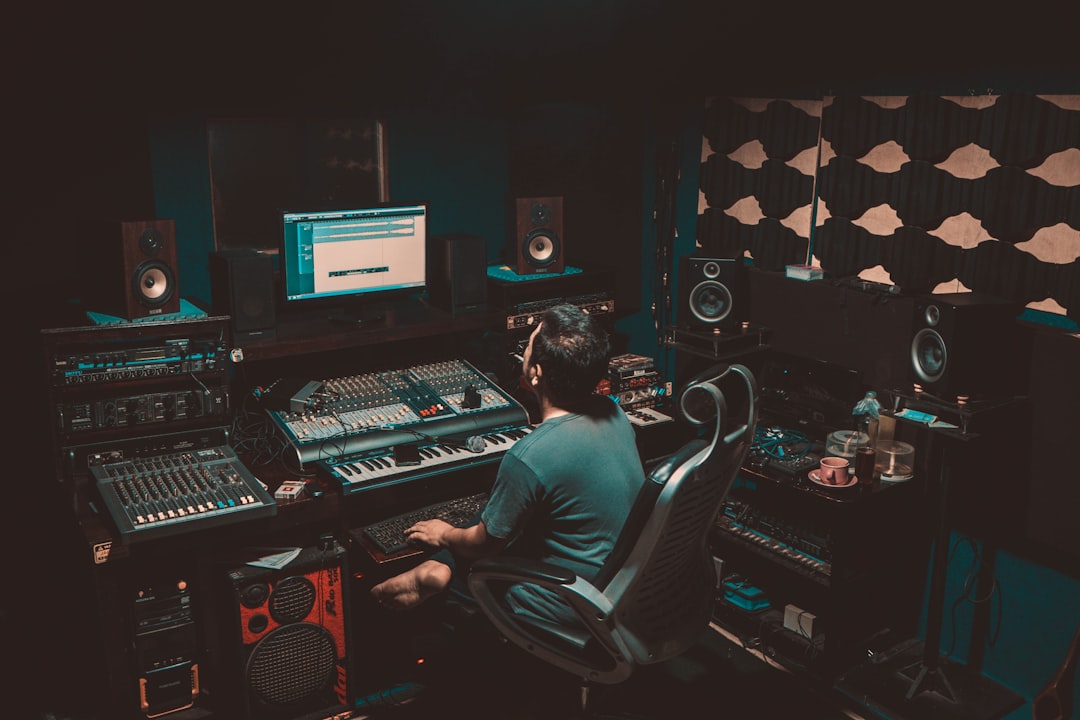
Releasing music on your own comes down to four moves: get your track professionally mastered, pick a distributor to place it on Spotify, Apple Music and the rest, plan a release date with a little runway, then promote and collect your royalties. This independent artist guide walks through each step in plain English so you can put out a record that sounds finished and actually reaches listeners, without a label doing it for you.
Violet Recording is reader-supported — we may earn a commission from links on this page, at no extra cost to you.
The short version: your release in five steps
- Master the track so it’s loud, balanced and translates across earbuds, cars and club systems.
- Choose a distributor (DistroKid, TuneCore, CD Baby, LANDR, Amuse or Ditto) to deliver your song to streaming platforms.
- Set a release date three to five weeks out so you can pitch playlists and build anticipation.
- Promote with a pre-save link, short-form video, and a simple email or social plan.
- Collect royalties from streams, and register with a PRO and a publishing administrator so you don’t leave money on the table.
Finish the song: mixing and mastering before you release anything
A release lives or dies on how it sounds next to everything else in a playlist. Two things stand between a rough bounce and a competitive track: a solid mix and a proper master. Mixing is where you balance the individual elements — vocals sitting right, low end under control, nothing fighting for the same space. If you’re doing this yourself, our beginner’s guide to mixing your first song and the EQ and compression fundamentals walk you through the moves that matter most.
Mastering is the final polish: overall loudness, tonal balance and consistency so your track holds up against commercial releases. You have three realistic options. Hire a human mastering engineer for the most nuanced result. Use an AI mastering service like LANDR for a fast, affordable pass that’s genuinely good for most releases. Or learn to do a basic master yourself. If you want to weigh those up, read AI mastering vs human mastering and our roundup of the best online mastering services. For a streaming-first release, pay attention to loudness targets — our guide to mastering a song for streaming and LUFS explained cover exactly how loud your master should be. When you’re ready for a quick, budget-friendly master, a service like LANDR is a sensible place to start.
An independent artist guide to choosing a music distributor
You can’t upload directly to Spotify or Apple Music as an artist — you go through a distributor, which delivers your files to every platform and pays you the streaming royalties that come back. The big names each work slightly differently, and pricing models change often, so treat the notes below as general shape rather than gospel and always check the provider’s current pricing.
- DistroKid — known for unlimited uploads on a flat annual subscription; popular with artists who release frequently.
- TuneCore — long-established, wide platform reach, historically a per-release or subscription model.
- CD Baby — one of the originals, typically a one-time fee per release plus publishing services.
- LANDR — bundles distribution with its mastering tools, handy if you want one service for both.
- Amuse and Ditto — lean, artist-friendly options, sometimes with a free or low-cost entry tier.
When you compare them, look at four things: whether they keep 100% of your royalties or take a cut, how fast they pay out, whether they charge per release or per year, and what extras (publishing admin, YouTube Content ID, splits payments) are bundled in. If you release a single every couple of months, a flat annual plan usually wins. If you release once a year, a per-release fee can be cheaper. A service like LANDR is worth a look if you’d rather master and distribute under one roof.
Plan the release date and get your metadata right
Don’t upload on a whim. Give yourself at least three to four weeks between delivering your files to the distributor and the release date. That window lets the track propagate to every platform, gives you time to pitch Spotify’s editorial playlists through Spotify for Artists (which needs roughly a week or more of lead time), and lets you build a pre-save campaign.
Metadata is the boring part that quietly makes or breaks discovery. Spell your artist name and track title consistently everywhere. Credit every songwriter and producer correctly. Add genre and mood tags honestly. Get an ISRC code (your distributor supplies one) and, if you’re releasing physically or want a barcode, a UPC. Upload high-resolution cover art that meets platform specs — usually a square image at 3000×3000 pixels, with no unauthorised logos or blurry text. Sloppy metadata is the most common reason a release looks amateur or gets rejected.
Promote the release without a marketing budget
Promotion is where most independent artists under-invest. You don’t need money — you need a plan and a bit of consistency. Start with a pre-save link so fans can save the track before it drops, which signals early momentum to the algorithms. In the weeks before release, tease the song: short vertical clips of the hook, behind-the-scenes studio moments, a lyric snippet. Short-form video is the single most effective free tool an independent artist has right now.
On release day, make it easy to find and share. Post the streaming link everywhere, pin it, and ask your closest supporters to add it to their own playlists — user playlist adds and saves matter. Pitch your track to independent playlist curators and blogs in your niche; if you also do production or engineering work, the same networking muscle helps you find paid work, and our list of the best sites to find mixing clients is a useful companion. Keep a simple email list too — it’s the one audience channel no algorithm can take away from you.
Understand royalties, rights and getting paid
Streaming pays per stream, and the per-stream rate is small and varies by platform, country and your listener mix — so never bank on a fixed figure. There are also different types of money you’re owed. Your distributor collects the recording (master) royalties from streams. But songwriting generates separate performance and mechanical royalties that a distributor usually doesn’t collect for you.
To capture those, register as a songwriter with a performing rights organisation (a PRO such as ASCAP, BMI, PRS or your local equivalent), and sign up with a publishing administrator or use your distributor’s publishing add-on to collect mechanicals worldwide. If a song has more than one writer, agree the splits in writing before release — a clear split sheet prevents ugly arguments later. It’s unglamorous admin, but it’s the difference between collecting everything you’re owed and quietly leaving money uncollected for years.
Keep releasing: momentum beats perfection
One flawless single a year won’t build a career; a steady drumbeat of releases will. Consistency teaches the algorithms who your listeners are, gives your audience a reason to keep paying attention, and makes each release a little easier than the last because your workflow tightens. Treat your first few releases as reps. Master efficiently, distribute reliably, promote what you can, and learn from the numbers in your Spotify for Artists dashboard. For more on the business side, browse the Music Business hub.
Frequently asked questions
Do I need a record label to release music?
No. Any independent artist can release music worldwide through a distributor like DistroKid, TuneCore, CD Baby or LANDR. Labels can offer funding, marketing muscle and connections, but the technical act of getting your song onto Spotify and Apple Music is fully DIY and inexpensive. Many artists build sizeable careers without ever signing a traditional deal.
How much does it cost to release a song independently?
Costs vary widely and change often, so check each provider’s current pricing. Broadly, expect a modest annual or per-release distribution fee, plus an optional mastering cost if you use a service like LANDR rather than mastering yourself. Cover art, a pre-save page and social promotion can all be done for little or nothing, so a first release can be genuinely cheap.
How long before my release date should I upload?
Give yourself at least three to four weeks. That lead time lets the track reach every platform, gives you a window to pitch editorial playlists through Spotify for Artists, and leaves room to run a pre-save campaign so you arrive on release day with some momentum already building rather than starting from zero.



