A standing wave is a stationary pattern of sound pressure that forms when a wave reflects back on itself between two parallel surfaces and reinforces. When you ask what is a standing wave in a studio, the practical meaning is this: at certain bass frequencies, the room sets up fixed zones where sound is very loud and fixed zones where it almost disappears — and those zones don’t move. That’s why bass can boom at your desk and vanish a metre away.
🔧 Free tool: try our Frequency to Wavelength Calculator.
🔧 Free tool: try our Room Mode Calculator.
Standing waves are the physical reality behind room modes, and they’re the main reason small rooms struggle with an uneven low end.
What Is a Standing Wave, Physically?
When sound travels between two parallel walls, the reflected wave travels back toward the source. If the distance between the walls matches a half-wavelength (or a whole number of half-wavelengths), the outgoing and returning waves line up perfectly and reinforce. Instead of moving through the room, the combined wave appears to “stand still” — hence the name. It creates a fixed pattern of:
- Antinodes — points of maximum pressure, where that frequency is loudest. These sit at the walls.
- Nodes — points of minimum pressure, where that frequency nearly cancels out. These sit between the walls.
It helps to picture a skipping rope tied at both ends. Flick it at the right speed and you get a shape that flaps up and down but never travels along the rope: the ends stay still (the nodes) while the middle swings widely (the antinode). Air pressure in a room does the same thing at its resonant frequencies. The wave energy is still there — it’s just trapped in a repeating pattern instead of dispersing evenly, which is exactly why it feels so stubborn to fix.
Standing Waves and Room Modes
People often use “standing wave” and “room mode” almost interchangeably, and they’re closely linked. A room mode is the resonant frequency at which a standing wave forms; the standing wave is the pressure pattern it produces in the room. The lowest standing wave between a pair of walls happens at the frequency you get from the room’s dimensions — you can predict it by learning how to calculate room modes.
Every pair of parallel surfaces produces its own series: a fundamental plus a stack of harmonics at whole-number multiples above it. A room therefore has three sets of these — length, width and height — and they overlap. Where two or three modes pile up on the same frequency, the peak is severe; where the modes are spread out evenly, the low end sounds smoother. This spacing, not just the size of the room, is what separates a room that mixes well from one that fights you.
Why Standing Waves Are a Problem
Because the pattern is fixed, your listening position determines what you hear. Sit at an antinode for a given frequency and it’s far too loud; sit at a node and it’s nearly gone. Since different frequencies have their nodes and antinodes in different places, no single spot is flat. The result is the uneven, position-dependent bass that makes mixing low end so hard. Standing waves are a key part of how sound behaves in a room and a major cause of mixes that don’t translate.
There is a second, sneakier problem: time. A standing wave doesn’t just change level, it also rings on after the note has stopped, because the trapped energy takes a while to decay. This smears bass detail, blurs the attack of kick drums and bass lines, and makes it hard to judge how much low end you really have. You end up turning the bass down to tame a boom in your room, only to find the mix sounds thin everywhere else.
Where Standing Waves Are Worst
Standing waves are strongest at low frequencies because long bass wavelengths fit neatly between typical room dimensions. They’re also worst in square or cube-shaped rooms, where two or three dimensions are equal and their standing waves line up at the same frequency, stacking on top of each other. If your room is square, our best room dimensions for a studio guide explains why proportions matter and what to do about it.
How to Reduce Standing Waves
You can’t eliminate standing waves, but you can reduce their severity:
- Move your speakers and listening position. This changes which nodes and antinodes land at your ears and is often the biggest free improvement.
- Add bass traps in the corners. Corners are where multiple standing waves have their pressure maximum, so thick porous absorbers (mineral wool such as Rockwool or Owens Corning 703) there are most effective. Thin foam won’t touch these long wavelengths — if you want to make your own, see how to build a bass trap with enough depth to work.
- Measure to confirm. A calibrated mic like the miniDSP UMIK-1 with Room EQ Wizard (REW) shows your peaks and nulls so you can find a better spot.
See acoustic treatment for home studios for how to deploy bass traps and panels effectively.
How to Choose Where to Sit and Place Speakers
If you only do one thing, get your positioning right before you spend money on treatment. A practical starting point is to set up your mix position symmetrically along the room’s longer axis, with your head and both speakers the same distance from the side walls so the left and right channels excite the modes equally. From there, treat it as a search rather than a fixed rule:
- Avoid the dead centre and the exact corners. The middle of a dimension is a node for some modes and an antinode for others, so it tends to give the most lumpy bass response. The corners are the opposite extreme, where pressure piles up.
- Pull the listening position off the rear wall. Sitting right against the back wall puts your ears in a pressure maximum for the length mode, which is why bass often sounds heaviest there.
- Move in small steps and listen to a familiar bass-heavy track. Shifting your chair or your speakers even 20–30 cm can move a problem null or peak well away from your ears.
Common Mistakes
A few habits make standing waves worse or waste your effort:
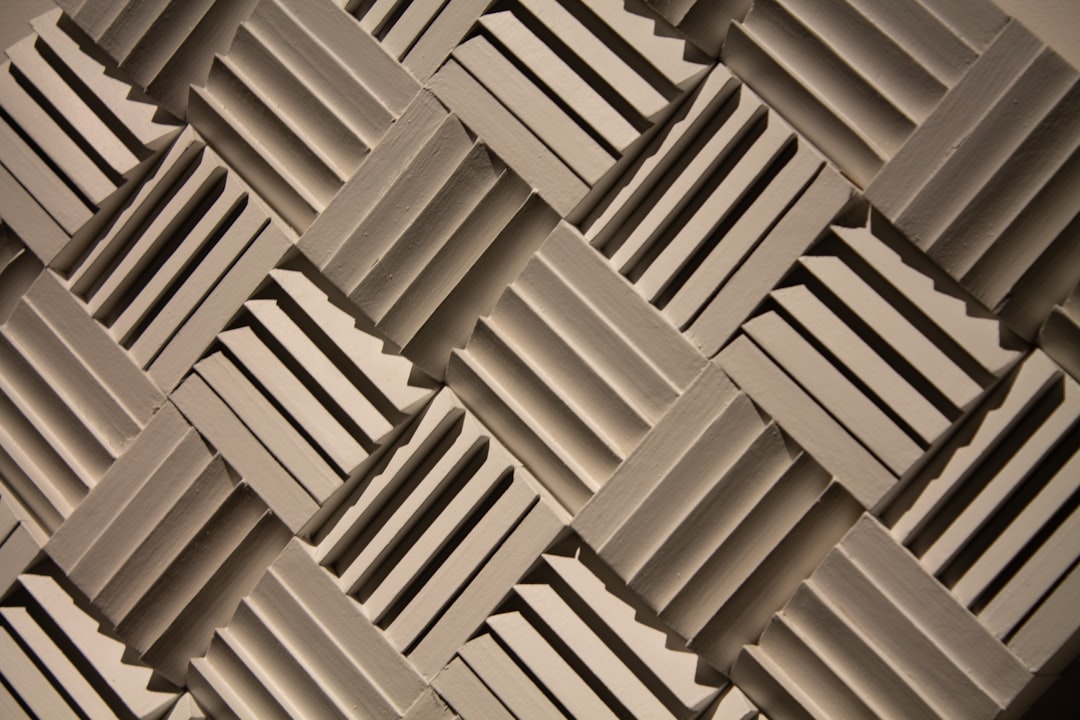
- Using thin acoustic foam to fix bass. Foam panels a few centimetres thick absorb high frequencies and do almost nothing to the long wavelengths that cause modal problems. Bass needs thick, dense traps with depth or an air gap behind them.
- EQing the room flat without moving anything first. You can pull down a peak with EQ, but you can’t EQ energy back into a deep null — adding gain there just wastes headroom. Sort out position and treatment, then use EQ only for what remains.
- Trusting one listening spot. Because the response is position-dependent, a mix that sounds great in one chair can be badly balanced. Always check on headphones and on other systems before committing.
- Building a perfectly square or symmetrical room when you have the choice. Equal dimensions stack modes together. If you’re planning a space, non-equal proportions spread the problem out.
Frequently Asked Questions
Is a standing wave the same as an echo?
No. An echo is a distinct delayed reflection you hear as a separate sound. A standing wave is a steady pressure pattern at a specific frequency that makes that frequency louder or quieter depending on where you are in the room.
Can I hear a standing wave directly?
You hear its effect rather than the wave itself. Play a sustained bass note and walk around the room — you’ll notice it getting dramatically louder and quieter at different spots. That variation is the standing wave at work.
Do standing waves affect high frequencies too?
They occur at all frequencies, but high-frequency standing waves are so densely packed and easily absorbed that they blend into normal reverberation. The audible, problematic ones are always in the bass region.
Will bass traps get rid of standing waves completely?
No, but they take the edge off. Good corner bass traps reduce how much a mode peaks and how long it rings on, which makes the low end tighter and more even. The pattern still exists; it’s just less severe, which is usually enough to mix confidently when combined with sensible speaker and seating placement.