
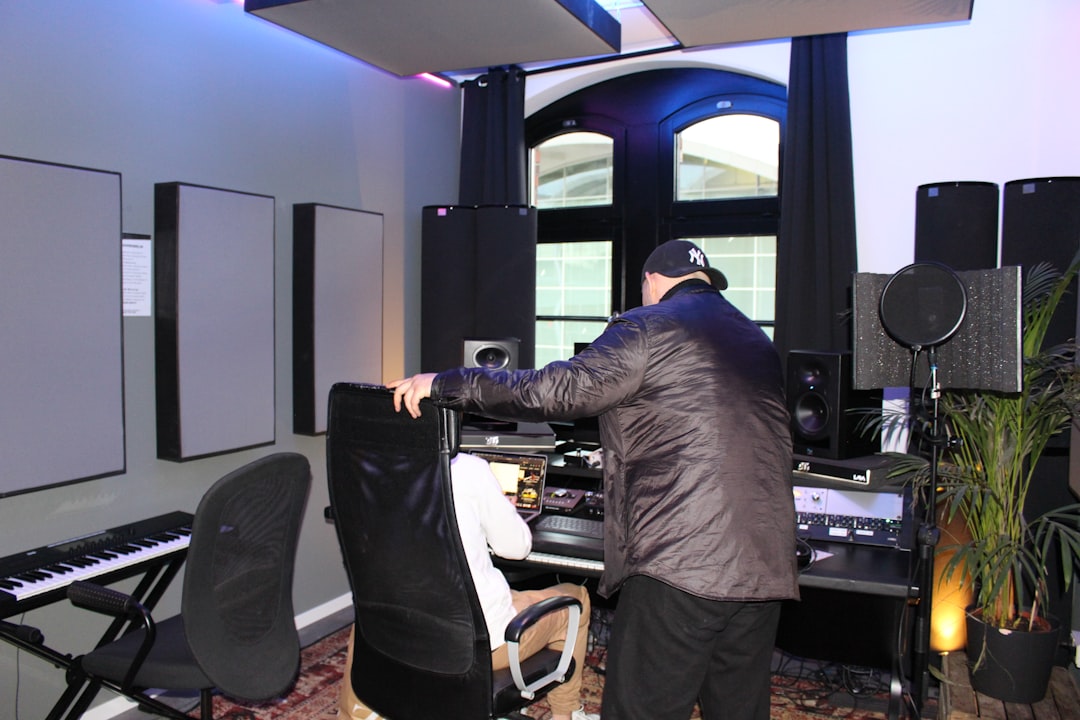
The best room dimensions for a studio are the ones whose length, width and height are in proportions that spread the room’s resonances out evenly, so no single bass frequency dominates. There’s no single “perfect” room size, but there are proportions that consistently sound smoother — and there are shapes, like a cube or a square, that you should avoid if you possibly can. This guide explains why dimensions matter, which ratios work, and what to do when you don’t get to choose the room.
Quick Answer
- Avoid square rooms and cubes — equal dimensions stack resonances and create severe bass problems.
- Aim for proportions where length, width and height are clearly different, following a recognised ratio.
- Bigger generally helps, because it pushes resonances lower and spaces them more evenly.
- Ceiling height matters as much as floor area — don’t ignore it.
- If you can’t pick the room (most of us can’t), treatment and placement do the heavy lifting instead.
Why Room Dimensions Matter So Much
Every enclosed room resonates at frequencies set by the distance between its surfaces. These resonances are room modes, and they create the standing waves that make bass loud in some spots and almost absent in others. The lowest mode in each dimension is fixed by that dimension’s length — you can predict them all by learning how to calculate room modes.
Here’s the key insight: the proportions of the room decide whether those modes are spread out evenly or piled up on top of each other. A room with well-chosen ratios has modes scattered across the bass region, so the response is relatively smooth. A room with poor ratios has modes clustering at the same frequencies, producing big peaks and deep nulls. This is the foundation of how sound behaves in a room.
The Worst Shape: Square and Cube Rooms
If two dimensions are equal — a square floor plan — their modes fall at exactly the same frequencies and reinforce, doubling the size of those peaks. A cube, where all three are equal, is the worst case of all: every dimension resonates together and the bass becomes wildly uneven. If you’re stuck with a square room, it’s still workable, but it needs more bass trapping and careful placement than a well-proportioned room. Don’t expect ratios alone to save it.
The Best Room Dimensions for a Studio: Proportions and Ratios
Over the years, acousticians have published “preferred” room ratios that spread modes evenly. You’ll see these expressed as height : width : length. Commonly cited examples include proportions around 1 : 1.4 : 1.9 and 1 : 1.6 : 2.3 (sometimes called “golden” or Bolt-area ratios). The exact numbers matter less than the principle:
- Keep the three dimensions clearly different from one another.
- Avoid having one dimension be a simple multiple of another (for example, a length exactly double the width), which makes modes stack.
- Treat these ratios as a target to aim for, not a guarantee — real rooms with doors, windows and non-rigid walls never behave exactly like the theory.
The best way to check a prospective room is to plug its dimensions into a free room-mode calculator or to measure it. A calibrated measurement mic such as the miniDSP UMIK-1 with the free Room EQ Wizard (REW) software shows you the actual modal peaks rather than a prediction.
Does Bigger Mean Better?
Generally, yes — within reason. A larger room pushes its modes lower in frequency (often below the most critical mixing range) and packs them closer together, which sounds smoother and more even. A larger room also gives you more distance between your speakers, your listening position and the walls, which reduces the impact of early reflections. That said, a big room with poor proportions or no treatment can still sound bad, and a smaller, well-treated room can sound excellent. Size helps, but it doesn’t override the need for treatment.
Don’t Forget Ceiling Height
Ceiling height is the dimension people most often overlook, and it’s frequently the smallest of the three — which means floor-to-ceiling modes land high in the bass range where they’re very audible. A low ceiling also brings the floor and ceiling reflections closer in time, worsening colouration. If you have any choice, a taller ceiling is almost always an advantage. If you don’t, an overhead absorber (an acoustic “cloud”) helps manage the ceiling reflection.
What If You Can’t Choose the Room?
This is the reality for most home recordists — you work with the spare bedroom, the garage or the basement you have. The encouraging news is that treatment and placement matter more than dimensions once the room exists. Prioritise in this order:
If yours is below ground, our guide to treating a basement studio deals with low ceilings, concrete and damp.
- Speaker and listening-position placement. Symmetry left-to-right, sensible distance from the front wall, and avoiding sitting in a major modal peak or null. This is free and powerful.
- Bass traps in the corners. Corners are where modal energy concentrates, so thick porous absorbers (mineral wool such as Rockwool or Owens Corning 703) there do the most to smooth out a poorly proportioned room. Thin foam will not help with bass.
- First reflection points. Treat the side walls and ceiling to tighten imaging, as covered in our acoustic treatment for home studios guide.
- Measure and adjust. Use REW to confirm what helped and where the remaining problems are.
If you’re on a tight budget, our DIY acoustic treatment guide shows how to build effective panels and bass traps yourself. And remember the distinction: all of this is acoustic treatment, which controls sound inside the room. Stopping sound from leaving is a separate problem — see soundproofing vs acoustic treatment.
Choosing Treatment Products
If you’d rather buy than build, several established companies make broadband absorbers and bass traps suited to home studios — names you’ll come across include GIK Acoustics, ATS Acoustics, Primacoustic and Auralex. The thing to focus on is thickness and density, not branding or looks: thicker absorbers with an air gap behind them perform far better at low frequencies than thin panels. For a beginner-friendly room build that pulls this together, see our build a home studio on a budget guide.
For ready-made treatment, brands like GIK Acoustics, ATS Acoustics, Primacoustic and Auralex make broadband panels and bass traps that suit most rooms. Prefer to build your own? Panels filled with Rockwool or Owens Corning 703 rigid mineral wool give excellent absorption for the money — see our guides to the best bass traps and best acoustic panels for specifics.
Myths to Ignore
- “Egg cartons treat a room.” They don’t. Their shape and thinness do almost nothing useful, especially at bass frequencies.
- “Acoustic foam soundproofs.” No. Foam is light, porous treatment — it cannot block sound transmission, which requires mass and decoupling.
- “There’s one perfect room size.” There isn’t. Good proportions help, but treatment and placement decide whether a room is usable.
Frequently Asked Questions
What is the best room ratio for a studio?
There’s no single best ratio, but proportions where height, width and length are clearly different — such as the commonly cited 1 : 1.6 : 2.3 — spread room modes evenly and sound smoother. Treat published ratios as a guide and verify with a measurement.
Is a square room usable as a studio?
Yes, but it’s the hardest shape to work with because equal dimensions stack resonances. You can make it work with heavy corner bass trapping and careful speaker placement, but expect to do more treatment than in a well-proportioned room.
Does ceiling height really matter for a home studio?
Very much. A low ceiling pushes the floor-to-ceiling mode higher into the audible bass range and worsens reflection colouration. A taller ceiling generally sounds better; if yours is low, an overhead absorber helps manage it.