
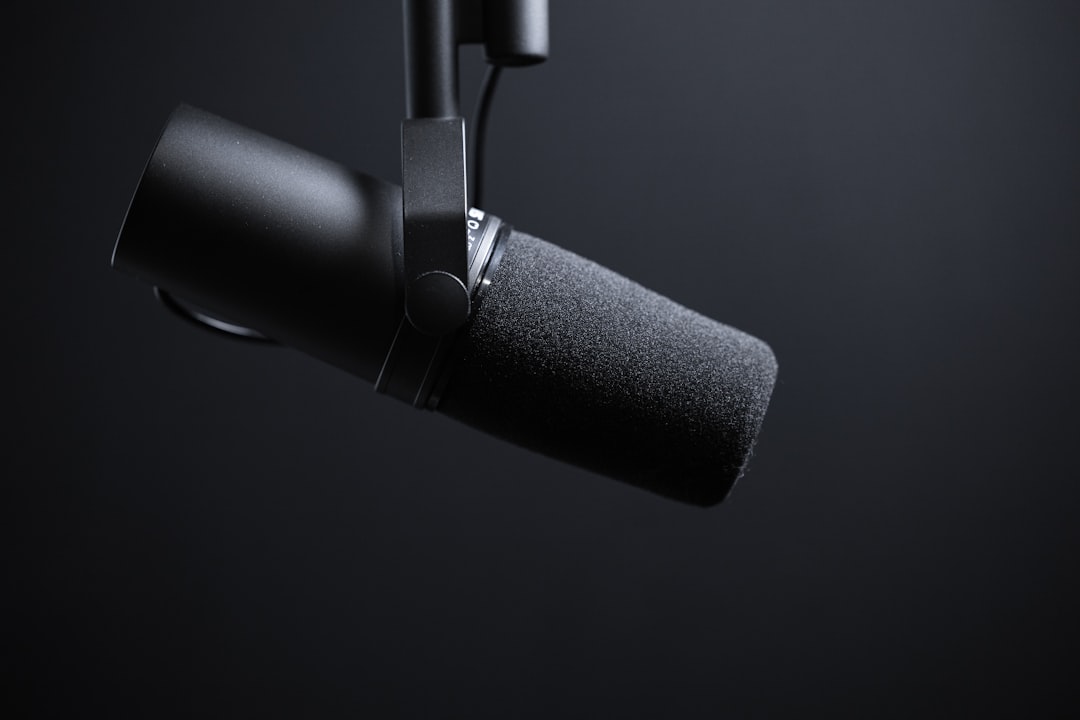
A shotgun microphone is a highly directional mic that captures sound from straight ahead while rejecting noise from the sides and rear, making it the standard for film dialogue, video, and any situation where you can’t put a mic close to the source. They mount on a boom pole or directly on a camera.
Quick answer: For professional boom-mounted dialogue, the Sennheiser MKH 416 is the industry benchmark. For camera-mounted video, the Rode VideoMic series and Deity shotguns are reliable, easier-to-power choices.
What makes a shotgun microphone directional
Shotgun mics use a long interference tube in front of the capsule that cancels off-axis sound, producing a narrow, focused pickup (a supercardioid or lobar pattern). This lets them grab a subject’s voice from a metre or more away while pushing back the surrounding room. Learn the basics in our polar patterns guide.
The interference tube works by letting off-axis sound enter through slots along its length. Those off-axis waves arrive slightly out of phase and partially cancel each other before they reach the capsule, while sound arriving straight down the tube stays in phase and passes through cleanly. The longer the tube, the tighter the front lobe and the greater the reach — which is why long shotguns excel outdoors but can sound unnatural in small rooms. One thing worth understanding early: a shotgun does not actually amplify distant sound. It simply rejects everything that is not in front of it, so the ratio of voice to room improves. That is why getting closer always beats relying on the mic’s reach.
What to look for in a shotgun microphone
- Directionality: Tighter pickup means more reach and more side rejection, but it also means aim matters more.
- Indoor vs outdoor use: Some shotguns struggle in reflective rooms; shorter shotguns or hypercardioids often work better indoors.
- Power: Pro shotguns need 48V phantom power — see what phantom power is. Camera shotguns may use a battery or plug-in power instead.
- Mounting and wind protection: A shock mount and a windshield (or “dead cat”) are essential outdoors — see what a shock mount does.
- Connection: XLR for pro rigs and recorders; 3.5 mm for direct camera mounting.
Two further details separate a frustrating shotgun from a dependable one. The first is self-noise: because you often work at a distance and then raise the gain, a noisy mic will hiss audibly behind quiet dialogue. Lower self-noise gives you cleaner headroom to lift a soft voice. The second is moisture resistance. Outdoor work means humidity, sea air and temperature swings, and some capsule designs cope far better than others — a mic that crackles when the dew comes down is useless on a shoot. If you expect to record outside regularly, prioritise a model known to shrug off moisture, and see our roundup of the best mics for field recording for outdoor-ready picks.
Best shotgun mics for film and boom work
- Sennheiser MKH 416: The film and TV dialogue standard — focused, warm and reliable, even outdoors. Needs phantom power and an XLR input.
- Rode NTG3 / NTG5: Professional broadcast shotguns that compete with the 416 and resist moisture well.
- Deity S-Mic 2: A strong-value boom shotgun popular with indie filmmakers.
Best camera-mount shotgun mics for video
- Rode VideoMic Pro / VideoMic NTG: Compact on-camera shotguns with built-in power and a 3.5 mm output; the NTG also works over USB.
- Sennheiser MKE 400: A tidy, durable on-camera shotgun for run-and-gun shooters.
How to choose the right shotgun for your work
Start with where you will actually record. If most of your work is controlled outdoor dialogue on a boom — documentary, drama, interviews on location — a full-length XLR shotgun feeding a dedicated recorder is the right tool, and the extra reach and side rejection earn their keep. If you shoot run-and-gun video and mount the mic on the camera, a shorter on-camera shotgun with its own power and a 3.5 mm or USB output saves you a recorder, a cable run and a battery to manage.
Next, think about the room. For indoor and mixed environments, resist the temptation to buy the longest, tightest shotgun you can find. A shorter shotgun or a hypercardioid will sound more natural between four walls because it gathers fewer rear reflections. Finally, budget for the whole signal chain, not just the mic. A capable shotgun still needs a shock mount, a windshield for outdoors, the right cable, and an input that can power and gain it cleanly. A modest mic in a complete, well-managed rig beats a flagship mic dangling off the wrong adapter.
Common mistakes to avoid
- Pointing it at the chest, not the mouth. Aim the tube at the source of the voice. A shotgun pointed slightly off will sound dull and distant.
- Using a long shotgun in a small room. The rear lobe scoops up reflections and the dialogue turns hollow and boxy. Switch to a shorter pattern indoors.
- Skipping wind protection. Even a light breeze produces low-frequency rumble that ruins a take; a foam screen is the bare minimum and a furry windshield is better outdoors.
- Riding too far back. Operators leave the mic high to stay out of frame, then wonder why the room is loud. Get it as close as the shot allows.
- Forgetting to monitor. Without headphones you will not hear handling noise, off-axis colouration or clipping until it is too late to fix.
Getting the best from a shotgun mic
- Aim it precisely at the source — shotguns reward accurate pointing and punish sloppy aim.
- Get it as close as the frame allows; distance still adds room sound even with a directional mic.
- Always use wind protection outdoors and a shock mount on a boom.
- Use headphones to hear off-axis colouration and reflections.
- For studio dialogue and interviews, also see our microphones hub and best microphones for interviews.
Frequently asked questions
Are shotgun microphones good indoors?
They can be, but very long shotguns can sound boxy in reflective rooms because they pick up reflections from behind the subject. Shorter shotguns or hypercardioids often perform better indoors, and treating the room helps a lot.
Do shotgun mics need phantom power?
Professional XLR shotguns generally require 48V phantom power. Many camera-mounted shotguns instead run on a battery or plug-in power from the camera’s 3.5 mm input.
How far can a shotgun microphone reach?
A shotgun captures usable dialogue from roughly a metre or more, depending on the model and the room. It doesn’t magnify distant sound like a telescope; getting closer always sounds better.
Is a shotgun mic better than a lavalier for dialogue?
They solve different problems. A boomed shotgun captures the most natural, open sound when an operator can keep it close and aimed. A lavalier mic clips to the subject and stays consistent as they move, but it can sound a little closed-in and is prone to clothing rustle. Many productions record both at once and choose the better take in the edit.



