
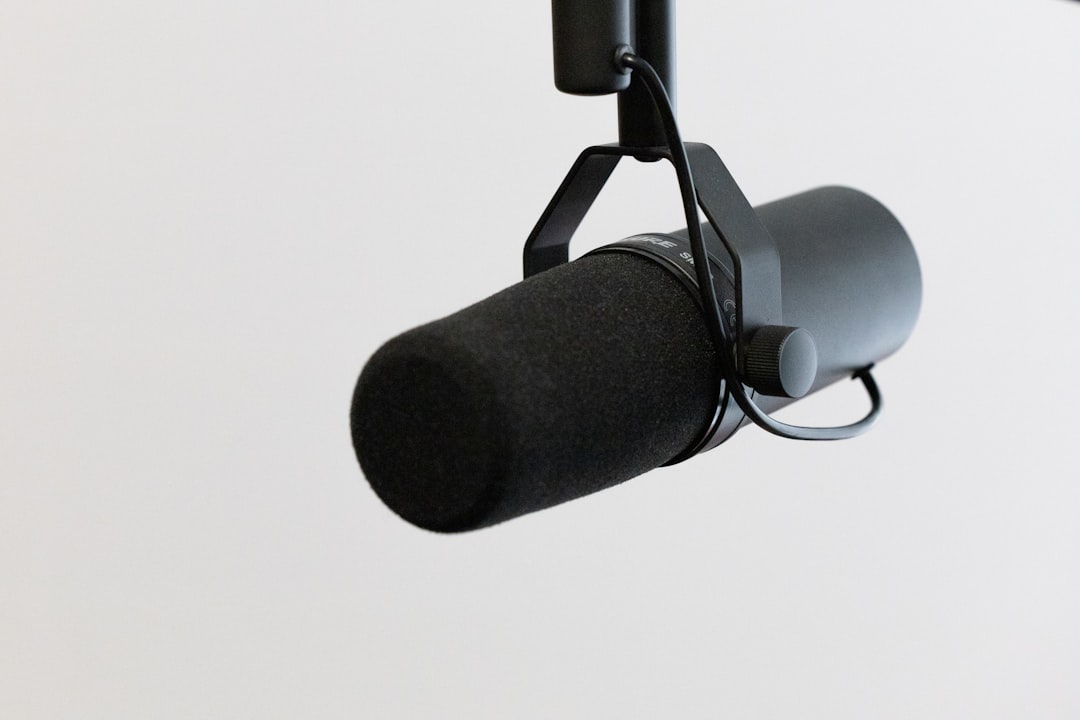
The best microphone for interviews depends on where you’re recording: in a controlled room a dynamic broadcast mic sounds great, on camera a lavalier keeps things tidy, and on location a shotgun captures speech from a distance. The common goal is clear, consistent, intelligible speech with minimal background noise.
Quick answer: For seated, in-room interviews use a dynamic mic like the Shure SM7B, Rode PodMic or Shure MV7 per person. For on-camera work use a lavalier such as the Rode Wireless GO II or DPA lav; for run-and-gun, a Rode VideoMic shotgun.
What to look for in a microphone for interviews
- Speech clarity: You want intelligible midrange and controlled sibilance, not hi-fi sparkle.
- Noise rejection: Dynamic mics and cardioid patterns reject room noise well, which matters in untreated or public spaces. See condenser vs dynamic microphones and polar patterns explained.
- One mic per person: Recording each speaker on their own channel makes editing and level control far easier.
- Form factor: Desk mic, clip-on lav or boom-mounted shotgun — match it to your setting.
In-room, seated interviews: dynamic mics
For podcasts and studio-style interviews where everyone is seated, broadcast dynamics are the standard.
- Shure SM7B: The broadcast benchmark — smooth, rejects room noise, needs lots of clean gain.
- Rode PodMic: Affordable, easy to drive and great up close; pairs well with a Rodecaster.
- Shure MV7: USB and XLR in one, ideal for simple multi-guest setups.
Give each speaker their own mic into an interface or podcast mixer like the Rodecaster or a multi-input Focusrite Scarlett. See how to record a podcast at home.
On-camera interviews: lavalier mics
When the interview is filmed and you don’t want a mic in shot, a clip-on lavalier is the discreet choice. Our roundup of the best lavalier microphones covers wired and wireless options in detail.
- Rode Wireless GO II: A compact wireless system, hugely popular for video interviews and two-person setups.
- DPA / Sennheiser lavaliers: Higher-end lavs for broadcast-quality clip-on sound.
On location: shotgun mics
For run-and-gun or when you can’t clip a mic on, a shotgun’s tight pickup grabs speech from a short distance while rejecting the sides. If this is your main use case, see the best shotgun microphones for a closer look.
- Rode VideoMic series: Camera-mounted shotguns that are easy to deploy.
- Sennheiser MKH 416: The film-industry standard boom shotgun for dialogue.
How to choose the right interview mic
With so many options, the quickest way to narrow things down is to work backwards from your recording situation rather than chasing a single “best” mic. Ask yourself three questions and the answer usually picks itself.
- Will the mic be seen on camera? If the answer is no — podcasts, radio, audio-only interviews — a desk-mounted dynamic gives you the most control and the easiest workflow. If a visible mic would ruin the shot, move to a hidden lavalier or an out-of-frame shotgun.
- How much can you control the room? A quiet, treated space is forgiving and lets you use almost anything. A noisy café, street or echoey hall demands a mic that rejects everything off-axis — that means a tight cardioid dynamic worn close, or a shotgun aimed precisely at the mouth. Our guide on how to record in a noisy room goes deeper on this.
- How many people are talking? One or two seated guests are easy to mic individually. For a panel or moving subjects, wireless lavaliers keep everyone captured without trailing cables.
Budget matters too, but it is rarely the deciding factor. A modest dynamic used close to the mouth will beat an expensive condenser used badly in a live room. Spend on placement and a quiet recording space first, then on the mic itself.
Common interview-recording mistakes
Most bad interview audio comes down to a handful of avoidable errors rather than the mic itself. Watch for these:
- Mic too far away: Distance is the single biggest cause of thin, roomy, echoey speech. Every doubling of distance pulls in more reflections and background noise. Keep dynamics within a hand’s width and clip lavs high on the chest.
- Inconsistent levels between speakers: If your interviewer is loud and the guest is quiet, sharing one mic guarantees a fight in the edit. Separate mics on separate tracks let you balance each voice independently.
- Recording too hot: Pushing levels into the red clips the audio and cannot be undone. Aim for healthy peaks with headroom to spare and ride the gain conservatively.
- Ignoring plosives and handling noise: Use a pop filter or foam windscreen on close dynamics, and a shock mount or boom to keep bumps and desk knocks out of the recording.
- Not monitoring live: Battery-dead lavs, loose connectors and air-conditioning hum are obvious in headphones and invisible without them. Always listen as you record.
Setup tips for clean interviews
- Keep mics close and consistent for every speaker.
- Record each person to a separate track when possible.
- Use headphones to catch problems live.
- In echoey rooms, add quick treatment — see acoustic treatment for home studios — or move closer with a dynamic mic.
- Browse the microphones hub for more.
Frequently asked questions
What’s the best microphone for a podcast-style interview?
A broadcast dynamic mic such as the Shure SM7B, Rode PodMic or Shure MV7, with one mic per person, gives clear speech and good room rejection for seated interviews.
Lavalier or shotgun for filmed interviews?
Use a lavalier when you can clip a mic to each person for consistent, close audio. Use a shotgun when you can’t attach a mic, such as quick street interviews or moving subjects.
Do I need a separate mic for each interviewee?
It’s strongly recommended. One mic per speaker on its own track makes balancing levels and editing much easier than sharing a single mic.
Can I use a USB mic for interviews?
Yes, for a single-person or remote interview a quality USB dynamic like the Shure MV7 works well. The catch is that most computers only handle one USB mic at a time, so for multiple in-person guests you’ll want XLR mics into an interface or podcast mixer instead.
How do I reduce background noise without acoustic treatment?
Get the mic closer to the speaker and choose a cardioid dynamic, which naturally rejects sound from the sides and rear. Turn off fans and air-conditioning while recording, and put soft furnishings or blankets in the room to soak up reflections.



