

A microphone’s polar pattern describes which directions it picks up sound from – and which it ignores. Understanding patterns is one of the quickest ways to get cleaner recordings, because the right pattern rejects the room and noise you don’t want.
Cardioid
The most useful pattern for home recording. Cardioid mics pick up mainly what’s in front and reject what’s behind, which keeps room reflections and background noise down. If you record one source at a time – vocals, a podcast, an instrument – cardioid is almost always the right choice.
Omnidirectional
Omni mics pick up equally from all directions. They sound natural and open and handle the proximity effect well, but they capture the whole room – so they only shine in spaces that actually sound good.
Figure-8 (bidirectional)
Figure-8 mics pick up the front and back while rejecting the sides. They’re the basis of classic stereo techniques and useful for recording two people facing each other, but they capture a lot of room from behind.
Super- and hypercardioid
Tighter than cardioid with even better side rejection, at the cost of a small pickup lobe directly behind the mic. Handy on loud stages and busy rooms.
How to read a polar pattern diagram
Most mic spec sheets include a circular polar plot. The microphone sits at the centre, 0° marks the front (where you point it), and the ring shows how sensitive the mic is at each angle. The further the line sits from the centre at a given angle, the more sound the mic picks up from that direction. A cardioid plot looks like a heart pointing forwards, an omni plot is a near-perfect circle, and a figure-8 plot shows two equal lobes front and back with deep notches at the sides. Read the diagram as a map of where the mic listens – and, just as importantly, where it goes deaf.
Those deaf spots are the most practical part. The angle where a pattern rejects the most sound is called its null, and you can aim that null at your noise source. Point a cardioid’s rear null at a noisy laptop fan or an air-conditioning unit and it will all but disappear from the recording – the same trick is at the heart of recording in a noisy room. Aim a figure-8’s side nulls at a wall to kill an early reflection. Working with the nulls is often more powerful than working with the front of the mic.
How to choose the right pattern for the job
Start with the room, not the mic. In a small, untreated home space – the situation most home recordists are in – you want the pattern that hears the least room, and that is cardioid or one of its tighter cousins. Pointing a directional mic at the source and putting the rejection toward the worst-sounding surfaces gives you a dryer, more controllable recording you can shape later.
Only reach for omni when the room genuinely sounds good, or when you actually want the space in the recording – an acoustic guitar in a nice-sounding room, or a roomy, natural ambience. Reach for figure-8 when you have two sources facing each other, or when you want to build a classic stereo array such as Mid-Side or Blumlein. If you are recording on a loud stage or in a busy room, the extra side rejection of a super- or hypercardioid can buy you cleaner isolation, just remember the small rear lobe and keep monitors and noise out of that zone.
Multi-pattern microphones
Many large-diaphragm condensers offer a switch that selects between cardioid, omni and figure-8 (and sometimes the in-between settings). This works by combining two back-to-back capsules electronically, so a single mic can change its pickup without you moving anything. It is a genuinely useful feature for a one-mic home studio: you can audition patterns against your own room and pick whichever rejects the most of what you don’t want. If you’re weighing this against a fixed-pattern mic, our microphone buying guide walks through how much the feature is worth. If a mic only offers one pattern, make it cardioid – it is the most broadly useful for recording one source at a time.
Common mistakes
- Ignoring the back of a cardioid: the rejection is real but not total, and it varies with frequency – low frequencies leak in from behind more than highs. Treat the rear as quieter, not silent.
- Using omni in a bad-sounding room: an omni faithfully captures every reflection and rattle. In an untreated space it usually sounds worse, not more natural.
- Forgetting figure-8 hears behind it: people set one up for an interview and are surprised the rear lobe pulls in the whole room or a second, unwanted source.
- Not using the null: the fastest noise fix is often rotating the mic a few degrees so its quietest angle faces the problem, before you touch a single plugin.
Which should you use?
- Solo vocals, podcasting, single instruments: cardioid.
- Natural room sound in a treated space: omni.
- Two sources facing each other / stereo techniques: figure-8.
Pattern works hand in hand with mic type – if you’re still choosing, read condenser vs dynamic microphones and our best microphones guide.
Frequently asked questions
Does a polar pattern change the sound, or just the direction?
Both. The obvious effect is directional – what the mic hears and rejects – but patterns also have tonal side effects. Directional patterns like cardioid and figure-8 exhibit the proximity effect, a bass boost that grows as you move closer, while a true omni stays tonally even up close. Patterns can also colour the off-axis sound differently, which is why a cardioid can sound slightly thinner at the rear than at the front.
Is cardioid always the best choice for vocals?
For most home setups, yes – it rejects the room and background noise that small untreated spaces are full of, which is usually the biggest problem. But in a well-treated room, an omni can give a more open, natural vocal because it avoids the proximity-effect bass build-up and sounds less boxed-in. Choose based on how good your room sounds.
Can I change a microphone’s polar pattern?
Only if the mic is designed to be switchable. Multi-pattern condensers let you select between cardioid, omni and figure-8 because they have two capsules whose signals can be combined in different ways. A single-pattern mic has a fixed pattern set by its capsule and housing, so you change it by repositioning the mic and the source rather than flipping a switch.
Shop related gear
Want a mic with the cardioid pattern this guide recommends for home recording?
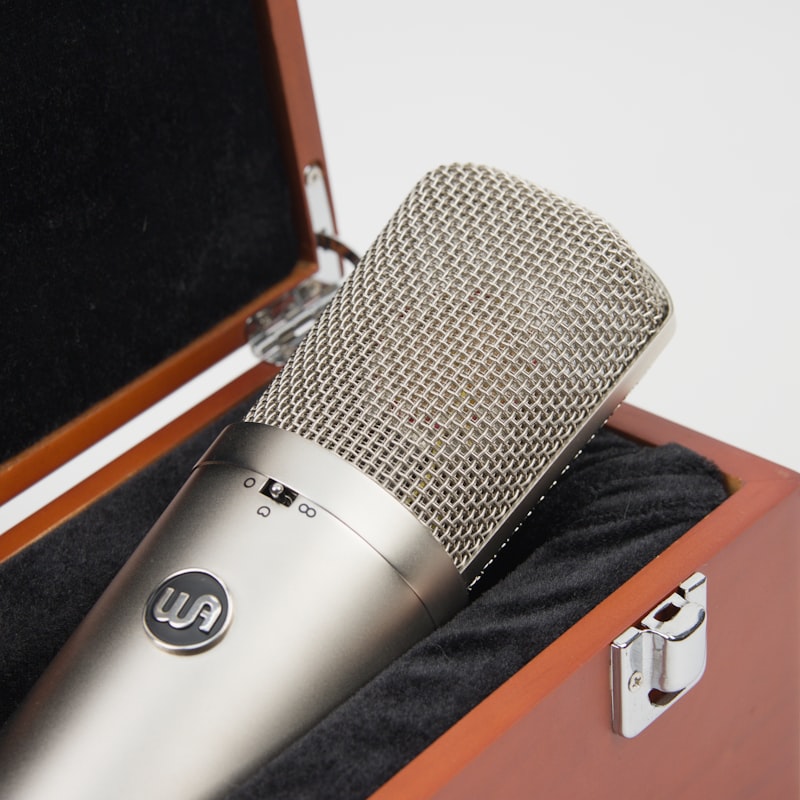
A versatile cardioid mic tuned for clear, present vocals at home.



