
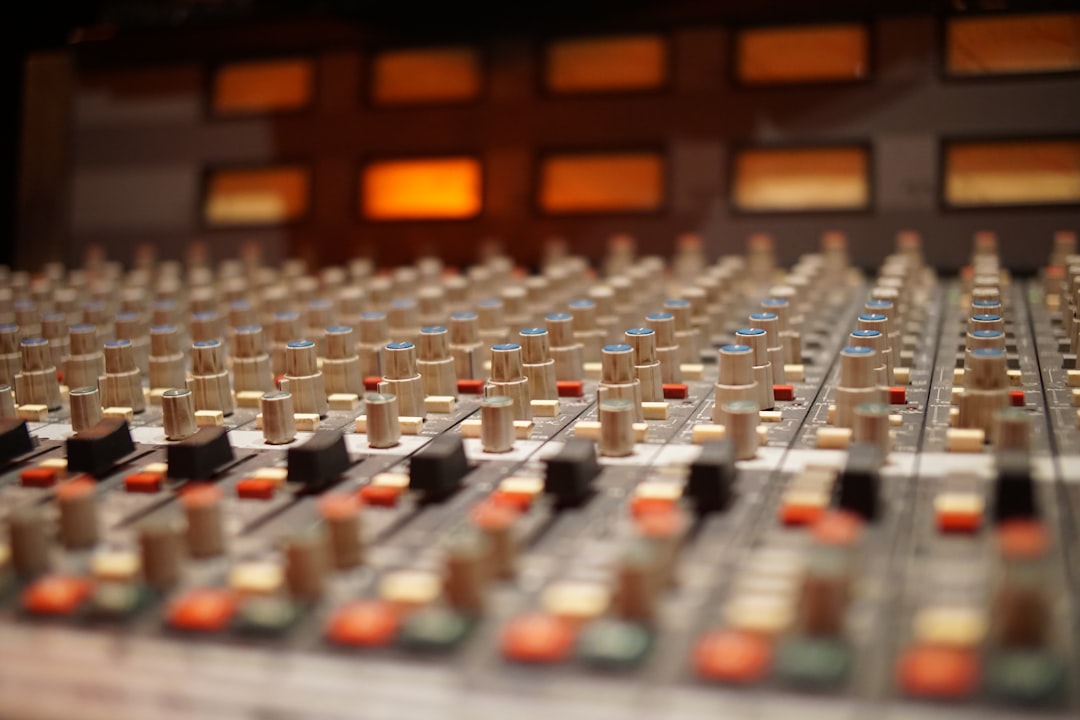
Learning how to master hip hop is really about one thing: making an 808-driven, sample-heavy record hit hard on a phone speaker and in a car without turning to mush. Mastering is the final polish, not a rescue mission, so the numbers below assume a mix that already balances the kick and 808 against the vocal. Get the low end under control, set a sensible loudness target, and you can deliver a master that stays punchy on every platform. Here is the specific, step-by-step approach we use.
Start with gain staging and a loudness target
Before you touch a plugin, decide where you are heading. Streaming services normalise playback to roughly -14 LUFS integrated, and they will simply turn a loud file down. That does not mean you should master to -14; competitive hip hop usually lands between -8 and -10 LUFS integrated because the genre lives and dies on perceived loudness and impact. You accept that Spotify attenuates it, but the transients and density still read as aggressive. Keep your true-peak ceiling at -1 dBTP so lossy encoding (AAC, Ogg) does not push you into clipping on conversion.
Put a loudness meter on the master bus first so every decision is measured, not guessed. A free option like the Youlean Loudness Meter shows integrated LUFS, short-term LUFS and true-peak in one window, which is exactly what you need to hold a target. Set your ceiling and short-term readout before you start compressing.
Tame the low end before you compress
The single biggest reason a hip hop master falls apart is uncontrolled sub energy. An 808 that swings 6 dB louder on one note than another will duck your whole track every time it hits the limiter. Address it in this order:
- High-pass gently. Roll off below 25-30 Hz with a steep filter. There is almost nothing musical down there, but that rumble eats headroom and makes the limiter work overtime.
- Broad, gentle tone shaping. If the mix feels boomy, a wide -1 to -1.5 dB dip around 200-250 Hz cleans up the low-mid buildup where kick and 808 overlap. If it feels dull, a broad +1 dB shelf above 10 kHz adds air without harshness. Keep master EQ moves under 2 dB; anything bigger belongs back in the mix.
- Even out the sub with multiband. A gentle multiband compressor on the lowest band (roughly below 100 Hz) with 1.5-3 dB of gain reduction and a fast-ish attack keeps every 808 note landing at a consistent level. This is the move that makes the low end feel “solid” rather than lumpy.
A surgical EQ such as FabFilter Pro-Q makes these micro-moves easy to see and hear, and its dynamic bands can do double duty for the sub control if you would rather not stack a separate multiband.
Glue, then push for loudness
With the low end stable, add glue compression on the master bus: a slow attack (around 30 ms) to let transients through, auto or medium release, a 2:1 ratio, and only 1-2 dB of gain reduction. You are not trying to squash the track here, just knit the sample, drums and vocal into one cohesive front-to-back image. Listen for the beat “breathing” with the release; if it pumps unpleasantly, slow the release down.
Now the limiter. Set the output ceiling to -1 dBTP and pull the threshold down until your integrated loudness reaches the -8 to -10 LUFS zone. Watch the gain-reduction meter: 3-6 dB of peak reduction on the loudest sections is normal for the genre, but if you are hammering 8 dB or more, back off, because that is where 808s lose their attack and vocals start to sound pinched. A transparent limiter like FabFilter Pro-L 2 lets you switch limiting algorithms; the more aggressive modes suit trap, while transparent modes preserve boom-bap swing. If you own an all-in-one chain such as iZotope Ozone, its maximizer and IRC modes do the same job with a codec-preview option built in.
Check translation and reference honestly
Loudness means nothing if the master only works on your speakers. Reference against two or three commercial tracks in the same lane, loudness-matched so you are comparing tone and not just volume. A tool like ADPTR MetricAB lets you level-match and A/B instantly, which stops you from being fooled by “louder sounds better.” Then run the practical checks:
- Phone speaker test. Play it on a laptop or phone. The 808 fundamental disappears here, so if you can still feel the groove, your kick and the 808’s upper harmonics are doing their job.
- Mono check. Collapse to mono. Wide stereo effects on samples can vanish or phase-cancel; the vocal and drums must stay solid.
- Car and earbuds. Cars exaggerate sub; earbuds flatter mids. If it holds up in both, ship it.
If your monitoring is the weak link, work through our guide to mastering on headphones and lean on metering to stay objective. For quick sanity checks on loudness and peaks between sessions, the free utilities in our audio tools hub are handy, and the broader mixing and mastering guides cover the mix-stage fixes that make mastering easy.
How to master hip hop: the recap chain
For a typical trap or boom-bap record, a reliable order is: high-pass 25-30 Hz, gentle corrective EQ under 2 dB, multiband to steady the sub, glue compression at 1-2 dB gain reduction, then a limiter to -1 dBTP targeting -8 to -10 LUFS integrated. Master in one focused session, sleep on it, and re-check the next morning at low volume. If the 808 still knocks and the vocal still cuts at conversation level, you have mastered a hip hop track that will travel.



