
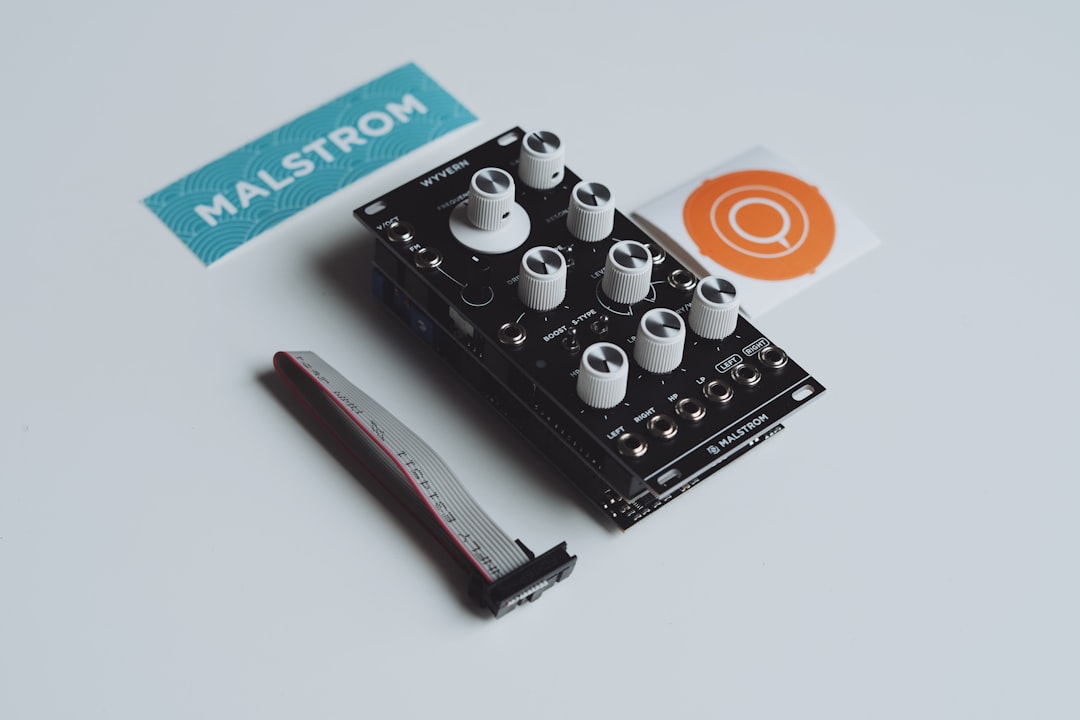
A modular synth is an electronic instrument built from separate building blocks — called modules — that you connect with patch cables to create and shape sound. Instead of a fixed signal path printed on a front panel, a modular synthesizer lets you decide what feeds into what, so the same hardware can be a bass synth one day and a generative drone machine the next.
If you have ever wondered what is a modular synth and why people obsess over walls of blinking patch cables, the short version is freedom: you assemble the instrument yourself, module by module, and rewire it whenever you like.
How a modular synth works
A traditional synth — say a Moog Minimoog or a Korg Minilogue — has its oscillators, filter, envelopes and modulation already wired together internally. A modular synth breaks those same functions into physical modules with input and output jacks. Nothing is connected until you run a cable from one jack to another. That cable carries a signal, usually one of two kinds:
- Audio signals — the actual sound you hear, generated by oscillators and shaped by filters and amplifiers.
- Control voltages (CV) — silent signals that tell other modules what to do, such as which pitch to play or how to move a filter over time.
Because audio and control voltage are just voltages on a cable, you can route either one almost anywhere. That interchangeability is the heart of modular. If you are new to control voltage, our explainer on what CV and gate are walks through how pitch and timing get sent between modules.
One idea that trips up newcomers is that there is no “wrong” connection in the way there is on a fixed synth. Patching an LFO into a filter’s cutoff makes the tone wobble; patch that same LFO into an oscillator’s pitch instead and you get vibrato or, at audio rate, a clangorous new timbre. The module does not change — only where you send its output does. Learning to hear what each destination does with a given source is most of what “learning modular” actually means, and our step-by-step on how to patch a modular synth works through real examples.
The core building blocks
Most patches are built from a handful of classic module types. The three that form the backbone of subtractive synthesis are the oscillator, filter and amplifier — voltage-controlled versions of each. Our guide to VCO, VCF and VCA covers them in detail, but in brief:
- VCO (oscillator) — generates the raw tone or pitch.
- VCF (filter) — removes or emphasises frequencies to shape timbre.
- VCA (amplifier) — controls volume, usually shaped by an envelope.
- Envelope and LFO — modulation sources that change parameters over time.
- Sequencer — generates patterns of pitch and timing.
Brands like Make Noise, Mutable Instruments (with modules such as Plaits and Marbles), Doepfer and Intellijel each have their own take on these functions, which is part of the appeal — you can mix and match the character you want.
Beyond the core five, a few supporting modules quickly become essential once a patch grows. A mixer sums several audio or CV sources down to one. A multiple (or “mult”) copies a single signal to several destinations, so one sequencer or clock can drive many modules at once. Attenuators and attenuverters turn a modulation amount up or down — and, in the case of attenuverters, flip it negative — which is how you tame a wild LFO into a subtle movement. And almost every system needs an output module to convert hot modular levels down to the line or headphone levels your other gear expects. If you want a shopping list, our rundown of the essential Eurorack modules covers what most systems end up needing.
Modular formats: Eurorack and beyond
Modular synths come in a few physical standards, but the dominant one today is Eurorack, a compact format originated by Doepfer and now supported by hundreds of makers. It defines module height, connector type and power so that modules from different brands fit the same case. If you want the full picture, read what Eurorack is next. There are larger formats too, such as 5U systems associated with classic Moog-style modules, but Eurorack is where most beginners start.
Modular vs semi-modular
You do not have to dive into a full modular system to taste this style of synthesis. Semi-modular synths like the Moog Mother-32, Moog Matriarch or Behringer’s modular-style instruments come pre-wired so they make sound out of the box, while still offering a patch bay for rerouting. It is the gentlest on-ramp, and we compare the two approaches in modular vs semi-modular synths.
How to start a modular system without overspending
The most common beginner mistake is buying a large case and filling it with modules before you understand what each one does. A smaller, deliberately chosen rig teaches you more and wastes less money. A sensible starting point looks like this:
- Begin with a complete voice. One oscillator, one filter, one envelope and one VCA will already make musical sounds you can shape. Some makers sell these as a single multi-function module, which is a tidy and affordable way in.
- Add a source of motion next. An LFO, a second envelope or a simple sequencer turns a static tone into something that evolves, which is where modular becomes addictive.
- Budget for the boring modules. Power, a case, an output module and a few attenuators are not exciting, but a patch will not work cleanly without them. Factor them in from the start.
- Buy one module at a time. Live with each addition long enough to learn it before moving on. This is cheaper, less overwhelming, and you end up with a system shaped around how you actually work.
Common mistakes to avoid
Two traps catch most new players. The first is under-powering a case — modules draw current, and a power supply that is too small leads to noise, glitches or modules that simply will not start, so always check current draw against your supply’s rating. The second is ignoring levels: modular audio signals run hotter than the line level your interface or mixer expects, which is why an output module exists, and why clean gain staging matters the moment you record.
Is a modular synth right for you?
Modular rewards curiosity and hands-on experimentation more than it rewards convenience. It is brilliant for sound design, evolving textures and learning how synthesis actually works under the hood. It is less ideal if you want polyphonic chords, presets you can recall instantly, or a grab-and-go instrument — for that a keyboard synth is usually a better fit. Many producers run both: a fixed-architecture synth for songwriting and a small modular rig for textures and surprises.
One practical reality worth knowing before you commit: most modular patches cannot be saved. When you unplug the cables, the sound is gone unless you photographed the panel or wrote the routing down. For some players that impermanence is the whole point — every session starts fresh and invites happy accidents. For others it is a dealbreaker. Knowing which camp you fall into will tell you more about whether modular suits you than any spec sheet.
Once you record those textures, you will want them in your project cleanly. See how to record a hardware synth for capturing modular into your DAW, and pair it with solid gain staging so your levels stay clean.
Frequently asked questions
Is a modular synth good for beginners?
It can be, especially if you start small with a semi-modular like the Moog Mother-32 or a tiny Eurorack case with a few well-chosen modules. The learning curve is steeper than a fixed synth, but it teaches synthesis deeply. A beginner-friendly route is to add one module at a time rather than buying a large system at once.
Do modular synths play chords?
Most modular oscillators are monophonic, so a basic patch plays one note at a time. You can build polyphony by using multiple voices, but it gets large and costly fast. If chords are not a priority, one of the best monophonic synths may suit you, but if chords matter, a polyphonic keyboard synth is usually the smarter choice.
Can you save patches on a modular synth?
Generally no. The sound is defined by physical cables and knob positions, so once you re-patch it is gone. Players usually photograph the panel or keep notes to recall a setup, and some digital modules can store their own settings, but the system as a whole is not recallable like a preset synth.
What’s the difference between a modular synth and a normal synth?
A normal synth has a fixed internal signal path you tweak with knobs. A modular synth splits those functions into separate modules you connect with cables, so you design the signal path yourself and can change it at any time.