
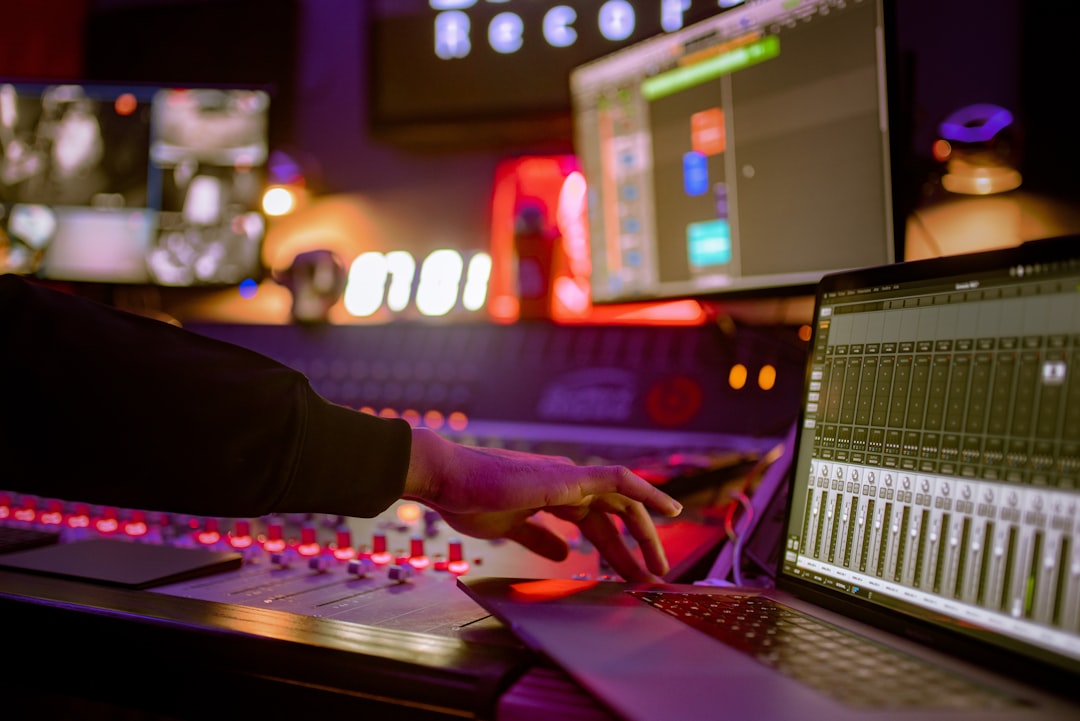
To become a broadcast audio engineer, you need to combine solid audio fundamentals with the specific skills broadcast demands: working live and to deadline, routing audio reliably over networks, and keeping everything within strict technical standards. It’s a discipline where consistency and calm under pressure matter as much as a good ear.
Here’s what the job involves and how to work toward it.
What a broadcast audio engineer does
Broadcast audio engineers handle sound for live and recorded television, radio, sports, news and streamed events. It’s one of several distinct paths within the field, so it helps to see where it sits among the wider types of audio engineering jobs. Depending on the role, that can mean:
- Mixing live audio for a broadcast in real time (often called the A1, with assistants as A2s).
- Managing microphones, comms and audio routing across a studio or outside-broadcast truck.
- Ensuring loudness and signal standards are met so the broadcast is legal and consistent.
- Troubleshooting fast — there’s no second take in live broadcast.
It overlaps with live sound engineering but adds the layer of broadcast standards, comms systems and audio-for-picture.
The skills and knowledge you need
Broadcast rewards engineers who are technically thorough. Focus on:
- Rock-solid signal flow. You must trace and fix audio paths instantly. Brush up on gain staging and clean monitoring.
- Loudness standards. Broadcast has strict loudness rules, so understanding LUFS and loudness measurement is essential.
- Audio-over-IP networking. Modern facilities route audio over networks, so Dante knowledge is highly valued.
- Large-format consoles and comms. Broadcast consoles and intercom systems are their own world; hands-on time matters.
- Microphone technique for dialogue, sport and music. A strong grasp of polar patterns helps you place and choose mics correctly.
A typical broadcast signal chain
Understanding how a broadcast audio path is built helps you troubleshoot it when something goes wrong on air. In broad terms, signal travels from source to transmission like this:
- Sources — microphones, playout machines, phone and remote feeds, and music beds all arrive at the facility, often converted to a networked audio stream early in the chain.
- The mixing console — the A1 balances every source, rides levels, and routes groups and busses to where they need to go. Broadcast desks are built around fast, repeatable recall so the same show sounds identical day after day.
- Loudness processing — a dedicated loudness processor sits near the output to keep the programme inside the legal target and tame sudden jumps between content and adverts.
- Comms and monitoring — a separate intercom path lets the engineer talk to camera operators, producers and presenters without any of it reaching air.
- Transmission — the final mix is handed off to playout, streaming encoders or the transmitter, usually with redundant paths in case one fails.
The thing that sets broadcast apart from studio work is redundancy and recall: nothing should depend on a single cable, and every show should be reproducible from a saved snapshot.
Certifications and training that help
Formal credentials carry more weight in broadcast than in some creative audio fields. Worth pursuing:
- Dante certification (offered by Audinate) — increasingly expected for networked audio roles.
- AVIXA training for AV systems knowledge, useful where broadcast meets live events.
- Manufacturer training on specific broadcast consoles when you can access it.
For a broader look at which credentials actually move the needle, see our rundown of the audio engineering certifications worth getting.
A degree or college course in audio or broadcast can help, but as with most audio careers, demonstrable skill and hands-on experience matter most. See do you need a degree to be an audio engineer? for the wider perspective.
How to break in
Broadcast is a hands-on, hierarchical field, so you generally start junior and work up:
- Get any foot in the door — assistant, A2, or junior roles at a TV station, radio station, or outside-broadcast company.
- Volunteer or intern at community, student or local stations to gain real live experience.
- Build live experience anywhere you can. Live events, houses of worship and streaming productions all teach transferable skills.
- Network within the industry — broadcast crews are tight-knit and hire people they trust. Our guide to networking applies directly.
Common mistakes to avoid
Most newcomers stumble in predictable ways. Knowing them in advance makes you look like a safer pair of hands on a crew:
- Treating it like studio work. In the studio you can stop, fix and re-take. On air you cannot, so engineers who plan for failure — backup mics, redundant feeds, a known-good snapshot to fall back on — are the ones who get trusted with bigger shows.
- Ignoring loudness until the end. Loudness compliance is not a final polish; it has to be considered throughout the mix. Chasing the meter at the last minute usually means a mix that sounds squashed or inconsistent.
- Neglecting comms discipline. Knowing when to talk on intercom, and keeping that path clean and separate from programme audio, is a core professional skill that beginners often underestimate.
- Skipping labelling and documentation. A truck or studio with clearly labelled sources and saved sessions is one you can recover quickly. Sloppy patching costs you when something fails under time pressure.
- Forgetting it’s audio-for-picture. Sound has to serve the image and the story, the same discipline that drives post-production sound for film and TV. The cleanest technical mix still fails if the dialogue isn’t clear and intelligible to the viewer at home.
Frequently asked questions
Is broadcast audio the same as live sound?
They share many skills, but broadcast adds strict loudness standards, audio-for-picture, comms systems and network routing. A live sound background is a strong starting point, but you’ll need to learn the broadcast-specific layer.
Do I need Dante certification to work in broadcast?
It isn’t always mandatory, but networked audio is now standard in many facilities, so Dante knowledge is highly valued and certification can make you more employable. It’s one of the most worthwhile credentials to pursue.
How do I get live experience without a broadcast job?
Volunteer at local or community stations, help with live-streamed events, or work in live sound. Any experience mixing live and managing signal flow under pressure builds the instincts broadcast demands.
What’s the difference between an A1 and an A2?
The A1 is the lead audio engineer who mixes the broadcast in real time and is responsible for what goes to air. A2s support that mixer — rigging and managing microphones, handling comms, running cables and solving problems on the floor. Most engineers start as an A2 and move up to A1 as their experience and judgement grow.



