
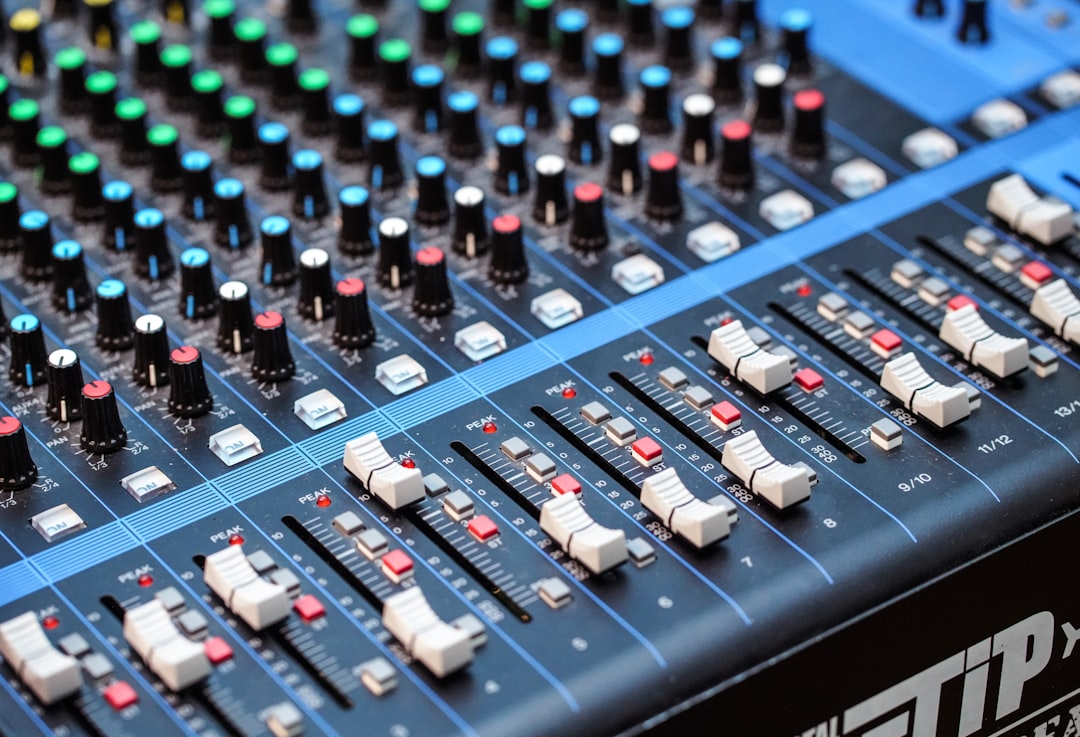
Want to know how to become a live sound engineer? Live sound is its own world: real-time, high-pressure, and hands-on. There are no second takes — you make a band sound great in front of an audience, in a room you may have only met that afternoon. It rewards quick problem-solving, calm under pressure and a solid grasp of audio fundamentals. Here’s how to get into it.
What a live sound engineer does
Live sound splits broadly into two roles. The front-of-house engineer mixes what the audience hears; the monitor engineer manages what the performers hear on stage. On smaller gigs one person does both. The job involves setting up and ringing out a PA, line-checking, soundchecking, mixing the show live, and troubleshooting whatever goes wrong — because something always does. As you progress you may specialise as a front-of-house engineer or a monitor engineer.
Step 1: Learn the audio fundamentals
Live sound rests on the same foundations as studio work. You need to understand signal flow, gain staging, and EQ and compression fundamentals — especially EQ, because controlling feedback and fitting a band into a room is largely an EQ and gain-structure problem. The faster you can diagnose a frequency issue by ear, the better your shows will sound.
Step 2: Understand PA systems and live gear
You’ll work with mixing consoles (digital and analogue), speaker systems, stage monitors or in-ear systems, microphones, DI boxes and a lot of cabling. Knowing your dynamic and condenser microphones and their polar patterns matters on stage, where bleed and feedback are constant concerns. Dynamic mics dominate loud stages for good reason. Learn how systems are powered, connected and protected.
Step 3: Get on real gigs as fast as you can
Live sound is learned in the room, not from a book. Volunteer at small venues, houses of worship, community theatres and local bands. Offer to help load in, patch stages and assist whoever is running sound. The repetition of setting up, soundchecking and mixing real shows is irreplaceable. This is also one of the best ways of getting audio engineering experience generally, because it forces you to work quickly and decisively.
All those nights beside a loud PA add up, so protect your hearing from the start. A pair of high-fidelity concert earplugs lowers the level evenly, so you can still judge the mix while you work.
Step 4: Develop speed, calm and people skills
The technical side gets you in the door; temperament keeps you working. You’ll deal with tired musicians, tight schedules and gear that fails mid-set. Bands rebook engineers who stay calm, solve problems quietly and make the night run smoothly. Communication and reliability are as valued as your mixing ear — networking matters, so see how to network in the music industry to build the relationships that bring repeat work.
Step 5: Build a reputation and consider certifications
As you take on bigger rooms and touring work, networked audio knowledge becomes valuable. Certifications such as Dante training and AVIXA credentials can strengthen your credibility for larger productions and AV-integration work. They’re not mandatory, but they signal competence — our overview of audio engineering certifications worth getting covers which ones matter for live and AV work.
A typical show, start to finish
Understanding the shape of a gig helps the steps above make sense. Most shows follow the same arc, and getting fluent at each stage is what separates a confident engineer from a flustered one.
You arrive for load-in, get the PA and stage gear in position, and run power and signal cabling. Next comes patching: every microphone and DI is routed to a console input following an input list, ideally one you’ve agreed with the band in advance. Then you ring out the system and stage wedges — pushing the gain up until feedback starts and notching out the offending frequencies so you have headroom to work with later. Line check confirms every channel is alive and arriving where it should. Soundcheck is where you build a rough mix and set monitor levels for each performer. Finally you mix the show, riding levels and reacting to a room that changes the moment an audience walks in and soaks up the high end. After the last song you load out — and a tidy, fast pack-down is part of the reputation that gets you rebooked.
Common mistakes beginners make
Almost every new live engineer trips over the same things. Knowing them in advance saves you a lot of painful shows.
The biggest is chasing volume instead of clarity. Turning everything up until the loudest element wins just builds a wall of mush and invites feedback; a clean, well-balanced mix at a sensible level always sounds bigger than a loud one. Closely related is poor gain structure — setting input gains by eye rather than by ear and meters, which leaves you fighting noise or clipping all night. Beginners also tend to over-process, reaching for EQ and compression to fix problems that are really down to mic choice or placement. Skipping the ring-out, ignoring the input list, and forgetting to label or check cables before doors all cause avoidable mid-show panics. Finally, many newcomers mix from behind the desk only — a good engineer walks the room during soundcheck, because what you hear at front-of-house is not what the audience in the corners hears.
How to choose where to start
If you’re deciding what kind of live work to pursue first, match it to your temperament and what’s available locally. Houses of worship are one of the most welcoming entry points: they run regular services, often have a fixed install you can learn on, and value reliability over flash. Community theatre and small venues expose you to varied acts and quick turnarounds, which builds speed fast. Working with one local band as their regular engineer lets you grow alongside them and learn a single rig deeply. There’s no wrong door — the goal is simply consistent, repeated time behind a real console with a real audience in the room.
How long does it take?
It varies widely. You can run small shows competently within months of regular gigging, while mixing large, complex productions confidently takes years of varied experience. Your pace depends on how many gigs you do and how varied they are. Live sound rewards mileage above all.
Frequently asked questions
Do I need a degree to be a live sound engineer?
No. Live sound is overwhelmingly experience-driven — venues and bands hire on reputation and reliability. Hands-on gig experience matters far more than formal qualifications, the same way it does in the studio, as we cover in whether you need a degree to be an audio engineer, though networked-audio certifications can help for bigger productions.
Is live sound harder than studio engineering?
It’s different rather than harder. Live work demands speed, calm and real-time problem-solving with no chance to redo anything, while studio work — the kind you’d do as a recording engineer — allows more deliberation. Each suits a different temperament.
How do I get my first live sound gigs?
Volunteer locally — small venues, community theatres, places of worship and local bands almost always need help. Offer to assist whoever runs sound, learn their rig, and take on shows as you prove yourself reliable.
What gear should I learn first?
Start with the signal chain you’ll meet on every stage: dynamic microphones, DI boxes, a mixing console and stage monitors or in-ears. Understanding how a signal travels from a mic, through the desk, out to the PA and back to the wedges matters far more than memorising any one brand of equipment.



