
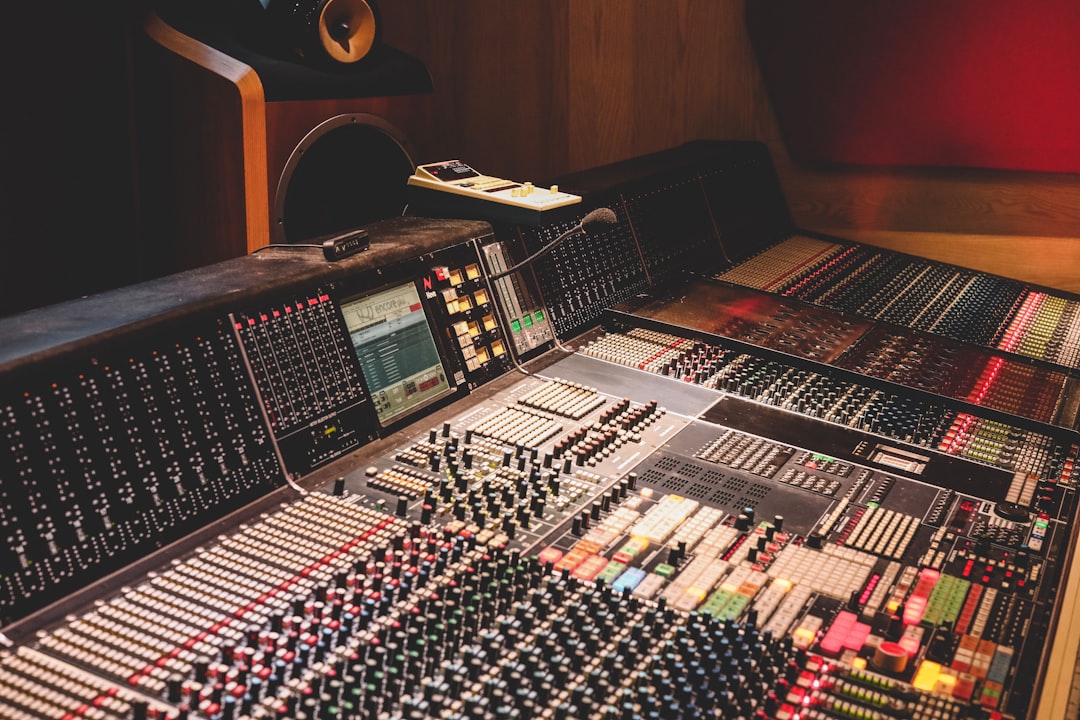
Figuring out how to become a mastering engineer means accepting one thing up front: mastering is a discipline of subtlety and judgement, not big moves. The mastering engineer is the last person to touch a record before release, responsible for final tonal balance, loudness, consistency across an album, and clean delivery. It rewards exceptional ears and a methodical, restrained approach. Here’s how to build toward it.
What a mastering engineer actually does
Mastering takes a finished mix and prepares it for the world — refining the overall tone, controlling dynamics, setting the right loudness for the destination, and ensuring tracks sit together cohesively on an album or playlist. If the role is still fuzzy, start with what a mastering engineer is and our broader explainer on what mastering is. The work is quieter and more analytical than mixing, but no less skilled.
Step 1: Build elite-level critical listening
Mastering decisions are often fractions of a decibel. That demands a more refined ear than almost any other audio role. You develop it by listening to a huge range of professionally mastered music, analysing tonal balance, and comparing your work to commercial references constantly. There’s no shortcut — your ears are the most important tool you have, and they improve only with focused, repeated listening.
Step 2: Understand loudness and delivery standards
Modern mastering is shaped by streaming. You need a working understanding of loudness measurement and how platforms normalise tracks. Our guide on LUFS and how loud a master should be is essential reading here. Chasing maximum loudness at the expense of dynamics is a classic beginner mistake — knowing the targets keeps your masters competitive without crushing them.
Step 3: Get an accurate room and monitoring
Because the moves are small, your monitoring has to be honest. You need to trust what you hear across the full frequency range, especially the low end. That makes acoustic treatment and well-positioned monitoring more important in mastering than almost anywhere else. You don’t need a world-class room to begin, but you do need to know exactly how yours translates.
Step 4: Learn the core processing chain
A typical mastering chain uses gentle EQ, careful dynamics control, sometimes harmonic enhancement, and final limiting — all applied conservatively. A solid grasp of EQ and compression fundamentals is the bedrock. The skill isn’t in owning rare tools; it’s in knowing when not to reach for them. Practise by mastering mixes you know well and comparing the result to released versions of similar material.
Step 5: Practise on real mixes and build a portfolio
Offer to master tracks for mixing-engineer friends and local artists. Real mixes — with real flaws — teach you far more than ideal demo files. As your masters start holding up against commercial references, document them. When you’re ready to take paid work, mastering services are in demand on platforms like SoundBetter, AirGigs, Fiverr and Upwork, and it’s worth learning how to get clients on SoundBetter as well as pricing your mastering services so you can set fair, sustainable rates.
The skills that separate good masters from great ones
Beyond the technical chain, a few habits mark out engineers whose work consistently translates. The first is reference-matching discipline: loading a commercial track in the same genre, level-matching it honestly, and A/B-ing your master against it throughout the session rather than just at the end. The second is gain-staging and headroom awareness — receiving mixes with sensible headroom (a few decibels below full scale), and leaving the limiter enough room to do its job gracefully rather than fighting an already-squashed mix.
The third is consistency across a body of work. Mastering a single track well is one thing; making twelve songs feel like one album — matched in tone, level and spacing, with sensible gaps and fades between them — is where sequencing and judgement really show. Finally, great engineers know how to handle a weak mix diplomatically: recognising when a problem should be sent back to the mix engineer rather than papered over at the master, because there are tonal and balance issues mastering simply cannot fix without making things worse.
Common mistakes to avoid
Most early mastering problems come from a handful of recurring habits. Watch for these:
- Over-processing. Reaching for heavy EQ or compression because it feels like “doing the job”. If a mix arrives in good shape, restraint is the correct response.
- Loudness for its own sake. Pushing the limiter until the master is loud but lifeless. Aim for a level that’s competitive for the destination while keeping the music breathing.
- Mastering on an untreated, untrusted room. Making low-end decisions you cannot actually hear leads to masters that fall apart on other systems.
- Working only on flattering material. Polished demo files hide your weaknesses. Real, imperfect mixes are where you genuinely learn.
- Skipping referencing. Without a commercial benchmark in the session, it’s easy to drift away from what the genre actually sounds like.
- No level-matched comparison. Louder almost always sounds “better” in the moment, so always compare before-and-after at matched loudness before trusting a change.
How long does it take?
It varies widely. Because mastering leans so heavily on refined listening, most engineers come to it after time spent mixing, and developing a trustworthy mastering ear can take years of focused work. Your pace depends on how much you listen analytically and the standard you’re aiming for. Treat it as a long-term craft.
Frequently asked questions
Should I learn mixing before mastering?
It helps. Mixing builds the listening skills and processing intuition that mastering relies on, and understanding how a mix is made informs better mastering decisions. Many mastering engineers came up through mixing first, so it’s worth understanding how to become a mixing engineer alongside this path.
Do I need analogue gear to be a mastering engineer?
No. Plenty of professional mastering is done entirely in the box with high-quality plugins. Accurate monitoring, a treated room and trained ears matter far more than whether your processing is hardware or software.
Can I master tracks from home?
Yes, provided your monitoring is accurate and your room is reasonably treated. Many working mastering engineers operate from well-set-up home or project rooms. The bottleneck is your ears and your room, not your postcode.
What qualifications do I need to become a mastering engineer?
There’s no formal certificate that gates the work — it’s a portfolio-driven field. A degree or course can shorten the learning curve and teach fundamentals, though it’s worth weighing up whether an audio engineering degree is worth it before committing. Clients and artists judge you on how your masters sound and how reliably you deliver, not on paper credentials. A consistent body of work that holds up against commercial releases is the qualification that actually wins jobs.
How is mastering different from mixing?
Mixing balances the individual elements within a song — the relative levels, panning and processing of each track. Mastering works on the finished stereo (or stems) result, treating the song as a whole and preparing it for release alongside other tracks. Mixing is about the parts; mastering is about the final, cohesive whole and how it translates everywhere.



