
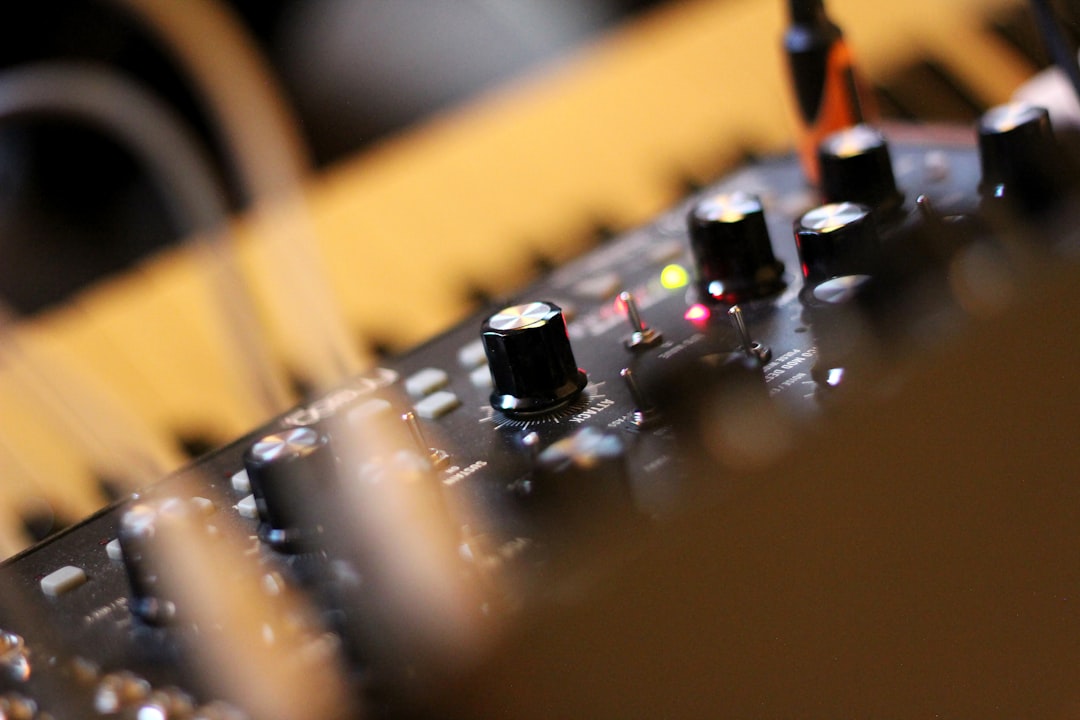
To make sci-fi sounds, you take a simple synth tone or a recorded source and bend it until it stops sounding natural — sweeping filters, heavy modulation, pitch glides, metallic resonance and long reverbs all push a sound into “the future”. The trick is that sci-fi is less a single sound and more a set of techniques you apply to whatever you start with.
This guide walks through the building blocks: lasers, drones, computer blips, sweeps and alien textures. You can follow along in any synth — Vital and Surge are free and capable, while Serum, Arturia Pigments and Phase Plant give you deeper modulation if you have them.
Start with the right source for the sci-fi sound you want
Different sci-fi sounds want different starting points. Pick your source before you reach for effects:
- Lasers and zaps: a single oscillator (saw or square) with a fast downward pitch envelope.
- Drones and spaceship hums: two or three detuned oscillators, low and slow.
- Computer blips and UI beeps: a pure sine or triangle with a very short envelope.
- Alien textures: a noisy or granular source, or a resampled field recording.
If you are new to oscillators, filters and envelopes, our guide on designing sounds with a synth covers the signal flow you will be using here.
Use pitch envelopes and glides for lasers and zaps
The classic laser is a pitch sweep. Route an envelope to oscillator pitch and set it to drop from high to low quickly — that downward glide reads instantly as “energy weapon”. For a rising laser, invert it. Add a touch of portamento (glide) and the sound gets that wobbly, retro feel.
Stack a second oscillator detuned by a few semitones and the laser turns harsher and more aggressive. A short bit of distortion adds bite. Keep the amp envelope tight so the whole event lasts a fraction of a second. If you are building a full arsenal of blasters and energy weapons, our guide on designing weapon sounds for games goes deeper on transients and impact.
Modulate everything for movement and “alien” character
Static tones sound earthly; movement sounds futuristic. This is where LFOs earn their keep. Assign an LFO to the filter cutoff for a slow, breathing sweep, and a second, faster LFO to pitch for that warbling, unstable quality. Random or sample-and-hold LFO shapes are gold for computer chatter and malfunctioning-robot noises. If you want a systematic look at routing modulators, our guide on using modulation for sound design covers LFOs, envelopes and macros in depth.
FM and wavetable synthesis are especially strong here because small parameter changes produce wildly metallic, inharmonic results. Modulating an FM operator ratio or sweeping a wavetable position gives you sounds that have no natural equivalent — exactly what you want. Our walkthrough on FM synthesis for sound design goes deeper on getting those clangy, metallic tones.
Build drones and sci-fi atmospheres
A sci-fi drone is a sustained, evolving bed. Start with detuned oscillators or a noise source, then automate the filter slowly over several bars so the timbre never sits still. Layer in a high, shimmering tone and a low sub for depth. Long modulated reverb and delay turn a flat pad into a vast, cavernous space — perfect for spaceship interiors and deep-space ambience. For the building, tension-raising transitions between scenes, the same automation tricks feed straight into making risers and sweeps.
If you want to go further into evolving beds, see designing textures and atmospheres, which uses many of the same layering ideas.
Process with reverb, delay and resonance
Effects do a lot of the sci-fi heavy lifting:
- Reverb: big, metallic or plate reverbs (Valhalla reverbs are popular) create scale and otherworldliness.
- Delay: pitched or filtered feedback delays make sounds ricochet and decay strangely.
- Resonant filters: push resonance high and sweep the cutoff for that singing, robotic whistle.
- Distortion and bitcrushing: add grit for damaged-machine and retro-computer textures.
A powerful move is resampling: render your sound to audio, then re-pitch, reverse and re-process it. Reversing a reverb tail, for example, turns any hit into an eerie sci-fi swell. Our guide on resampling sounds shows the full loop.
How to choose your approach for a specific scene
Sci-fi sound design rarely happens in the abstract — you are usually serving a picture, a game event or a track. Let the context decide which techniques you lean on:
- Short, punchy events (lasers, button presses, teleports): prioritise tight envelopes and a strong transient. The ear only hears these for a moment, so a clear pitch movement and a little distortion do more than elaborate modulation.
- Sustained beds (engine rooms, ambience, tension): prioritise slow, continuous movement. Nothing should feel looped or static, so automate filters and add subtle pitch drift over long spans.
- Character or interface sounds (robots, AI voices, computers): prioritise rhythm and pattern. Sample-and-hold LFOs, arpeggiated blips and gated delays read as “something is computing”.
A useful workflow is to design the core tone first with as few effects as possible, then add processing only until the sound earns its place in the mix. It is easy to bury a great source under so much reverb that it loses its identity — start dry and commit to wet later.
Common mistakes when making sci-fi sounds
Most weak sci-fi sounds fail for a handful of repeatable reasons. Watch for these:
- Too much movement at once: a dozen LFOs fighting each other turns into mush. Pick one or two clear gestures per sound and let them be heard.
- Relying on presets: factory “sci-fi” patches are everywhere and instantly recognisable. Start from one, by all means, but change the source, the modulation or the effects so it becomes yours.
- Ignoring the low end and the transient: impressive mid-range textures often disappear in a busy mix because they have no body or no attack. Layer a sub for weight, or a short click for definition.
- Over-reverberating everything: long tails sound epic in solo but smear together when several elements play at once. Use shorter, brighter spaces for events and save the cavernous reverbs for atmospheres.
- Forgetting context: a sound that is dazzling on its own can be wrong for the scene. Always audition against the picture or the rest of the track, not in isolation.
Frequently asked questions
What synth is best for making sci-fi sounds?
Any synth with strong modulation and FM or wavetable engines works well. Vital and Surge are excellent free options, while Serum, Phase Plant and Arturia Pigments offer deeper routing. The technique — modulation, pitch glides, resonance — matters more than the specific plugin.
How do I make a sci-fi sound feel “alien” rather than just synthetic?
Use inharmonic and metallic sources (FM operators, detuned wavetables, resonant noise) and modulate them unpredictably with random or sample-and-hold LFOs. Earthly sounds have stable, harmonic tones; alien sounds drift, warble and clang.
Can I make sci-fi sounds from recordings instead of synths?
Yes. Record everyday objects, then heavily pitch-shift, reverse, granularise and add long reverb. A creaking door slowed down and stretched can become a spaceship hull; a metal scrape re-pitched becomes a hovering drone.
How do I keep my sci-fi sounds from clashing in a busy mix?
Give each element its own frequency range and its own gesture. Carve space with EQ so a high resonant whistle does not collide with a shimmering pad, and keep long reverbs off your rhythmic blips so the groove stays clear. If two sounds compete, make one shorter or move it in pitch rather than turning everything up.



