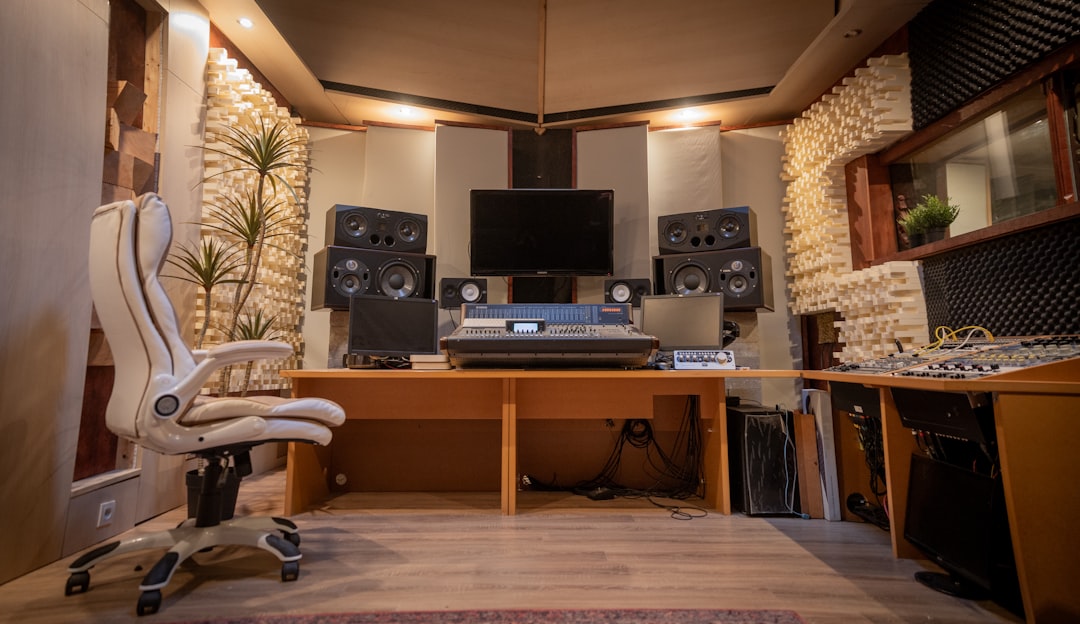
To treat a room for mixing, you want your monitors to give you an accurate, neutral picture of the audio so your decisions translate to other systems. That means taming early reflections at the speaker mirror points, controlling bass build-up in the corners, and setting up a symmetrical listening position. Mixing rooms generally need more careful treatment than recording rooms, because room problems trick you into mixing wrong.
This is acoustic treatment — shaping sound inside the room. It is not soundproofing, which is about stopping sound from leaving or entering. The two are explained in soundproofing vs acoustic treatment.
Try the free BPM & Key Finder →
Why you treat a room for mixing
An untreated room colours everything you hear. Reflections off side walls cause comb filtering that shifts the frequency balance, and room modes create huge bass peaks and nulls so the low end seems too loud in one spot and absent in another. You then overcompensate, and the mix falls apart on other speakers. Background reading: what are room modes and early reflections explained.
Step 1: Set up a symmetrical mix position
Place your desk and monitors along the shorter wall, centred left-to-right so the room is mirror-symmetrical around your seat. Your head and the two speakers should form an equilateral triangle, with tweeters at ear height and the speakers angled in toward you. Avoid sitting exactly halfway down the room’s length, where modal nulls are worst. For specifics, see how to position studio monitors.
Step 2: Treat the first reflection points
The first reflection points on the side walls (and the ceiling) are where treatment matters most for stereo imaging. Use the mirror trick: a helper slides a mirror along the wall, and wherever you can see a speaker from your seat, that’s a reflection point. Cover those spots with thick broadband absorbers — fabric-wrapped mineral wool such as Rockwool, or rigid fibreglass like Owens Corning 703 — ideally 5–10 cm thick with an air gap behind. The full method is in how to find your first reflection points and placement strategy is in where to place acoustic panels.
Step 3: Trap the bass in the corners
Low frequencies are the hardest part of any small room. Stack thick bass traps floor-to-ceiling in the corners, especially the front corners behind the speakers, and treat the wall-ceiling junctions where you can. Porous bass traps need depth to work low, so thicker is better. Thin foam will not fix bass. See our bass traps guide, our walkthrough on how to treat room corners, and the overview in acoustic treatment for home studios.
Treatment only goes so far in a tight space, so our guide on mixing in a small room covers the workflow tricks that make up the difference.
Step 4: Add a ceiling cloud and rear-wall treatment
A cloud above the listening position kills the strong floor-ceiling reflection, and absorption or diffusion on the rear wall stops sound bouncing straight back to your ears. In small rooms, broadband absorption on the rear wall is the safe choice. Avoid over-deadening the whole room; you want it controlled, not anechoic.
Step 5: Measure and verify
Your ears are a good start, but a measurement confirms what’s actually happening. The free Room EQ Wizard (REW) with a calibrated measurement mic like the miniDSP UMIK-1 shows your frequency response and decay times so you can see where modes and reflections remain. Treat first, then consider room correction software such as Sonarworks SoundID Reference, IK ARC or Dirac as a finishing touch — correction helps with what’s left, but it cannot replace physical treatment of reflections and reverb time.
Don’t skip RT60
A good small mixing room has a fairly short, even reverberation time across frequencies. If the room rings or the bass decays much slower than the mids, you need more absorption and more bass trapping. Read what is RT60 to understand the target.
How to choose where to spend first
If your budget or wall space is limited, treat the room in order of audible impact rather than trying to do everything at once. The priority for almost every small mixing room is the same: corners first, then the side-wall and ceiling reflection points, then the rear wall. Bass problems are the most damaging because you cannot hear what you cannot trust in the low end, and they are also the hardest to fix with EQ or correction later. Reflection-point absorption comes next because it sharpens the stereo image and stops the comb filtering that smears your panning and balance decisions.
When you are weighing up panels, think in terms of total depth and coverage rather than how a product looks. A thicker absorber with an air gap behind it will always outperform a thin one of the same surface area, because absorption depends on the material interacting with the longer wavelengths of lower frequencies. Decorative thin foam tiles look the part but barely touch anything below the upper mids, so they give a false sense of progress while the real problems remain.
Common mistakes when treating a mixing room
The first and most common mistake is reaching for thin acoustic foam and covering the walls evenly with it. This deadens the highs, leaves the bass untouched, and produces a dull, lopsided room that is actually harder to mix in than before. The second mistake is an asymmetrical setup — a cupboard on one side and an open doorway on the other — which skews your stereo image so that centred elements like vocals and kick drift off to one side.
A third mistake is treating only the front of the room and ignoring the rear wall, which leaves a slap-back reflection arriving straight back at your head. A fourth is trusting correction software to do the heavy lifting; it can tidy the frequency response but cannot undo a long, uneven decay. Finally, many people stop measuring too early. Treat, measure, adjust, and measure again — the room you end up with is rarely the one you predicted on paper.
Frequently asked questions
Where should I start treating a mixing room?
Start with the first reflection points on the side walls and ceiling, then add corner bass traps. Those two steps fix the most audible problems — imaging and bass accuracy — before anything else.
Will room correction software fix an untreated room?
Only partially. Correction can flatten some frequency-response issues, but it cannot shorten a long reverb tail or undo comb filtering. Treat the room physically first, then use correction for the remainder.
Can a room be too dead for mixing?
Yes. An overly dead room is fatiguing and unnatural to work in. Aim for a controlled, even decay rather than total silence, and use some diffusion on the rear wall in larger rooms.
How much treatment does a small mixing room actually need?
More than most people expect, and concentrated in the right places. As a rough guide, prioritise floor-to-ceiling bass trapping in the corners plus broadband absorbers at every first reflection point, then add rear-wall treatment. It is the depth and placement of the treatment that matters, not simply how much of the wall surface you cover.