
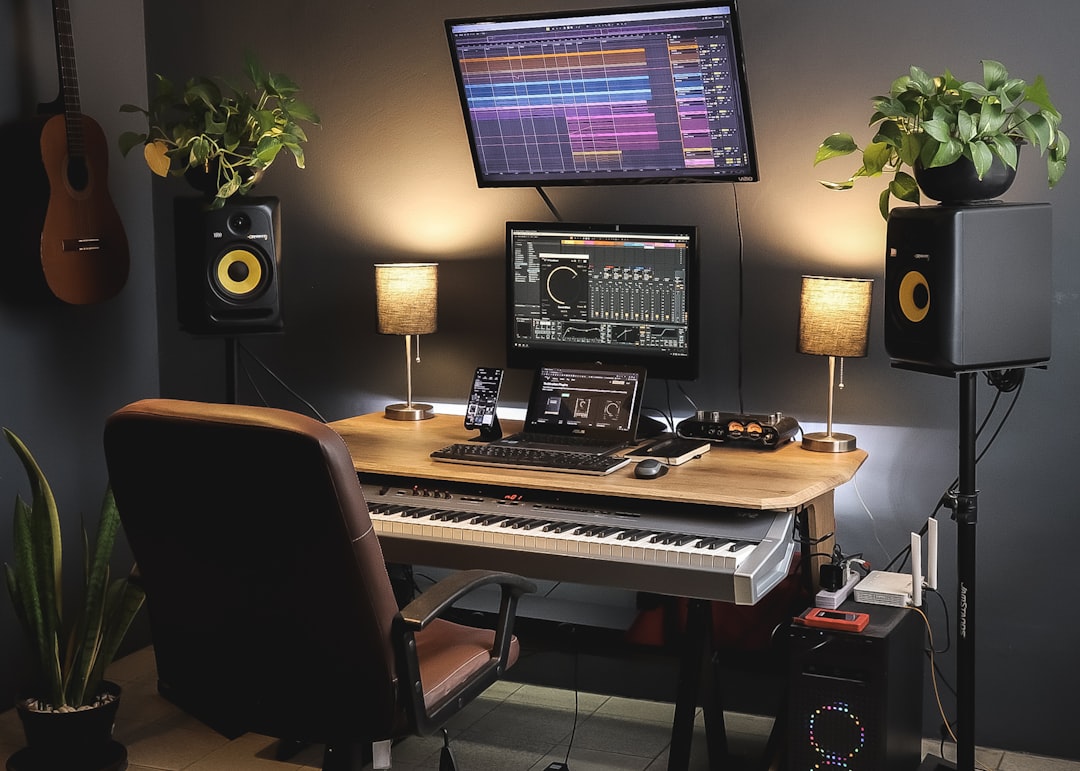
The best free hip hop samples come from a mix of reputable free packs, label giveaways, DAW stock libraries and producer communities — not sketchy blog downloads. If you want usable material fast, start with the free sections of established sample platforms, grab genre kits from well-known free-pack creators, and mine the free content bundled with your DAW. Below we cover where to look, what separates a good free pack from filler, and how to stay on the right side of licensing.
Violet Recording is reader-supported — we may earn a commission from links on this page, at no extra cost to you.
The quick list: where free hip hop samples actually live
- Free tiers of sample platforms — services like Splice give away rotating free packs and offer free demo content alongside their paid catalogue.
- Free-pack creators — Cymatics-style producers regularly release full free drum kits, loop packs and one-shots in exchange for an email.
- Label and artist freebies — beat-focused labels and producers drop free “starter” kits to build a mailing list.
- Your DAW’s stock library — FL Studio, Ableton, Logic and others ship gigabytes of loops and drums you already own.
- Producer forums and communities — long-running boards and subreddits curate legitimate free links and share user-made kits.
- Public-domain and Creative Commons archives — for breaks, spoken word and textures, if you read the licence carefully.
What makes a free hip hop sample pack worth downloading
Quantity is the trap. Anyone can zip up 500 low-bitrate loops and call it a mega-pack; that doesn’t make it useful. When you’re sorting the good from the padding, judge a free pack on a few practical things.
Sound quality. Samples should be clean 44.1kHz or 48kHz WAV files, not MP3s re-saved as WAV. MP3 sources carry compression artefacts that get worse the moment you pitch, stretch or layer them. Open a one-shot in your DAW’s editor and look at the waveform — real WAV content has detail all the way to the top of the frequency range.
Labelling and key/tempo tags. A good pack tells you the BPM of every loop and the key or root note of every melodic sample. That metadata is the difference between building a beat in ten minutes and spending an hour guessing why two loops clash.
Dry, usable one-shots. For drums especially, you want reasonably dry hits you can process yourself — not kicks and snares drowned in reverb and saturation you can’t remove. Loops are handy for inspiration, but one-shots give you control over the groove.
Character over quantity. Ten genuinely gritty, sampled-sounding drum breaks beat a thousand generic hits. Hip hop lives on texture: dusty vinyl noise, boom-bap swing, hard trap 808s, lo-fi tape wobble. Pick packs that commit to a vibe.
Free hip hop samples by type: drums, melodies, and 808s
Hip hop production breaks down into a few building blocks, and the free ecosystem is stronger in some than others.
Drums. This is where free content shines. Boom-bap and trap drum kits are the most-given-away material on the internet, because producers use them to build an audience. You’ll find full kits of kicks, snares, claps, hi-hats, open hats, percussion and 808s. Layer a punchy kit sample with a stock DAW kick for weight, and you’re most of the way to a modern beat.
808s and bass. Free 808 collections are everywhere, but quality varies wildly. Look for long, tunable 808s recorded cleanly so you can pitch them to your melody without them turning to mush. If you want to shape your own, our guide to the best free drum VSTs and the best free synth VSTs covers plugins that generate 808s and sub-bass from scratch.
Melodies and loops. Free melody loops — keys, guitars, pads, flutes, sampled soul — are common but often overused, because a popular free loop ends up on thousands of beats. Treat free melodic loops as a starting sketch rather than the finished hook: chop them, re-pitch them, filter them, and combine two into something that isn’t recognisable. If you’d rather build melodies yourself, browse the best free synths for sound design.
Vocals, adlibs and FX. Free vocal chops, tags, adlibs, risers, impacts and vinyl-crackle textures round out a beat. A little foley and noise glued under a loop does more for the “sampled” feel than any single expensive plugin.
How to use free samples so your beat doesn’t sound like everyone else’s
The downside of free is that thousands of other producers downloaded the exact same pack. Here’s how to make common samples your own.
Chop and rearrange. Don’t drop a loop in whole. Slice it, rearrange the pieces, drop or mute bars, and build a new progression from the fragments. A sampler or your DAW’s slicing tool turns one loop into raw material.
Re-pitch and time-stretch. Shifting a melodic loop up or down a few semitones changes its character and hides its origin. Formant-shifting vocal chops does the same. Just watch quality — heavy stretching on an already-lossy sample falls apart fast, which is why source quality matters.
Process aggressively. EQ out the mud, add your own saturation, run it through a filter, resample it back into your project. Layer two drum hits into a single custom sound. The more you process, the less it sounds like a stock pack.
Layer, don’t replace. Stack a free clap over a stock DAW snare, blend two 808s, or double a melody with a synth you played yourself. Layering is the fastest route to a signature sound. If you ever want to pull elements out of a reference track to study them, the free stem splitter in our tools section separates a song into stems.
“Free” still has a licence — read it before you release
This is the part most producers skip, and it’s the one that can cost you. Free does not automatically mean royalty-free or cleared for commercial release. Every pack, even a giveaway, comes with a licence, and those licences vary a lot.
Some free packs are fully royalty-free for commercial use — you can sell the beat, upload it, and monetise it with no further payment. Others are “free for non-commercial use only,” which means demos and practice but not a release you distribute or sell. A few require credit or have restrictions on reselling the samples inside a beat pack of your own. Creative Commons material carries its own conditions, and public-domain claims on old recordings are often wrong because the recording and the composition can have separate rights.
Before you build anything you plan to release, do three things: read the licence or terms file included with the pack, keep a copy of it with your project, and never assume a random blog re-upload has any right to give the sample away in the first place. When a licence is unclear, don’t use the sample commercially. And if your source is an actual copyrighted record rather than a cleared sample, that’s a different legal question entirely — you’d need to clear it with the rights holders.
When free runs out: subscription libraries and original tracks
Free samples are perfect for learning, sketching and building your first beats. At some point, though, you’ll hit the ceiling: the same loops everyone else has, licences you can’t verify, and gaps in genres nobody gives away for free. That’s when a subscription library earns its keep.
A service like Splice gives you a large, well-tagged, clearly-licensed catalogue of royalty-free samples, loops and one-shots, searchable by key and BPM, with the licensing already sorted so you can release commercially without guessing. For a working producer shipping music regularly, that clarity and depth is often worth more than the money you save hunting free downloads.
And if what you actually need is a finished, original track rather than raw samples — for a video, a client, or a release you fully own — you can generate one with Solmi. It’s a different route from sampling, but it sidesteps the licensing maze entirely because the output is original. For building your own DAW skills first, start with the best free DAWs for beginners, and browse the wider sound design hub for more free-sound guides.
Frequently asked questions
Are free hip hop samples legal to use in songs I release?
It depends entirely on the pack’s licence. Many free packs are cleared for commercial, royalty-free use, but some are non-commercial only or require credit. Always read the licence file that comes with the download and keep a copy. Never trust a random re-upload — if the licence isn’t clear, don’t release with it.
What’s the best free source for boom-bap and trap drums?
Free drum kits are the strongest part of the free ecosystem. Established free-pack creators, label giveaways, and the free tiers of platforms like Splice all release solid boom-bap and trap kits regularly. Your DAW’s stock library is also an underrated free source you already own. Judge kits on clean WAV quality and dry, usable one-shots.
How do I make free loops sound original?
Chop and rearrange them instead of using them whole, re-pitch or time-stretch to shift their character, process them with your own EQ and saturation, and layer them with other sounds. The goal is to use the free sample as raw material, not a finished part — combine and mangle until it no longer sounds like the stock pack.



