
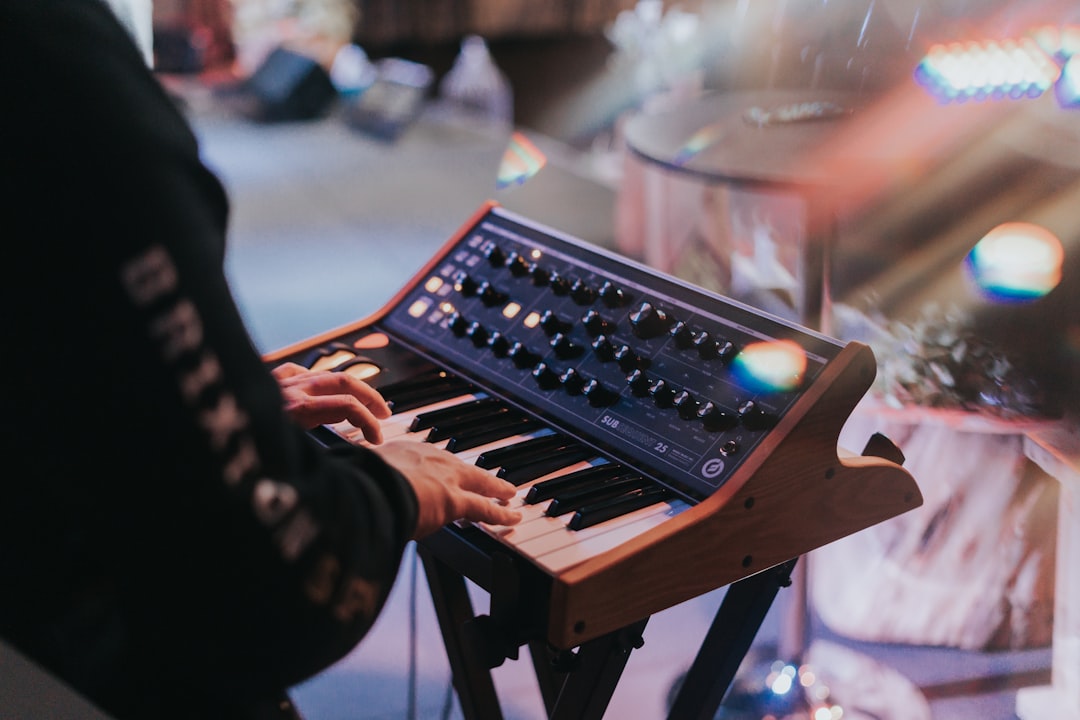
What is a rompler? A rompler is a sample-based synthesizer that makes sound by playing back short, pre-recorded audio clips stored in read-only memory, rather than generating tones from scratch with oscillators. The name is a blend of “ROM” (read-only memory) and “sampler,” and it tells you exactly how the instrument works: the sounds are already baked in, and you trigger and shape them from your keyboard or DAW.
Romplers are the workhorses behind a huge amount of modern music — think realistic pianos, strings, brass, drums and “preset” pads. If you have ever loaded a plugin, scrolled through hundreds of ready-made instruments and just started playing, you were almost certainly using a rompler.
Violet Recording is reader-supported — we may earn a commission from links on this page, at no extra cost to you.
What is a rompler, and how does it differ from a synth?
A traditional subtractive synth starts with raw waveforms — sine, saw, square, noise — generated by oscillators, then carves them into a sound using filters and envelopes. Nothing is pre-recorded; every tone is built in real time from electronic building blocks.
A rompler flips that around. Instead of oscillators, its sound source is a library of sampled recordings: a real grand piano played note by note, a violin section, an analog synth patch, a kick drum. When you press a key, the rompler retrieves the matching sample from memory and plays it. You still get filters, envelopes and effects on top, but the character of the sound comes from the recording, not from synthesis.
This is why romplers excel at realism. Recreating a convincing acoustic piano with pure synthesis is extremely hard; recording a real piano and playing it back is straightforward. The trade-off is flexibility — you are largely working with the sounds the developer captured, so romplers are less about radical sound design and more about instant, high-quality results.
How a rompler actually works under the hood
Under the surface, a rompler is doing a few clever things to turn a finite set of recordings into a fully playable instrument. Understanding these mechanics helps you get better sounds and avoid the tell-tale signs of a cheap library.
Multisampling. Developers do not record just one note and stretch it across the whole keyboard — that sounds unnatural fast. Instead they sample many notes across the range and map each recording to a small group of keys, or “zones.” Play a C3 and you hear a real C3; play a D3 and the rompler may pitch a nearby sample up slightly to fill the gap.
Velocity layers. A real instrument sounds different when played softly versus hard — not just louder, but brighter and more aggressive. Good romplers capture several velocity layers per note and switch between them based on how firmly you play, so soft passages stay mellow and hard hits open up.
Looping. Sustained sounds like strings or pads would run out of recorded audio if you held a note forever. Romplers loop a section of the sample seamlessly so the sound can sustain indefinitely, then play the natural release when you let go.
Round-robins. To stop repeated notes sounding like a machine gun, better libraries record the same note several times and cycle through the takes, so each repeat is subtly different — closer to how a human player performs.
Rompler vs sampler: what is the difference?
People often use these terms loosely, so it is worth being precise. A sampler is an open instrument: you load your own audio, chop it, map it and design your own patches. A rompler is a closed instrument: the samples come pre-loaded and pre-programmed, and you mostly play and tweak rather than build from raw recordings.
Think of a sampler as an empty kitchen where you cook whatever you like, and a rompler as a very good ready-meal — fast, consistent and reliable. In practice the line blurs, because many modern plugins are sample libraries running inside a sampler engine (such as Kontakt). When a library ships as a fixed, play-it-and-go instrument, it behaves like a rompler even if the underlying engine could do more.
The controls you will actually use
Because the raw tone is already recorded, a rompler’s controls are mostly about shaping and performing that sound rather than creating it. A few show up on almost every rompler:
Amp envelope (ADSR). Attack, decay, sustain and release control the volume shape over time. Lengthen the attack for soft pad swells; shorten the release for tight, staccato parts.
Filter. Usually a low-pass filter to darken or brighten the sound, often with its own envelope. Rolling off the highs on a bright preset is one of the quickest ways to make it sit in a busy mix.
LFO. A low-frequency oscillator for movement — vibrato on strings, a slow filter sweep on a pad, tremolo on a pad or key.
Built-in effects. Most romplers bundle reverb, delay, chorus and EQ so a preset sounds finished out of the box. These are convenient, but for a polished mix you will often turn them down and use your own dedicated processors instead. Our guide to using reverb and delay covers why that matters.
Macros and mod wheel. Many patches map expressive controls — like a swell, a filter, or a switch between playing styles — to the mod wheel or a few big macro knobs, so you can perform changes live.
When to reach for a rompler, and common mistakes
Romplers shine whenever you need a believable acoustic or vintage sound quickly: a piano under a vocal, string pads behind a chorus, a brass stab, a realistic drum kit, or classic synth textures you would rather not program from scratch. They are also fantastic for sketching — you can lay down an idea in seconds and refine later.
A few habits separate amateur-sounding rompler parts from professional ones:
Do not rely on the factory reverb. Stacking several presets that each have heavy built-in reverb quickly turns a mix to mush. Dial the internal effects back and treat everything with a shared reverb bus.
Play with dynamics. Those velocity layers only help if you actually vary your playing. Flat, uniform velocities are the fastest way to make a great library sound fake.
EQ to fit the mix. Presets are recorded to sound impressive solo, which usually means too much low-end and sparkle. A little corrective EQ helps them share space — the same principles from our EQ and compression fundamentals apply here.
Do not fear the deeper controls. Even a “closed” rompler usually lets you shape attack, filter and effects. Tweaking a preset by even 10% often turns a generic sound into something that feels like yours.
Some free romplers worth trying
You do not need to spend anything to start. Several genuinely good free romplers and sample instruments are widely used by working producers. Spitfire Audio LABS is a free, ever-growing collection of beautifully recorded instruments — strings, keys, pads and more. Decent Sampler is a free player with a large ecosystem of free libraries. Plogue Sforzando plays SFZ-format libraries and pairs well with free collections like the Versilian Studios Chamber Orchestra (VSCO 2) Community Edition. These are a great way to learn how romplers behave before committing money. For more free instrument ideas, see our roundup of the best free synth VSTs.
Where to get a good rompler
When you are ready for paid libraries, you will find a big range — from all-in-one “everything” romplers with thousands of presets to focused instruments that do one thing beautifully. It is worth browsing a well-stocked plugin retailer so you can compare options, read the specs and catch sales. Stores like Plugin Boutique carry most of the major rompler and sample-instrument developers in one place, which makes it easy to demo and choose.
Before you buy, listen to real audio demos rather than the marketing copy, check that the library covers the articulations you need, and make sure your computer has the RAM and disk space large sample libraries demand. For a broader look at building your setup, our free DAW guide and the wider sound design hub are good next stops.
Frequently asked questions
Is a rompler the same as a VST?
No — those describe different things. VST is a plugin format that lets an instrument run inside your DAW. A rompler is a type of instrument. Many romplers are supplied as VST (or AU/AAX) plugins, but a rompler can also be a piece of hardware, and plenty of VSTs are synths rather than romplers.
Can you design your own sounds on a rompler?
To a degree. You cannot usually swap out the core recordings, but you can shape them a lot — filtering, envelopes, LFOs, layering presets, and adding effects. That is enough to make a stock preset genuinely your own, though for ground-up sound design a synth or a full sampler gives you far more freedom.
Are romplers good for beginners?
Very. Because the hard part — capturing great-sounding instruments — is already done, a rompler lets a beginner get professional-sounding pianos, strings and drums almost instantly. That fast, satisfying result makes them one of the best ways to start producing while you learn deeper skills like arranging and mixing.



