
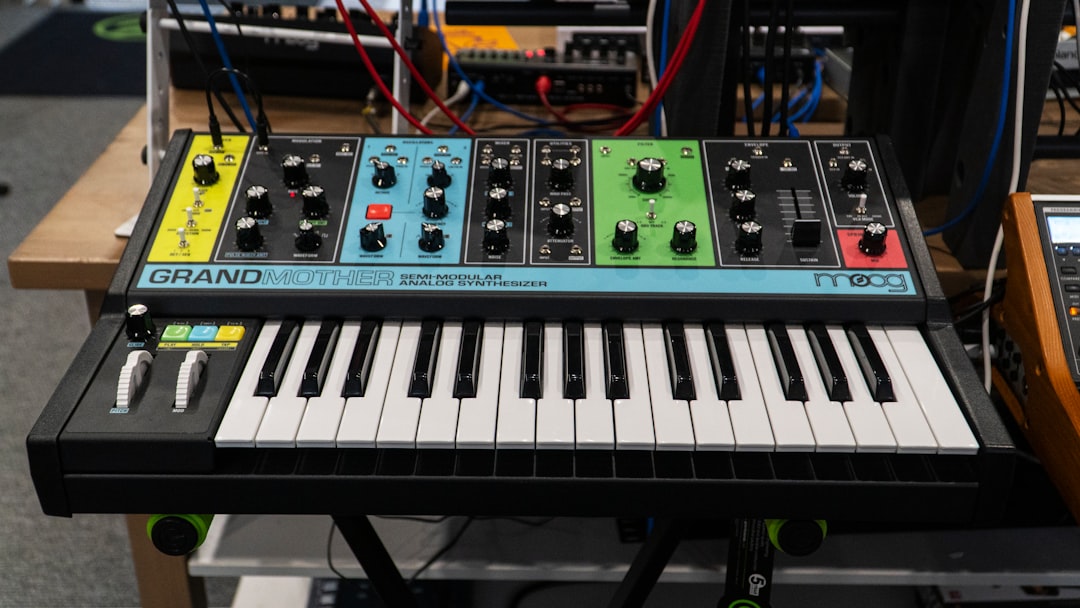
The best free jazz samples come from a mix of well-known producer libraries, label and artist freebies, sample-focused forums, and the free tiers of subscription platforms. Instead of chasing one magic “jazz pack,” it pays to know the types of sources that reliably hand out good material — and how to tell a usable loop from a noisy, badly-recorded one. This guide walks through where to look for free jazz samples, what separates a pro-grade loop from filler, and how to stay on the right side of licensing.
Violet Recording is reader-supported — we may earn a commission from links on this page, at no extra cost to you.
Quick answer: where to find free jazz samples
- Free packs from subscription platforms — Splice and similar services regularly release free starter packs and rotating free loops.
- Label and artist freebies — jazz-leaning labels, beatmakers and library composers give away sampler kits to build an audience.
- Cymatics-style free packs — big sound-design brands hand out genre bundles, jazz and lo-fi included, in exchange for an email.
- Producer forums and communities — long-running boards and subreddits share vetted free-sample links and construction kits.
- Public-domain and Creative Commons archives — old jazz recordings and community-recorded stems, licence permitting.
- DAW factory content — the loops bundled with your DAW often include usable jazz drums, keys and bass.
What makes a good free jazz sample pack
Jazz is unforgiving of cheap samples. The genre lives on room tone, human timing and the natural decay of acoustic instruments, so a thin or over-compressed loop stands out immediately. When you audition a free pack, listen for a few concrete things.
Recording quality first. A great jazz sample sounds like it was captured in a real room with good mics — you can hear the brush texture on a snare, the woody thud of an upright bass, the felt on a piano hammer. If a loop sounds boxy, harsh in the high mids, or drenched in a preset reverb you can’t remove, it will fight everything else in your mix. Free doesn’t have to mean low quality, but you do have to filter harder.
Clean labelling and key/tempo info. Good packs tell you the BPM and root key of each loop. Jazz uses a lot of extended and altered harmony, so a loop labelled “Rhodes — Fmin9 — 82 BPM” saves you from guessing whether a chord stab will clash. Packs that dump 200 unlabelled WAVs into one folder waste more time than they save.
Musical, playable content. The most useful free jazz samples are either clean one-shots (single piano chords, single bass notes, individual drum hits) or short, loop-able phrases that leave space. Busy four-bar solos are hard to fit into your own track; a two-bar brushed-drum groove or a simple walking-bass figure is far more flexible.
Dry, or lightly processed. For anything you plan to chop or re-pitch, drier is better. You can always add your own reverb and saturation; you can’t easily strip a baked-in effect back out.
The best types of sources for free jazz samples
Rather than trusting a single download, build a small rotation of trustworthy source types. Each one has its own strengths.
Free tiers and free packs from subscription platforms
The big sample platforms use free content as a shop window. Splice, for example, publishes free starter packs and periodically opens loops up at no cost, and its jazz, soul and lo-fi material tends to be professionally recorded and neatly tagged. This is usually the fastest route to genuinely pro-grade brushed drums, upright bass and Rhodes loops without paying anything up front. Grab what’s free, and treat it as a taster for the deeper catalogue.
Label, artist and library-composer freebies
Independent jazz and lo-fi labels, session musicians and library composers frequently give away sampler kits — a handful of loops and one-shots pulled from a paid release — to grow their mailing lists. These freebies are often the most characterful option, because they come straight from working musicians rather than a factory. Follow a few jazz-adjacent producers and labels and the freebies find you.
Cymatics-style genre bundles
Large sound-design brands (Cymatics is the obvious example) release big free bundles in exchange for an email address, and jazz, lo-fi and neo-soul packs show up regularly. Quality is generally high and consistent. The trade-off is that these packs are widely downloaded, so a distinctive loop may already be in a thousand other tracks — fine for background texture, riskier for the main hook.
Producer forums and communities
Long-running production forums, Discord servers and subreddits are gold for curated free links. Members share construction kits, point out which free packs are actually worth downloading, and flag anything with a dubious licence. The community filtering is the real value: you’re getting samples that other producers have already vetted in real projects.
Public-domain and Creative Commons archives
There’s a deep well of old jazz recordings and community-recorded stems in public-domain and Creative Commons archives. This is where crate-digging producers find raw, dusty character you can’t buy. Just be careful: “public domain” status varies by country and by recording, and Creative Commons licences range from fully permissive to strictly non-commercial. Read the specific terms before you build a release around anything you pull from an archive.
Your DAW’s factory library
Don’t overlook what you already own. Most DAWs ship with a loop library that includes serviceable jazz drums, keys, bass and horn phrases, fully cleared for use in your projects. It’s the one source where the licence question is already settled.
How to use free jazz samples without sounding generic
Because free packs are downloaded by thousands of producers, the danger isn’t quality — it’s ubiquity. A few habits keep your tracks sounding like yours.
Chop and rearrange. Take a walking-bass loop and re-sequence the notes; slice a drum groove and swap the snare for one from a different kit. A few edits turn a stock loop into something personal.
Layer for depth. Stack a free brushed-drum loop under your own programmed hats, or double an upright-bass one-shot with a soft synth-bass sine for weight. Layering is how you hide the “sample-pack” fingerprint.
Re-pitch and re-harmonise. Pitching a Rhodes chord up or down a few semitones, or dropping a lo-fi filter and some tape wobble on it, can completely change its character. If you want to pull a clean chord or bassline out of a fuller loop, a stem separator helps — our free Stem Splitter tool can isolate parts you can then re-use.
Mind the timing. Jazz swings. If you quantise a hand-played free loop hard to the grid, you kill the feel that made it worth using. Keep the groove loose.
If you want more: pro-grade jazz libraries
Free packs are perfect for demos, beats and learning, but if jazz becomes your main lane you’ll eventually want the depth and licensing clarity of a subscription. A service like Splice gives you a huge, searchable catalogue of professionally recorded jazz drums, upright bass, horns and keys — filterable by key and BPM — with clear, track-friendly licensing so you’re not second-guessing every release.
And if you’d rather skip sample-hunting entirely and generate an original jazz-flavoured backing track from scratch, you can try Solmi to make something that’s yours from the first bar.
A quick word on licensing — “free” still has terms
This matters more than most producers assume. Every free sample carries a licence, and “free to download” is not the same as “free to use commercially.” Some free packs are fully royalty-free for any use; others are for non-commercial or personal use only, or require credit, or forbid re-distribution. Public-domain recordings differ by country. The rule is simple: check the licence for each pack before you release music with it, and keep a copy of the terms in your project folder. If a source doesn’t state a licence at all, treat it as unsafe for a commercial release. If you ever plan to sample an existing recording rather than a licensed pack, that’s a separate legal question about clearance — plan for it early.
For more on building a free workflow, see our guides to the best free DAWs for beginners, the best free drum VSTs, the best free synth VSTs, and browse the full Sound Design hub for more sample and production tutorials.
Frequently asked questions
Are free jazz samples royalty-free?
Not automatically. Some are fully royalty-free, but many free packs are licensed for personal or non-commercial use, or require attribution. Always read the specific licence that comes with each pack, and don’t assume a commercial release is covered just because the download cost nothing.
Where can I find free brushed-drum and upright-bass loops?
Start with the free packs on subscription platforms like Splice, then check Cymatics-style genre bundles, label and artist freebies, and curated links shared on producer forums. Your DAW’s factory library is also worth a look and comes pre-cleared for your projects.
Can I use free jazz samples in a song I sell or stream?
Often yes — but only if the licence allows commercial use. Many free packs do permit it; some don’t. Confirm the terms for every pack before you distribute, and if you’d rather avoid the question entirely, generate an original track with a tool like Solmi or build from your DAW’s cleared factory content.



