
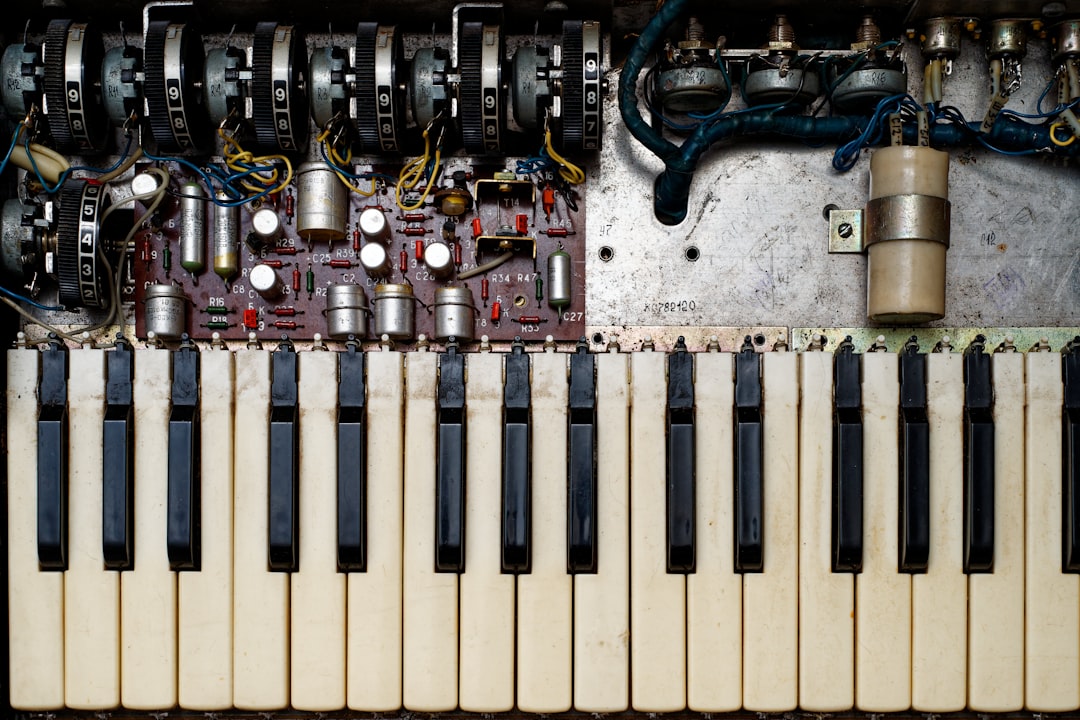
If you want the best free sample packs in 2026, the honest answer is that there is no single magic download — there are a handful of source types that consistently deliver clean, usable sounds, and knowing which is which saves you hours of digging. Below we break down where the good free packs actually come from, what separates a keeper from filler, and how to stay on the right side of licensing so you never get a surprise takedown later.
Violet Recording is reader-supported — we may earn a commission from links on this page, at no extra cost to you.
The quick list: where to find the best free sample packs
- Free packs from subscription platforms — Splice regularly gives away free sounds and starter content alongside its paid library.
- Producer-brand freebies — companies like Cymatics build their reputation on high-quality free sample packs to win you over.
- Label and artist giveaways — record labels and individual producers drop free kits to promote releases.
- Producer forums and communities — long-running threads and Discord servers where members share their own recordings.
- DAW stock content — the factory libraries you already own but rarely dig through.
- Public-domain and Creative Commons archives — huge, uneven, but genuinely free when you read the terms.
Free packs from subscription platforms (the reliable starting point)
The most consistent free sounds tend to come from the companies that sell samples for a living. That sounds backwards, but it makes sense: a free pack is a shop window. Splice, for example, regularly releases free content and starter packs designed to show off the quality of its wider catalogue. The sounds are professionally recorded, tagged sensibly, and mixed to sit in a modern production without a ton of cleanup.
The trade-off is scope. Free offerings are curated and limited by design — you get a taste, not the whole cupboard. That is fine when you are chasing a specific texture or a few drum one-shots, and it is often the fastest route to something that sounds finished. Just treat these as a sampler rather than an endless well, and always read what the free tier actually grants you before you build a release around it.
Producer-brand freebies and label giveaways
A whole category of companies grew up on free-first marketing. Cymatics is the best-known example: it puts out large, genre-focused free sample packs — drums, melodic loops, vocal chops, FX — as a way to funnel producers toward its paid bundles. The quality is genuinely high, and for trap, hip-hop, EDM and future-bass styles these packs are a legitimate backbone, not just filler.
Alongside the dedicated freebie brands, watch for label and artist giveaways. When a label pushes a new release or a producer wants to grow their audience, they often hand out a drum kit, a loop pack, or a set of stems for free. These are usually smaller and more idiosyncratic, but that is exactly the appeal — you get a specific artist’s sound rather than a generic library. Sign up to a few newsletters in your genre and these land in your inbox on their own.
Forums, communities and DAW stock content
Producer forums and community servers are the old-school route, and they still work. Long-running sample-sharing threads, subreddit megaposts and genre Discord channels are full of user-recorded hits, field recordings and homemade loops. The signal-to-noise ratio is lower — you will wade through some rough uploads — but you also find sounds that are not on every other track this month, which is worth a lot when everyone is pulling from the same commercial libraries.
Do not overlook the library you already own, either. Every major DAW ships with a stock content pack — drums, synth loops, foley, one-shots — and most producers barely scratch it. Before you download anything, spend twenty minutes browsing your DAW’s factory sounds. If you are still choosing a DAW, our roundup of the best free DAWs for beginners flags which ones come with the most generous built-in libraries.
What actually makes a free sample pack worth downloading
Free does not automatically mean good, and a bloated pack of unusable sounds costs you more time than it saves. A few things separate the keepers:
- Clean, well-recorded source. Listen for noise, harsh clipping and muddy low end. A well-recorded one-shot slots straight into a mix; a noisy one needs work before it is usable.
- Sensible organisation and naming. Good packs are foldered by type and often key-labelled. If you cannot tell a kick from a snare by the filename, you will waste time every session.
- Format and quality. Prefer WAV over heavily compressed MP3 where you can, especially for drums and anything you will pitch or stretch.
- Tagged tempo and key on loops. Melodic loops labelled with BPM and key save you constant guessing and re-tuning.
- A stated licence. More on this below — but a pack that clearly tells you what you can do with it is worth more than a mystery folder, no matter how good it sounds.
If you find yourself layering and pitching drum hits a lot, a couple of our free browser tools can help you audition and prep sounds before they ever hit your DAW.
Free still has a licence — read it before you release
This is the part most guides skip. “Free” almost never means “do whatever you want.” Nearly every free sample pack ships with a licence, and those terms vary a lot. Some grant full royalty-free commercial use, some allow personal use only, some require credit, and some forbid redistributing the raw sounds. Creative Commons files in particular come in several flavours, a few of which restrict commercial use or demand attribution.
The rule is simple: check the licence for every pack before you put a track out. Save the licence text or screenshot the terms page in the same folder as the samples, so future-you can prove what was granted. Do not assume a pack is royalty-free just because you downloaded it for nothing — confirm it. If a source gives you no licence information at all, treat that as a red flag and keep looking. Spending five minutes reading terms is a lot cheaper than a copyright strike on a released song.
When free runs out: going pro (and going original)
Free packs are perfect for learning, sketching and filling gaps, but at some point the same sounds circulating everywhere start to hold your tracks back. If you want deeper, constantly-updated, clearly-licensed libraries with millions of sounds you can search by key and BPM, a subscription service like Splice is the standard step up — you get pro-quality samples with straightforward licensing baked in.
The other direction is to stop hunting for the perfect loop and generate something that is genuinely yours. If you want an original track built around your idea rather than a shared sample everyone else is using, Solmi can help you get there. And if you have a finished reference or acappella you want to pull apart, our free Stem Splitter separates a mix into stems you can chop and resample yourself.
Build a wider free arsenal
Samples are only one slice of a free production toolkit. If you are kitting out a room-free, budget setup, it is worth pairing your packs with free instruments and effects. Our guides to the best free drum VSTs, the best free synth VSTs and the best free synths for sound design cover the plugins that turn raw samples into full productions. If you work on the go, the best sampling apps round-up covers mobile-friendly options, and for finished-song shortcuts the best AI song generators comparison is a useful companion. You will find all of these under our Sound Design hub.
Frequently asked questions
Are free sample packs royalty-free?
Not automatically. Some free packs are fully royalty-free, but plenty carry conditions — personal use only, attribution required, or no redistribution. Always open the licence file or terms page for each pack and confirm what you are allowed to do before releasing a track. If no licence is provided, don’t assume it’s clear to use.
Where do professional producers get their free samples?
Mostly from the same handful of trusted sources: free offerings from platforms like Splice, high-quality freebie brands such as Cymatics, label and artist giveaways in their genre, and their own DAW’s stock content. Many also record and design their own sounds so their productions don’t rely on packs everyone else is using.
Is it worth paying for samples if so many are free?
It depends on your stage. Free packs are ideal for learning and sketching. Once you’re releasing regularly, a subscription like Splice gives you a far larger, well-tagged, clearly-licensed library that saves time and reduces licensing guesswork — which is usually worth it once samples are part of your workflow rather than an occasional experiment.



