
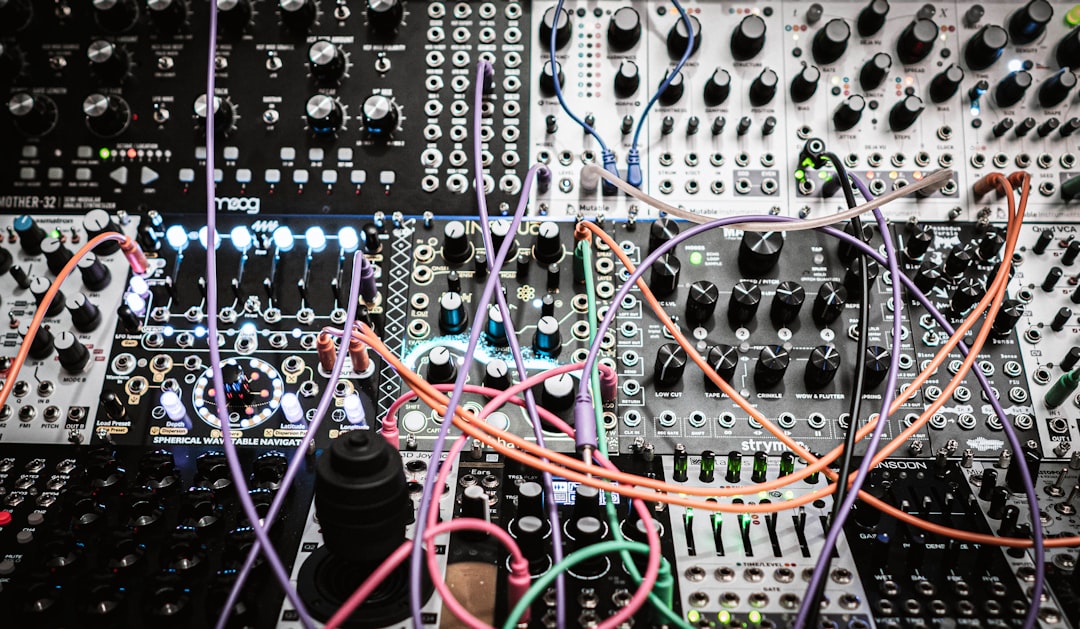
If you want to know how to get into sound design, the honest answer is that you need less gear than you think and more deliberate practice than you’d expect. Grab a DAW, a free synth and a pair of headphones, then commit to recreating sounds you love by ear. That single habit will teach you more than any tutorial binge. This guide gives you the tools, the order to learn things in, and a practice routine that actually sticks.
How to get into sound design with what you already have
You almost certainly own enough to start today. You need three things: a digital audio workstation, a synth, and a way to hear detail clearly. Most modern DAWs include a wavetable synth, a sampler and a full effects rack, so your existing setup is probably ready. If you’re starting from nothing, look at free DAWs for beginners and pair one with a free synth like Vital or Surge.
The starter toolkit
- A DAW — Ableton Live, FL Studio, Logic, Reaper or a free option. It’s your workshop.
- A synth — Vital and Surge are free and seriously capable. Serum and Arturia Pigments are popular paid options once you’re hooked.
- A sampler — Ableton Simpler, FL’s slicer, or Kontakt for deeper work.
- Sound sources — Freesound for free recordings and Splice for sample libraries.
- Monitoring — a flat-ish pair of headphones or studio monitors so you can hear what you’re shaping.
Learn the building blocks first
Before you design anything ambitious, get comfortable with the four core parts of a synth: the oscillator (the raw tone), the filter (which removes frequencies to shape brightness), the envelope (which controls how the sound changes over time), and the LFO (which adds automatic movement). You don’t need deep theory yet — just play with each control and listen to what it does. Our sound design for beginners guide walks through these in plain English.
How the building blocks fit together
It helps to picture the signal flow, because every synth follows the same basic path. The oscillator generates a raw waveform, that signal passes through the filter to carve away unwanted frequencies, and then the amplifier sets the final loudness. The envelope and LFO are the two things that make this chain move over time rather than sit still. An envelope fires once per note — its attack, decay, sustain and release decide whether a sound stabs, plucks or swells. An LFO loops continuously, so it’s what gives you wobble, vibrato or a slow filter sweep. Once you can name which stage is responsible for what you’re hearing, designing stops feeling like guesswork and starts feeling like solving a puzzle. The moment this clicks, it’s worth digging into how to use modulation to make those envelopes and LFOs do far more than vibrato.
A quick way to internalise this: load an init patch, play a single held note, and change one parameter at a time. Open the filter fully, then close it. Lengthen the amp envelope’s release, then shorten it. Assign an LFO to pitch, then to the filter cutoff. Hearing each control in isolation builds the mental map you’ll lean on for years.
The single best practice habit: recreate sounds by ear
The fastest way in is to copy. Pick a bass, lead or pad from a track you love and try to rebuild it from an init (blank) patch. You’ll be forced to ask the right questions: Is the oscillator a saw or a square? Is the filter open or closed? Is there an LFO wobbling it? Is the movement from the envelope or an effect? Even when you fail, you learn how sounds are constructed. Start with simple targets — see how to design a bass sound for a guided first build.
A simple 4-week plan
- Week 1 — Oscillators and filters. Load an init patch and design five different basses using only oscillator choice and a filter.
- Week 2 — Envelopes and LFOs. Make a pluck, a slow pad and a wobble using movement alone.
- Week 3 — Effects. Take three of your sounds and transform them with reverb, distortion and delay.
- Week 4 — Recreate. Pick three real sounds you love and rebuild them by ear.
Don’t treat the calendar as a deadline. The point of the four weeks is to give each skill its own space so you’re not trying to learn oscillators, modulation and effects all at once. If a week takes you two, that’s fine — depth beats speed here.
How to choose your first synth
Beginners often stall on this decision, so keep it simple. Start with a subtractive or wavetable synth rather than an FM or modular one, because subtractive synthesis maps directly onto the building blocks above — you can see the oscillator, filter and envelopes laid out in front of you. Vital and Surge are ideal first synths precisely because their layouts are visual and uncluttered. Avoid the temptation to start with the synth that has the most features; a deep instrument with hundreds of parameters will hide the fundamentals behind complexity. Learn one synth thoroughly before you add a second. Everything you master on one carries over, because the underlying concepts are universal even when the knobs are arranged differently.
Pick a direction once you’re comfortable
Sound design branches. Music producers focus on synths, layering and resampling. Film and game designers lean on recording, Foley and editing. You don’t have to choose early, but knowing the lay of the land helps. Read what a sound designer does to see which path appeals, and if you want to make it a career, our guide on how to become a sound designer covers portfolios and skills.
Common beginner mistakes
- Hoarding presets. Presets are fine for finishing tracks, but you learn by building from blank.
- Skipping the ear training. Tutorials show the “what”; copying by ear builds the “why”.
- Buying plugins to fix a skills gap. Free tools can make every sound you hear on the radio. Master one before buying more.
- Designing in a noisy room. If you can’t hear detail, you can’t shape it. Sort your monitoring early.
- Designing in isolation. A patch that sounds huge when soloed can vanish in a busy mix. Check your sounds against a reference track and at a sensible volume.
Frequently asked questions
How long does it take to get good at sound design?
You can make usable sounds within a few weeks of focused practice. Genuine fluency — being able to hear a sound and roughly know how to build it — usually takes several months to a year of regular work. The recreate-by-ear habit speeds this up dramatically.
Do I need a background in music theory?
No. Sound design is about timbre and texture, not chords and scales. Music theory helps when you’re writing parts, but you can design a great bass or atmosphere with zero theory. The technical fundamentals of synthesis matter far more here.
What’s the cheapest way to get into sound design?
A free DAW, the free synth Vital or Surge, and Freesound for raw recordings. That stack costs nothing and is enough to design professional-quality sounds. Add headphones you trust and you have everything you need to start.
Is sound design the same as mixing?
No, though they overlap. Sound design is about creating and shaping the raw character of a sound — the tone, movement and texture. Mixing is about balancing finished sounds so they sit together in a track. You’ll naturally pick up mixing habits as you design, but they’re separate skills, and it’s worth keeping the two stages mentally distinct while you learn.



