
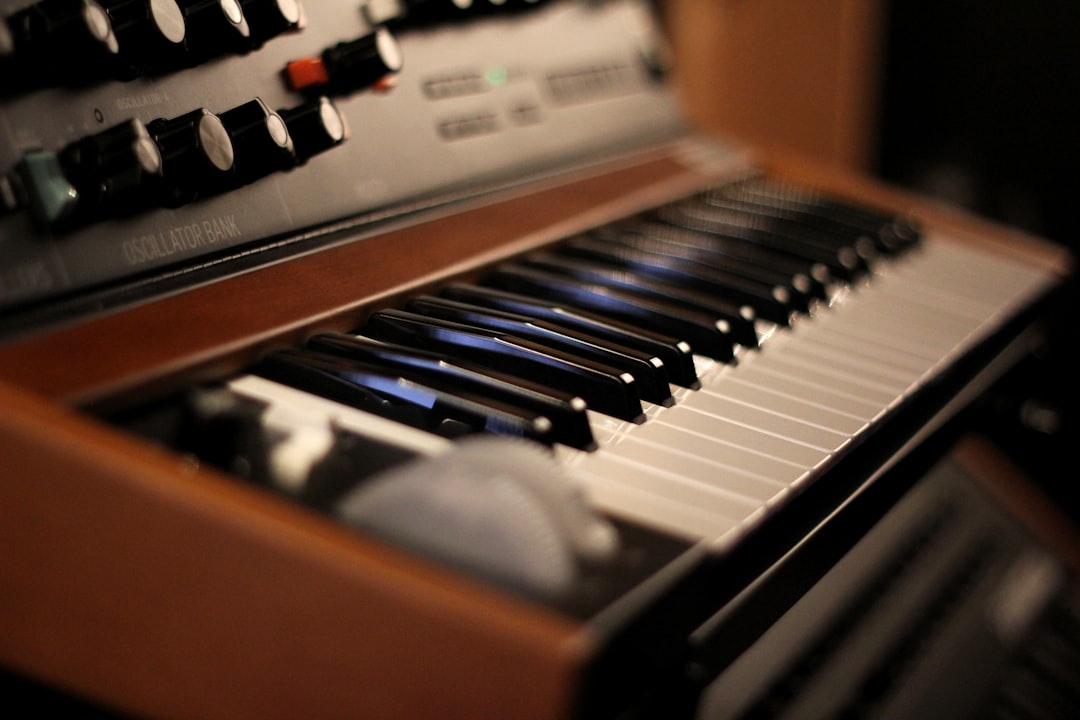
To connect a hardware synth to your DAW, you run its audio output into an audio interface so the computer can hear it, and you connect MIDI so the two can talk about notes, clock and control. Audio comes in through your interface inputs; MIDI travels over USB or a 5-pin DIN connection. Get those two paths right and your synth behaves like any other track in your session.
This guide walks through both halves — audio and MIDI — plus the routing and latency settings that trip people up. It assumes a typical bedroom setup with an audio interface, a DAW like Ableton Live, Logic or Reaper, and a synth such as a Moog Mother-32, Korg Minilogue or Arturia MicroFreak.
Step 1: Get the audio into your DAW
A hardware synth produces a real analog (or digital) audio signal, so it needs to reach your computer through an audio interface for synths. Run a cable from the synth’s main output to a line-level input on your interface. Most synths output on quarter-inch (TS or TRS) jacks; smaller units like Volcas use a 3.5mm output, so you may need an adapter or a 3.5mm-to-quarter-inch cable.
- Mono synth, one output: use a single cable into one interface input.
- Stereo synth (Wavestate, Hydrasynth, Prophet): use two cables into a pair of inputs and record a stereo track.
- Set the input to line level, not instrument/Hi-Z, and keep the synth’s volume sensible so the input meter peaks well below clipping.
If you are not sure how your interface inputs are wired, our walkthrough on how to set up an audio interface covers gain, monitoring and driver setup.
Step 2: Connect MIDI so the DAW can play the synth
MIDI lets your DAW send notes, automation and clock to the synth, and lets a keyboard play it. You have two common options:
- USB-MIDI: many modern synths (MicroFreak, Minilogue, Digitone) connect straight to the computer with a single USB cable that carries MIDI both ways.
- 5-pin DIN MIDI: older or output-only synths use traditional MIDI ports. You then need a MIDI interface, or an interface with built-in MIDI I/O, to bridge DIN to USB.
In your DAW, enable the synth as a MIDI input and output device, then create a MIDI track, set its output to the synth and arm it. Playing your controller should now trigger the synth — and if you are still picking one, our roundup of the best MIDI keyboards for hardware synths can help. For background on the protocol itself, see what CV and gate are — useful if your synth is analog and you later want tighter, voltage-based control.
Step 3: Choose your recording approach
There are two ways to capture a hardware synth, and they suit different workflows:
- Record audio in real time. Sequence the part with MIDI (or play it live), then record the synth’s audio output to an audio track. This is the standard method and what most people mean by recording a synth.
- Keep it as MIDI and re-record later. Save the performance as MIDI so you can tweak notes, then commit to audio once the part is final.
Our dedicated guide on how to record a hardware synth covers levels, gain staging and printing the final take.
Step 4: Tame latency and timing
Because audio leaves the computer, hits the synth and comes back, you can get a delay. Two things help:
- Direct monitoring: listen to the synth through your interface’s direct monitor path while tracking, so you hear it with no round-trip lag.
- Latency compensation: if you record the synth’s audio while the DAW drives it over MIDI, the recorded audio may land slightly late. Many DAWs offer an external-instrument or track-delay setting to nudge it back into the grid.
If clicks or dropouts appear, raise your buffer size when mixing and lower it when playing live. Our explainer on audio latency goes deeper.
Set up MIDI clock so sequencers stay in sync
If your synth has its own arpeggiator, sequencer or tempo-synced effects, you will want it to follow the same tempo as your project. That is the job of MIDI clock, a steady stream of timing pulses your DAW can send out alongside the notes. Without it, an onboard arpeggiator will free-run at its own tempo and drift against your session.
Decide on one master clock and stick to it. In most home setups the DAW is the master: enable clock (and usually start/stop) on the same MIDI port you use for notes, and set the synth to receive external clock or “auto” sync. If you prefer the hardware to lead — common with groovebox-style units — make the synth the master and tell the DAW to sync to incoming clock instead. When you have several boxes that all need to stay locked together, our guide on how to sync hardware synths walks through the wiring. The one rule to avoid timing chaos is that only one device should be the master at a time.
How to choose the right connection for your synth
The neatest setup depends on what ports your synth and interface actually have, so work backwards from the hardware in front of you:
- Modern desktop or keyboard synth with USB: use USB for MIDI (and clock) and a single audio cable for sound. This is the fewest cables and usually the most reliable.
- Older synth with only 5-pin DIN: add a small USB-MIDI interface, or use an audio interface that already has DIN MIDI ports, then route audio as normal.
- Analog synth you want to sequence tightly: consider CV and gate alongside MIDI for sample-accurate triggering, especially for percussive or bass parts.
- Several synths at once: a multi-output interface plus a MIDI hub or thru box lets each instrument keep its own audio track while sharing one clock.
There is no single “best” method — the right choice is the one that matches your ports, keeps cabling simple, and gives you a clean audio path and tight timing.
Common connection mistakes to avoid
- Plugging a synth into a mic input — line-level synths overload mic preamps. Use a line input.
- Forgetting the audio path — MIDI alone makes no sound through the computer; you still need the audio cable.
- Mismatched MIDI channels — set the DAW track and the synth to the same channel, or to Omni while you troubleshoot.
- Running two clock masters — if both the DAW and the synth try to lead, tempo-synced parts will fight each other. Pick one master.
- Leaving local control on — when you play the synth’s own keys through the DAW, doubled notes often mean local control should be switched off so the keyboard only speaks via MIDI.
Frequently asked questions
Do I need both audio and MIDI cables?
For full integration, yes. The audio cable carries the actual sound into your DAW, and MIDI lets the DAW sequence and control the synth. You can record audio without MIDI if you play the synth by hand, but you can’t hear MIDI alone.
Can I connect a synth with only a USB cable?
USB usually carries MIDI only, not audio, on hardware synths. A few units act as USB audio devices, but most still need their analog output routed into an audio interface to record sound.
Why is my recorded synth track out of time?
That is round-trip latency. Use direct monitoring while tracking, and apply your DAW’s latency compensation or a small negative track delay so the printed audio lines up with the grid.
Why do I hear doubled or stuck notes when playing the keyboard?
Doubled notes are usually a local-control issue: the synth is sounding its own keys and also receiving the same notes echoed back from the DAW. Turn local control off so the keyboard only sends MIDI. Stuck notes are often a channel or clock mismatch — line up the MIDI channels and make sure only one device is acting as the clock master.



