
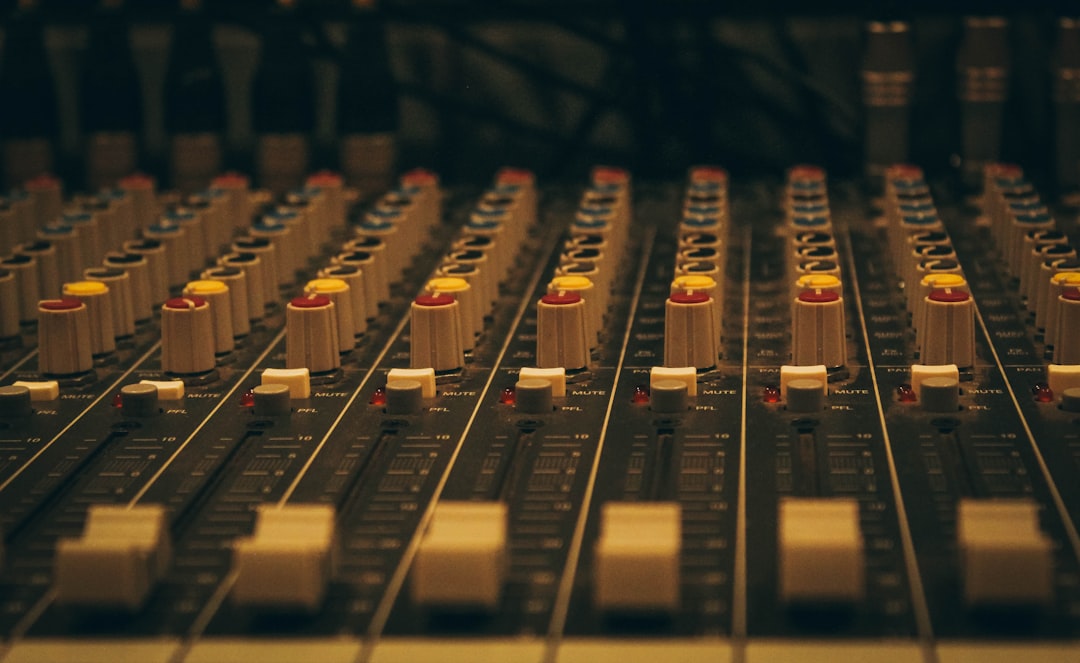
When you master a single vs album, the single is judged entirely on its own — it only has to sound great in isolation and hit a competitive loudness for streaming. An album adds a second job: every track has to sound like it belongs to the same record, flow in the right order, and keep a consistent tonal balance and perceived loudness from song to song. The techniques overlap, but the mindset and the checklist differ.
Violet Recording is reader-supported — we may earn a commission from links on this page, at no extra cost to you.
Below is how a mastering engineer actually approaches each, what to listen for, sensible starting points for loudness and tone, and the mistakes that make a home-mastered record sound amateur. If you are new to the process, start with our primer on what mastering actually is and then come back here.
What changes when you master a single vs album
A single is a self-contained product. Nobody hears it next to your other songs, so you are free to push it as hard or as bright as the song wants. Your only reference points are commercial releases in the same genre and your own ears. Get it loud enough, balanced, clean, and emotionally right — done.
An album is a collection that has to feel like one body of work. The listener moves from track to track, often within seconds, and their ears carry the memory of the previous song. If track 3 is noticeably brighter or two decibels quieter than track 4, they will feel the jolt even if they cannot name it. So on an album you are mastering relationships as much as individual songs: relative loudness, relative tone, and the transitions between tracks. That is the core difference, and everything below flows from it.
Loudness targets for streaming and how they differ
For a single, pick a loudness that suits the genre and let the platforms do their normalisation. Most streaming services play back at roughly -14 LUFS integrated as a common reference point, and many turn down anything louder rather than turning quiet tracks up. That means chasing an extremely loud master (say -6 or -7 LUFS) mostly buys you crushed dynamics and a quieter-sounding result after normalisation. A good starting range for most modern music sits somewhere around -9 to -14 LUFS integrated depending on genre — aggressive electronic and hip-hop tend louder, acoustic and jazz sit quieter. Treat these as by-ear starting points, not rules; check your true peak stays below about -1 dBTP to avoid inter-sample clipping on lossy playback.
For an album, the individual number matters less than consistency across the tracklist. You do not want every song identical — a ballad should feel gentler than the lead single — but the loud songs and quiet songs should sit in a deliberate range, not scatter randomly. Measure the integrated LUFS of every track, lay them side by side, and adjust so the record breathes without any song ambushing the listener. A ballad two or three LUFS quieter than the rockers is musical; a random 5 LUFS jump between two energetic songs is a mistake. Our LUFS guide explains the metering, and you can check numbers fast with the free LUFS and loudness tools in the Violet Recording toolbox.
Keeping tone consistent across an album
This is the part that separates a real album master from a folder of loose singles. Load every track into one session or one mastering project and A/B between them constantly. Listen for tonal drift: is one song noticeably brighter in the 8–12 kHz air region, is another muddy around 200–400 Hz, does one have far more low-end weight below 100 Hz than its neighbours? Small broad EQ moves — often under 1–2 dB with wide, gentle bands — pull the outliers back into the family.
A useful trick is to pick one or two tracks that already sound right and treat them as your internal reference. Match the others toward that tonal signature rather than mastering each song in a vacuum. Stock EQ handles this well; a clean digital or analogue-modelled EQ on your master bus is plenty. If you want a mastering-grade linear-phase EQ with match features for stubborn tonal matching across a record, a dedicated third-party option can genuinely help here — worth a look on (Plugin Boutique). That said, do not force it: stock EQ does most of this job. For the fundamentals of the moves themselves, see our EQ and compression fundamentals.
Sequencing, spacing and gaps between tracks
A single has no sequencing. An album lives or dies on it. Decide the running order early because it changes your loudness and energy decisions — you want peaks and valleys placed deliberately so the record has a shape. Once the order is set, focus on the joins.
Spacing between tracks is a real mastering decision, not an afterthought. A typical gap is roughly 2 to 4 seconds, but it is entirely by feel: a hard-hitting song into a ballad might want a longer breath, while two songs meant to feel continuous might want a very short gap or a crossfade. If you want tracks to run together seamlessly — common on concept albums and live records — you set that up in the mastering stage with gapless transitions and matched tails. Listen to each transition in context, at the join, several times. The end of one song and the first half-second of the next is where sequencing succeeds or fails.
The signal chain: what stays the same
The actual per-track chain is broadly the same whether it is a single or an album track. A sensible starting order on the master bus is: subtractive or corrective EQ first, then compression for glue, then any tonal EQ or saturation, then a limiter last to catch peaks and set final loudness. Keep master-bus compression gentle — a low ratio around 1.5:1 to 2:1 with just 1–2 dB of gain reduction is a common starting point for glue, adjusted entirely by ear. The limiter is where you dial in your final LUFS while watching true peak.
The difference is that on an album you run this chain many times with one eye always on the neighbouring tracks, whereas on a single you optimise in isolation. If you would rather hand the loudness-and-consistency heavy lifting to an engine — especially for matching a full tracklist — an online service like LANDR can master a whole album and keep levels sensibly aligned across it: (LANDR). It is a fair option when you do not have a treated room or a trusted monitoring chain. Compare your options in our roundup of the best online mastering services.
Common mistakes to avoid
The single-minded mistake is over-limiting: crushing the master flat chasing loudness the platforms will only turn down anyway. Back off and let transients live. The album-specific mistakes are subtler. Mastering each track on a different day, on different monitoring, or against a different reference is the fastest route to a disjointed record — do the whole album in one focused stretch on the same system. Ignoring the transitions is another: songs that each sound great alone can still clunk when joined. And forgetting to check the sequence at low volume and on a phone speaker will hide loudness and tonal jumps that are obvious to a casual listener. If your mixes are not landing before mastering, the problem usually lives upstream — tighten the mix first with our vocal mixing guide and the beginner’s mixing walkthrough. You can browse more technique guides in the mixing and mastering hub.
Frequently asked questions
Should every album track be the same LUFS?
No. Aim for consistency, not uniformity. The tracks should sit in a deliberate loudness range so nothing jumps out, but a ballad can and should measure a couple of LUFS quieter than the up-tempo songs. Match by ear and by musical intent, using the meter to confirm nothing is a wild outlier rather than to force identical numbers.
Can I master a single and later add it to an album?
You can, but be ready to re-master it for the record. A single mastered in isolation may be louder or brighter than the album context wants. When you assemble the tracklist, revisit that master so its loudness and tone sit correctly next to its neighbours — keep the mix stems or the original master session so you can adjust rather than starting over.
Do I need different tools to master an album versus a single?
No — the tools are the same. You need EQ, compression, a limiter, accurate metering and a reliable monitoring environment. The album simply demands more discipline: A/B-ing tracks against each other, matching tone and loudness across the set, and auditioning every transition. A good limiter and honest LUFS metering matter more than any single specialised plugin.



