
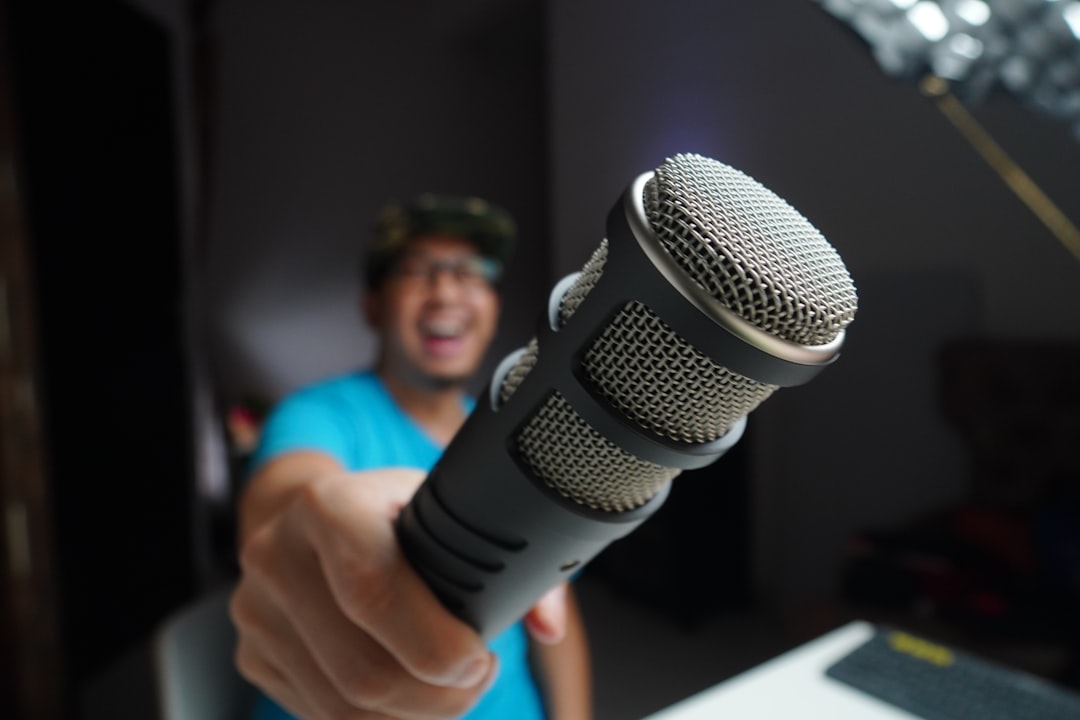
Both are condenser microphones, but their diaphragm size gives them distinct characters and ideal uses. Knowing the difference helps you pick the right tool instead of forcing one mic to do everything.
Large-diaphragm condensers (LDC)
LDCs have a warm, flattering, slightly larger-than-life sound and very low self-noise. They’re the classic studio vocal mic and also work well on voiceover and many instruments. If you mostly record vocals, an LDC is the usual first choice.
Small-diaphragm condensers (SDC)
SDCs (sometimes called pencil mics) capture fast transients and high-frequency detail extremely accurately. They excel on acoustic guitar, piano, cymbals, strings and anything where precision and natural detail matter – and they make great stereo pairs.
Why diaphragm size changes the sound
The diaphragm is the thin membrane that moves in response to sound. A larger membrane has more surface area, so it responds generously and adds a sense of body and weight – part of the reason LDCs flatter voices. That same mass, however, means it reacts a touch more slowly to very fast, high-frequency transients, and large diaphragms tend to become more directional and slightly less even off-axis as frequencies climb.
A small diaphragm has less mass to move, so it tracks rapid transients faithfully and keeps a more consistent, predictable response from front to side. That is why a pencil mic captures the snap of a pick or the shimmer of a cymbal so cleanly, and why matched SDC pairs are the go-to for honest stereo imaging. Neither is “better” – they simply trade flattering colour for literal accuracy. Most engineers end up owning both because they solve different problems.
Polar patterns and off-axis behaviour
Many LDCs offer switchable polar patterns – cardioid, omnidirectional and figure-of-eight – which makes them flexible for different sources and techniques. SDCs are more often fixed cardioid, though interchangeable-capsule models exist. Beyond the pattern you select, pay attention to how each mic sounds off-axis: sound arriving from the sides. SDCs tend to keep a cleaner, more natural tone off-axis, which matters when an instrument moves or when room reflections enter from the sides. LDCs can colour off-axis sound more, which is sometimes flattering on a single close vocal but less ideal when you want a faithful capture of a whole acoustic instrument.
Placement and proximity effect in practice
Choosing the format is only half the job – how you place it decides most of the recorded tone. Both LDCs and SDCs use directional (usually cardioid) patterns, and any directional mic exhibits proximity effect: the closer you move to the capsule, the more low-end the mic emphasises. On an LDC this is why a vocal sung a few centimetres from the grille sounds thick and intimate, and why backing off slightly thins and balances it. Use that deliberately rather than fighting it – set the distance that gives the weight you want, then control plosives with a pop filter rather than retreating so far the voice loses presence.
SDCs reward a different mindset. Because they are accurate and react strongly to small moves, a few centimetres of repositioning can swing an acoustic guitar from boomy to bright. A common starting point is to aim the mic where the neck meets the body, around 20-30 cm away, then nudge it towards the soundhole for more warmth or towards the fretboard for more string detail. If you are specifically tracking a steel-string in a singer-songwriter context, our guide to the best microphones for acoustic guitar walks through models and placement in more depth. Engage a high-pass (low-cut) filter on either mic when you do not need the deep lows – it tames proximity build-up, footfall and desk rumble before they ever reach your recording. Make these placement decisions in headphones while the source actually plays, since the difference a small move makes is far more obvious in monitoring than on the meters.
Which should you choose?
- Vocals, voiceover, podcasting: large-diaphragm condenser.
- Acoustic guitar, cymbals, detailed/stereo sources: small-diaphragm condenser.
- One mic for everything: an LDC is the more versatile single buy for most home studios.
If you are buying your very first studio mic and money is tight, an LDC is the safer choice: it handles the vocals most home recordists prioritise and still does a respectable job on acoustic instruments. Add an SDC (ideally a matched pair) as your second purchase, once you start recording acoustic guitar, drum overheads or anything where detail and a believable stereo image matter. Buying a pair from the same model run is worth it – mics that are factory-matched for sensitivity and frequency response keep a stereo recording balanced and centred.
It also helps to think about the source rather than the label. A breathy intimate vocal, spoken-word narration and a podcast voice all benefit from the body and forgiving warmth of an LDC. Bright, fast, transient-rich sources – finger-picked guitar, mandolin, hand percussion, drum overheads, orchestral strings – reward the speed and honesty of an SDC. When a source sits in between, such as an acoustic guitar in a singer-songwriter recording, many engineers simply try both and keep whichever flatters that particular instrument and room.
Common mistakes to avoid
- Blaming the mic for the room. Condensers are sensitive and pick up reflections, hum and traffic readily. An untreated room will undermine even an excellent mic, so fix acoustics before upgrading gear.
- Forgetting phantom power. No 48V means no signal (or a faint, distorted one). If a condenser seems dead, check phantom power first.
- Ignoring distance and angle. LDCs reward a controlled close distance and a pop filter on vocals; SDCs reward careful aiming, since small moves change the tone of an acoustic source noticeably.
- Mixing unmatched mics for stereo. Two different SDCs as a “pair” will pull your stereo image off-centre. Use a matched set for spaced or coincident techniques.
Frequently asked questions
Can I record vocals with a small-diaphragm condenser?
Yes, and on some voices the extra accuracy sounds great. Just know an SDC will be more honest and less flattering than an LDC – it won’t add the gentle warmth and body singers often expect, so you may rely more on the room and the performance to carry it.
Is a large-diaphragm condenser always more expensive?
Not necessarily. Both types span budget to high-end. A single LDC and a matched SDC pair can cost similar amounts, since you are buying two capsules for the pair. Judge by what you record rather than assuming one format is inherently pricier.
Do both types need the same care and accessories?
Largely, yes. Both are condensers, so both want phantom power, a shock mount to reject handling and floor noise, and a treated space. LDCs additionally benefit from a pop filter for close vocal work, while SDCs benefit from a sturdy stand that lets you place them precisely.
Why does my condenser sound boomy up close but thin further back?
That is proximity effect at work. Directional condensers lift the low frequencies as you get nearer the capsule, so a few centimetres in or out noticeably changes how full the source sounds. Find the distance that gives the body you want, and if the lows still build up unhelpfully, engage the mic’s high-pass filter or move back slightly rather than cutting heavily later.
Should I use one condenser or two on acoustic guitar?
One well-placed SDC captures a clean, usable acoustic track and is the simplest place to start. A matched stereo pair adds width and a more spacious, realistic image, but it also demands careful positioning to avoid phase issues. Begin with a single mic, get the placement right, and move to a matched pair when you specifically want stereo width.
Both are condensers, so both need phantom power and reward a treated room. New to mic types entirely? Start with condenser vs dynamic, then see the best microphones guide.



