
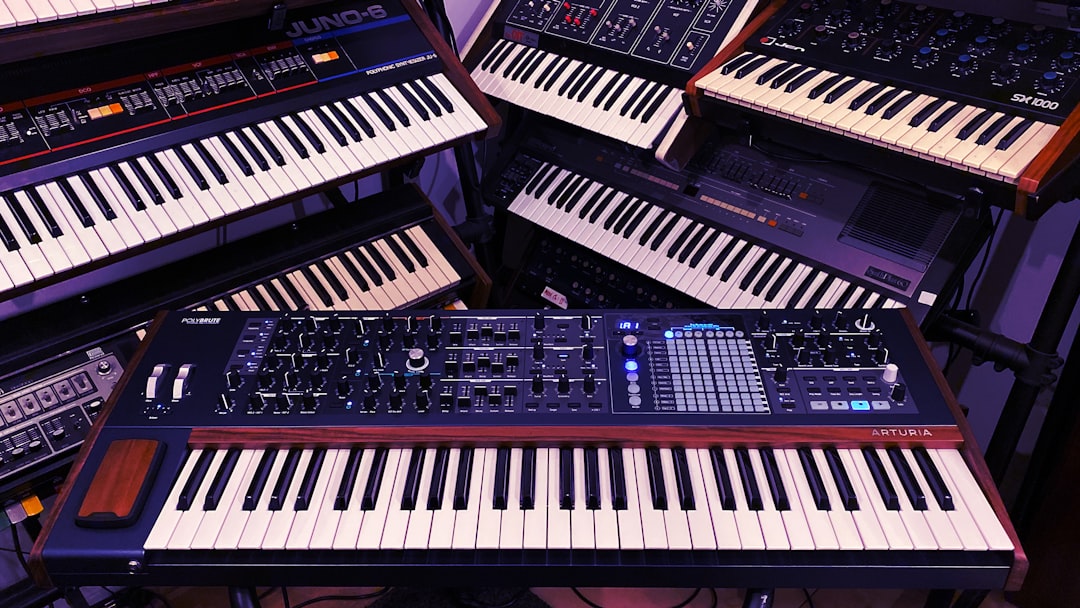
The best free ambient samples come from a handful of reliable places: producer forums, label freebie packs, sample-service free tiers, and field-recording archives. If you want atmospheric pads, evolving drones, granular textures and real-world field recordings without spending a cent, you have more good options than ever — you just need to know where to look and how to tell a usable sample from filler.
Violet Recording is reader-supported — we may earn a commission from links on this page, at no extra cost to you.
The quick answer: where to find free ambient samples
- Sample-service free packs — services like Splice regularly release curated free packs and give you a taste of their ambient libraries.
- Label and artist freebies — many ambient and electronic labels give away sample packs to build a mailing list.
- Free packs from producers — Cymatics-style free bundles, YouTube producers, and forum members share texture packs constantly.
- Field-recording archives — Creative Commons libraries are goldmines for raw ambience you can process into pads.
- Your own DAW’s stock content — most DAWs ship with ambient loops and pads you may have overlooked.
What actually makes a good ambient sample
Ambient is a forgiving genre in one sense — almost anything can become atmospheric with enough reverb — but that also makes it easy to fill a folder with samples you never use. A genuinely useful ambient sample tends to share a few traits.
First, it should be clean at the source. Ambient music lives in the tails and the quiet moments, so a pad with a noisy noise floor or an obvious MP3 artifact will expose itself the moment you turn up the reverb. Aim for WAV files at 24-bit where you can find them, and audition samples on headphones or monitors rather than laptop speakers so you can hear the hiss and the stereo image honestly.
Second, look for movement. A static, unchanging pad is fine as a bed, but the samples you reach for again and again usually evolve — a slow filter sweep, a shifting harmonic, a granular shimmer that never quite repeats. When you preview a pack, listen past the first two seconds. Does the sound go somewhere?
Third, favour samples that are easy to key and tempo match. Good free ambient packs label the root note and BPM. That matters more than it sounds: a beautiful drone in the wrong key against your track is just tension you didn’t ask for. If a pack is unlabelled, you can still use a tuner or your DAW’s pitch detection, but labelled content saves you real time.
The best free ambient samples: source by source
Rather than chase specific pack names that come and go, it pays to understand the types of sources and what each is good for. Here’s how the landscape breaks down.
Sample-service free tiers and rotating packs
Subscription sample platforms know that free content is the best advertisement they have, so they release genuinely good ambient packs at no cost and rotate free downloads regularly. These are usually well-recorded, properly labelled with key and tempo, and cleared for use — though you should always read the specific terms attached to each free pack. This is the most reliable place to build a starter library of pads and textures without paying.
Label and artist freebies
Ambient, downtempo and electronic labels frequently give away sample packs — sometimes as a mailing-list incentive, sometimes as a one-off promotion tied to a release. The quality here can be exceptional because the samples often come straight from records you admire. The catch is discovery: you find these by following labels and artists you like on social media and newsletters, not by searching a central catalogue.
Producer freebies and community packs
A huge amount of free ambient material comes from producers themselves. Cymatics-style free bundles, YouTube channels that bundle a free pack with a tutorial, and long-running producer forums where members swap textures are all worth mining. Quality varies more here, so audition before you commit folder space — but the sheer volume means you can find very specific things, like tape-saturated drones or vinyl-crackle beds.
Field recordings and Creative Commons archives
If you want ambience that sounds like nowhere else, raw field recordings are the answer. Community-run sound libraries host enormous collections of Creative Commons rain, wind, city hum, machine noise and room tone. These aren’t finished pads — they’re raw material — but a few minutes of granular processing, pitch-shifting or heavy reverb turns a recording of a train station into a haunting texture. Watch the licence carefully here: Creative Commons has several flavours, and some require attribution or forbid commercial use.
Your DAW’s stock library
Don’t overlook what you already own. Ableton, Logic, FL Studio and most other DAWs ship with ambient loops, pads and atmospheric one-shots. They’re free with the software you bought and cleared for use in your music. If you’re just starting out, mining stock content is the fastest way to get moving — and if you want to build your own pads instead, our roundup of the best free synths for sound design is a good next stop.
Free doesn’t mean licence-free — read the terms
This is the part most producers skip, and it’s the part that matters most if you ever release music commercially. “Free” describes the price, not the licence. Every free ambient sample you download still carries terms, and those terms vary a lot.
Some free packs are fully royalty-free and cleared for commercial use, including in tracks you sell or monetise. Others are free to download but licensed only for non-commercial or personal use. Creative Commons samples might require you to credit the original recordist, and a few licences forbid using the sound in a track you’ll sell at all. None of this is a reason to avoid free samples — it’s a reason to spend thirty seconds reading the licence file that comes with the pack, or the terms on the download page, before you build a release around a sound.
As a practical habit: keep the licence text in the same folder as the samples, so future-you knows exactly what you agreed to. If a pack has no licence information at all, treat it as risky for commercial work.
How to actually use ambient samples in a track
Downloading samples is the easy part; making them yours is where the craft lives. A few techniques go a long way.
Layer and blend. One free pad rarely carries a whole track. Stack two or three — a low drone, a mid pad, a high shimmer — and EQ each to its own lane so they don’t fight. The result sounds custom even when every layer came from a free pack.
Process aggressively. Reverb, granular effects, pitch-shifting and tape saturation transform a generic sample into something signature. A short vocal chop stretched to eight bars and drowned in reverb becomes a pad nobody will recognise. If you want to pull usable stems out of a finished track to repurpose, our free stem splitter tool can help you isolate elements to sample.
Automate movement. If a sample is too static, ride a low-pass filter or a volume swell across it. Ambient thrives on slow change, and a little automation makes a flat sample breathe.
Resample your own results. Bounce your processed layers back to audio and treat them as new source material. This is how producers build a personal sound library that no one else has — and it sidesteps licensing worries entirely, because the new texture is yours.
When free runs out: going pro
Free packs will take you a long way, but at some point you’ll want more variety, guaranteed clearance and packs curated to a consistent quality. That’s when a subscription service like Splice earns its keep — deep ambient libraries, reliable key and tempo tagging, and clear licensing across everything you download, so you’re never guessing whether a sound is safe to release.
And if you’d rather skip sample-hunting altogether and generate an original ambient bed to build on, you can create a full track from a text prompt with Solmi and then chop and process the result into your own textures.
Related reading on Violet Recording
If you’re building an ambient setup from scratch, these guides pair well with a good sample library: our picks for the best free synth VSTs and the best free drum VSTs cover the instruments, while the best sampling apps roundup helps you turn raw recordings into playable instruments. For more on textures and atmospheres, browse the full Sound Design category.
Frequently asked questions
Are free ambient samples good enough for a professional release?
Yes — plenty of released, commercial ambient tracks are built on free and self-recorded material. What separates professional results from amateur ones isn’t the price of the samples but the processing: layering, EQ, reverb and resampling. A well-processed free pad beats an unprocessed premium one every time. Just confirm the licence allows commercial use before you release.
What’s the difference between free samples and free field recordings?
A free sample pack is usually finished, labelled content — pads and textures ready to drop into a project with a stated key and tempo. Field recordings are raw source: rain, room tone, machinery, city hum. Field recordings need more work to become musical, but they give you sounds nobody else has. Most strong ambient libraries mix both.
Do I have to credit anyone when I use free ambient samples?
It depends entirely on the licence. Many royalty-free packs ask for nothing. Some Creative Commons recordings require attribution, and a few restrict commercial use altogether. Always check the terms that come with each pack or recording — the requirement, if any, will be spelled out there, and honouring it keeps you clear if your track takes off.



