
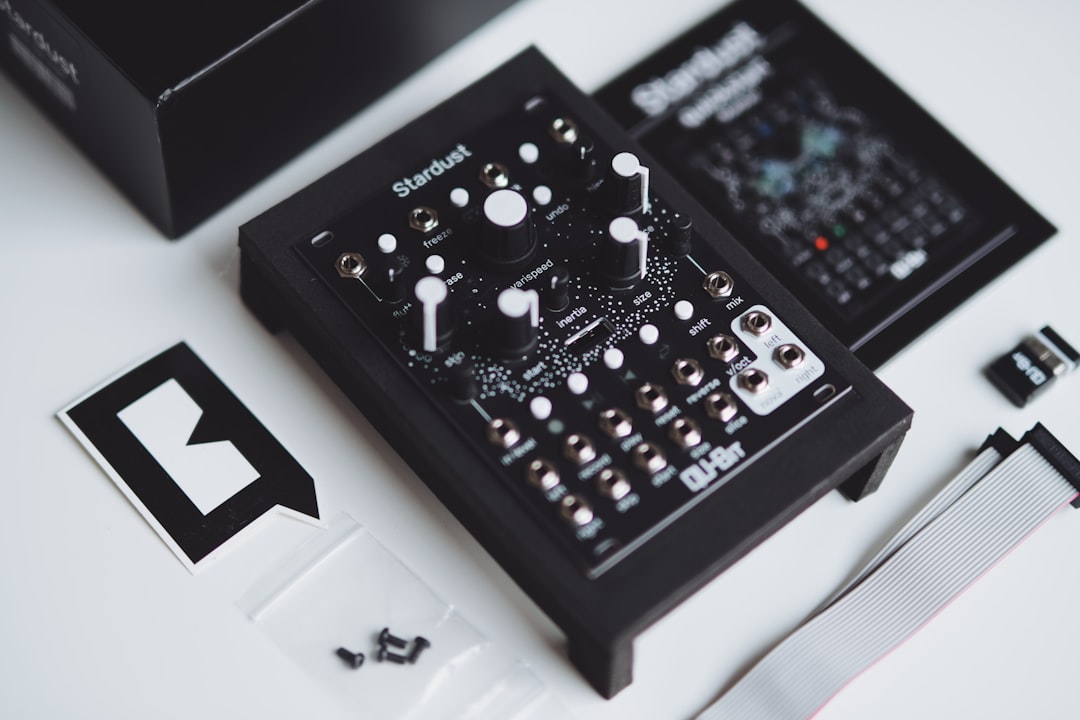
So what is a wavetable synth? A wavetable synth is a synthesizer that stores a collection of short, single-cycle waveforms in a “table” and lets you sweep through them to build sounds that move and evolve over time. Instead of locking you to one fixed shape like a plain sawtooth or square wave, it hands you a whole strip of shapes and a knob to travel between them. That travelling motion is what gives modern EDM, pop, and cinematic productions their signature morphing, breathing timbres.
Violet Recording is reader-supported — we may earn a commission from links on this page, at no extra cost to you.
What Is a Wavetable Synth in Plain Terms
Picture a flip-book. Each page holds one drawing, and when you riffle through the pages the drawings appear to animate. A wavetable works the same way, except each “page” is a single-cycle waveform — one repetition of a sound wave frozen in place. Stack dozens or hundreds of those frames side by side and you get a wavetable. The synth reads one frame and loops it thousands of times a second to produce pitch, exactly like any oscillator. The magic is in the position control: slide it and you move to the next frame, changing the tone in real time.
Because you can automate or modulate that position, the sound is never static. A pad can slowly bloom from a hollow, glassy tone into a rich, buzzy one over eight bars. A bass can snap between a clean sine and a gnarly, harmonically dense shape on every note. This is the core idea, and once it clicks the rest of the synth feels familiar — because underneath, a wavetable instrument is still just an oscillator feeding a filter and some envelopes.
How Wavetable Synthesis Actually Works
Every sound is a waveform, and a single-cycle waveform is the smallest complete unit of one — one full trip from start to finish before it repeats. A wavetable lines up many of these single cycles in a fixed order. Frame 1 might be a pure sine, frame 30 a soft triangle, frame 64 a bright saw, frame 128 a jagged, formant-heavy blob. The order matters, because the “wavetable position” (sometimes labelled just “position” or “index”) decides which frame you hear.
When you move between two frames, most modern synths interpolate — they crossfade smoothly rather than jumping, so you don’t hear clicks or steps. That smooth blend is why a wavetable sweep sounds fluid and organic instead of glitchy. Point a slow LFO or an envelope at the position knob and the tone morphs on its own. Point it at a fast source and you get metallic, almost FM-like tones as the frames flicker past. From there the signal usually hits a filter to carve away or emphasise harmonics, then a VCA shaped by an amplitude envelope to control how the note fades in and out. Same signal chain as a classic analogue synth — the wavetable just replaces the fixed oscillator with a morphing one.
The Key Controls You Will Reach For
Open any wavetable instrument and a handful of controls do most of the heavy lifting. Learn these and you can drive almost any one of them:
- Wavetable / oscillator select: chooses which table you’re playing — “Basic Shapes”, “Vocal”, “Growl”, and so on. Swapping tables is the fastest way to a totally different character.
- Position (or index): the flagship control. It picks the current frame. Modulate it and the timbre moves; leave it still for a fixed tone.
- Unison / voices: stacks multiple detuned copies of the oscillator for a thick, wide “supersaw” feel. Great for leads and pads, but too much detune muddies bass.
- Filter: usually a low-pass to tame brightness, often modulated by its own envelope so notes open up or close down as they play.
- Envelopes (ADSR): attack, decay, sustain, release. These shape volume and can be routed to the filter, position, or pitch for movement.
- LFOs and a mod matrix: low-frequency oscillators create cyclic movement, and the mod matrix is where you patch any source to any destination — LFO to position, envelope to filter, and so on.
The mod matrix is where wavetable synths get their reputation for deep sound design. Nearly everything can control everything else, which is powerful but easy to over-complicate.
What a Wavetable Synth Is Good At
Wavetable synthesis shines wherever you want a sound to feel alive. Evolving pads and ambient textures are the obvious win — a single held chord can journey through several timbres without you touching a key. Aggressive basses and leads are another sweet spot: the harmonically rich frames give you biting, screaming tones that cut through a busy mix, which is why the style dominates dubstep, future bass, and a lot of modern pop. Plucks, risers, and transition effects come easily too, because sweeping the position knob is practically a built-in automation move.
It’s less of a natural fit for perfectly authentic acoustic or vintage-analogue emulation — other methods sometimes get there more directly — but even then, a good wavetable synth can fake a surprisingly convincing electric piano or organ. If you’re mixing these sounds into a track, our guide on EQ and compression fundamentals will help you sit a busy wavetable patch in the mix without it fighting the vocal.
Wavetable Versus Other Types of Synthesis
It helps to know where wavetable sits among its cousins. Subtractive synthesis starts with a harmonically rich waveform and filters harmonics away — the classic analogue approach. FM (frequency modulation) uses one oscillator to modulate another’s pitch, producing bell-like, metallic, and glassy tones that are hard to get elsewhere. Additive builds sound up from individual sine harmonics stacked together.
Wavetable borrows the best of these worlds. Its front end is a morphing oscillator, but it almost always feeds a subtractive-style filter afterwards, so the workflow feels familiar to anyone who has used a traditional synth. Think of it as subtractive synthesis with a far more flexible, animated oscillator bolted on the front. That familiarity is a big reason it has become the default choice for producers who want one instrument to cover pads, bass, leads, and effects.
Common Mistakes Beginners Make
The first trap is modulation overload. Because you can route ten sources at once, it’s tempting to — and the result is a patch that wobbles unpredictably and never sits still enough to be musical. Start with one clear movement (say, an LFO gently sweeping the position) and add more only when the sound needs it.
The second is ignoring the filter. Newcomers fixate on the exotic wavetable and forget that the filter still does most of the tonal shaping. Many “harsh” wavetable patches just need a low-pass pulled back a little. The third is stacking huge unison on bass sounds — wide detune sounds massive on a lead but turns a sub-bass into a muddy, phasey mess that disappears on small speakers. Keep bass unison narrow or mono. Finally, watch your levels: rich wavetables carry a lot of energy, so use sensible gain staging habits and leave headroom rather than slamming the master.
The Best Free Wavetable Synths to Start With
You don’t need to spend anything to learn wavetable synthesis. Vital is a genuinely free, modern wavetable synth with a clean interface, a visual mod matrix you drag and drop, and a spectral warping engine — an excellent first instrument. Surge XT is another free, open-source synth that includes wavetable oscillators alongside several other synthesis types, so it doubles as a whole-workflow teaching tool. Both are cross-platform and cost nothing, which makes them the obvious starting point before you buy anything.
When you’re ready to invest, the paid tier is where the biggest wavetable libraries and refined workflows live — instruments like Serum, Massive X, and Pigments are staples in professional productions. You can browse and compare paid wavetable synths at a store like Plugin Boutique, which regularly runs sales and bundles worth watching.
Whichever you pick, the skills transfer. Learn the position knob, the filter, and the mod matrix on a free synth and you’ll be productive on any of the paid ones. For a wider look at free instruments, see our roundup of the best free synth VSTs, and if reverb is part of your patch, our picks for the best reverb plugins pair well with evolving pads. More sound-design explainers live on the Sound Design hub.
Frequently Asked Questions
Is a wavetable synth good for beginners?
Yes. Modern wavetable synths like Vital have visual, drag-and-drop modulation and thousands of presets, so you can make great sounds on day one and learn the engineering as you go. Because the signal path is still oscillator-to-filter-to-envelope, the core concepts carry over to every other kind of synth you’ll meet later.
What is the difference between a wavetable and a sample?
A sample is usually a full recording — several seconds of audio played back. A wavetable frame is just a single cycle of a waveform, looped to create a sustained pitch. Samplers play back the whole recording; wavetable synths loop one tiny slice and let you morph between many of those slices, which is why they excel at evolving, synthetic textures rather than realistic recordings.
Do I need a powerful computer to run one?
Not usually. A single wavetable patch is light on modern hardware. CPU load climbs when you pile on high unison voice counts, heavy oversampling, and lots of effects, or run many instances at once. If a project starts to strain, freeze or bounce finished tracks to audio and drop the unison count on parts that don’t need it.



