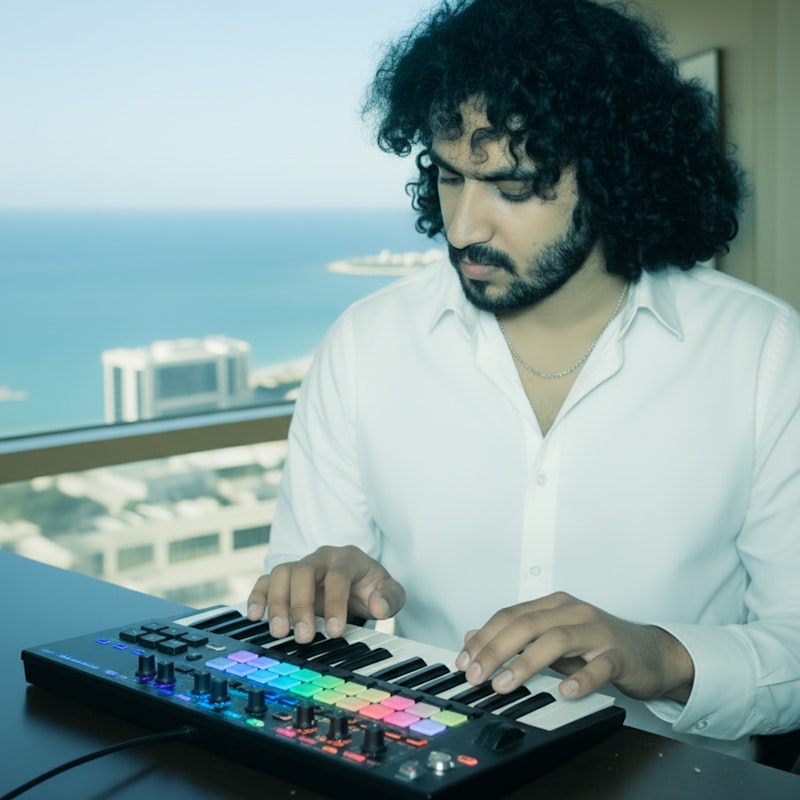
The best hardware samplers let you record, chop and play your own sounds with a tactile, screen-and-pads workflow that keeps you out of the mouse-and-menu grind. Whether you’re flipping samples, building drum kits or capturing field recordings, a dedicated sampler turns raw audio into a playable instrument fast.
Violet Recording is reader-supported — we may earn a commission from links on this page, at no extra cost to you.
| Pick | Best for |
|---|---|
| Akai MPC One, Live II and X | Full standalone beatmaking |
| Roland SP-404 series | Lo-fi sampling and live sets |
| Elektron Digitakt | Deep step sequencing |
| 1010music Blackbox | Compact setups |
Quick answer
For full standalone beatmaking, an Akai MPC (the MPC One, Live or X) is the most complete choice. For an affordable, lo-fi, instantly fun sampler, the Roland SP-404 series is a modern classic. The Elektron Digitakt brings a legendary sequencer to sampling, and 1010music’s Blackbox is the compact option for tight setups. Choose based on whether you want a self-contained groovebox or a sampler that slots into a larger rig.
What a hardware sampler does
A sampler records audio (from a record, a synth, a mic or a file), lets you trim, loop, pitch and slice it, and assigns the results to pads or keys so you can play and sequence them. The best ones add effects, resampling and onboard sequencing, blurring into groovebox territory. If you mainly want synthesised drums rather than sampled ones, our best analog drum machines guide is the better starting point.
How to choose a hardware sampler
- Standalone vs companion. Some samplers are complete production centres (MPC X, MPC Live); others are designed to sit in a bigger setup and sync to it (Digitakt, SP-404). Decide whether this is the centre of your studio or a part of it — if you’re still planning the wider rig, our guide on how to build a hardware music setup helps you place it.
- Polyphony and tracks. How many sounds can play at once, and how many sequencer tracks you get, shapes how complex your arrangements can be.
- Sampling workflow. Time-stretch, slicing modes, chromatic playback and resampling speed all affect how quickly you can flip a sample.
- The sequencer. Step entry, parameter locks, swing and song mode matter as much as the sampling engine. Elektron is the benchmark here.
- Effects and outputs. Onboard FX (the SP-404 is famous for these) and individual or stereo outs determine how finished your sound is before it hits your DAW.
- Connectivity. MIDI, USB and clock so it plays nicely with the rest of your gear. See how to sync hardware synths.
The best hardware samplers to consider
Akai MPC One, Live II and X
The MPC line is the most complete standalone option, descended from the machines that defined hip-hop production. Modern MPCs run in standalone mode with onboard synth engines, effects, sampling, slicing and a deep sequencer, plus a controller mode for your DAW. The MPC One is the compact, affordable entry; the Live II adds a battery and more outputs; the X is the flagship with the biggest screen and most I/O. Our dedicated Akai MPC guide goes deeper on which to pick.
Roland SP-404 series
The SP-404 (in its current MkII form) is the cult favourite for lo-fi, boom-bap and live sample mangling. Its character comes from immediate, hands-on effects and a workflow built around resampling and performance. It isn’t the deepest sequencer, but for vibe-first sampling and live sets, few things are as fun or as portable.
Elektron Digitakt
The Digitakt pairs sampling with Elektron’s celebrated step sequencer, complete with parameter locks, conditional trigs and microtiming. It’s mono-sample focused with eight audio tracks plus MIDI tracks, making it a superb hub for sequencing both its own samples and your external synths. If you love precise, evolving sequences, this is the one — our Elektron gear guide explains the wider ecosystem.
1010music Blackbox
The Blackbox is a compact, touchscreen sampler that packs clip launching, slicing, a sequencer and effects into a tiny footprint. It’s ideal for small setups, Eurorack-adjacent rigs or anyone who wants serious sampling without a large machine on the desk.
Korg and other grooveboxes with sampling
Several grooveboxes include strong samplers, blurring the line between categories. If you want melodic synthesis and drums alongside sampling in one box, weigh these against dedicated samplers in our grooveboxes roundup.
Sampler vs MPC vs groovebox
These categories overlap heavily. A rough way to decide:
- Pure sampler / SP-404 — fastest for capturing and performing samples; lighter on deep sequencing.
- MPC — a full standalone studio with sampling at its core.
- Digitakt — sampler with a world-class sequencer, best as a hub.
Recording your sampler
To get clean results, run the sampler into a quality interface and watch your levels. If it has individual outputs you can mix each part separately in your DAW. Our guides on the best audio interfaces for hardware synths and recording a hardware synth cover the chain end to end.
Frequently asked questions
Do I still need a hardware sampler if I have a DAW?
You don’t need one, but many producers prefer the hands-on, screen-free workflow and the way constraints push creativity. A hardware sampler also frees you from the computer for jamming and live sets. If you mostly work in the box and rarely perform, software samplers may serve you fine.
What’s the best hardware sampler for beginners?
The Roland SP-404 MkII is a popular first sampler thanks to its low price, immediate effects and fun factor. If you want a fuller standalone studio from the start, the Akai MPC One is approachable while still being deep enough to grow into.
Can a hardware sampler sequence my other synths?
Yes — many can. The Elektron Digitakt and Akai MPCs include MIDI sequencer tracks, so they can drive your other hardware synths and drum machines. That makes a sampler a natural brain for a larger setup. See connecting hardware to your DAW for the routing basics.
How are hardware samplers different from drum machines?
A sampler records and plays back your own audio: you can capture a record, a synth line or a field recording, then chop it and assign the slices to pads. A drum machine generates its sounds from built-in synthesis or fixed internal kits. Many modern boxes blur the line, but if you mainly want synthesized drum sounds, an analog drum machine is the more direct tool.
Do hardware samplers work without a computer?
Yes. Standalone units like the Akai MPCs, Roland SP-404 and Elektron Digitakt record, edit, sequence and play samples entirely on their own, so you can build full tracks away from a screen. A computer is still handy for transferring sample libraries and doing a final mix in your DAW, but day-to-day beatmaking does not require one.
Shop related gear
Dedicated boxes for chopping and sequencing samples: