
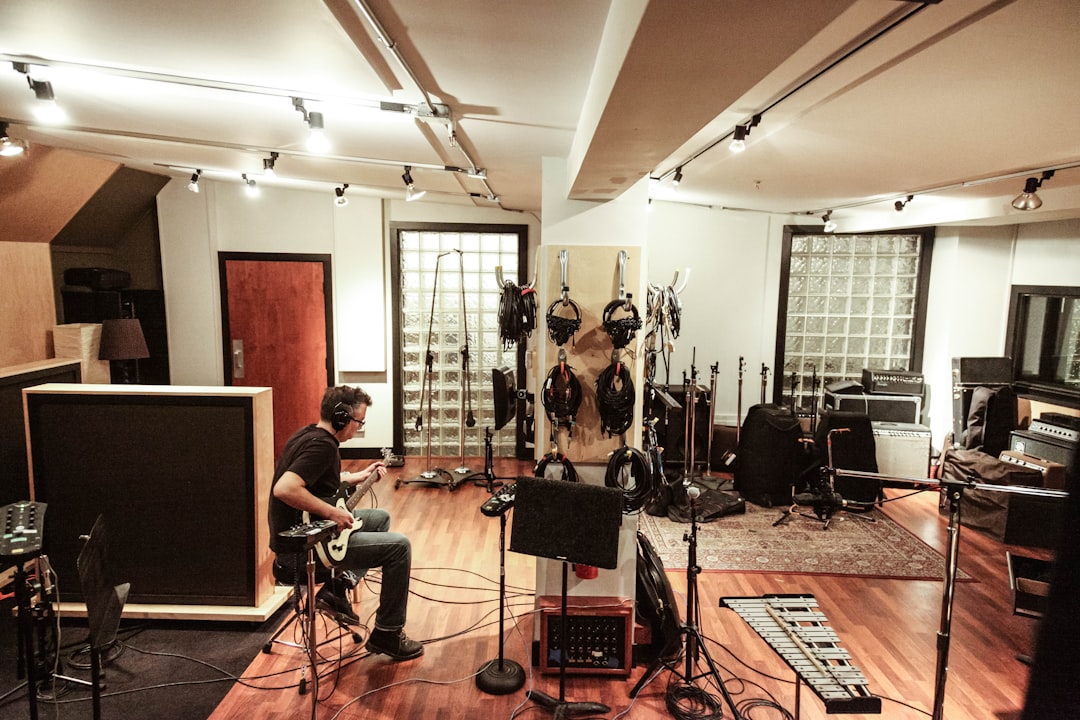
To mix metal, you need tightness and clarity at extreme density — high-gain guitars, double-kick drums, and aggressive vocals all happening at once without turning into a wall of noise. The secret is aggressive low-end control, precise EQ separation, and making sure the kick and guitars stay defined even when everything is loud and fast.
Here is a focused workflow for mixing modern metal. If you are still tracking and programming the song, our guide on how to make metal music covers the production side before you reach the mix.
How to mix metal: control the low end first
Metal mixes fall apart in the low end faster than any other genre because the kick, bass and downtuned guitars all crowd the bottom. Get this right before anything else:
- High-pass the guitars (around 80–120 Hz) so they stop muddying the sub region — the bass and kick own that space.
- Give the kick a clicky attack (around 2–5 kHz) so double-kick patterns stay audible and defined.
- Let the bass fill the low-mid gap the high-passed guitars leave behind, gluing the guitars to the kick.
Good gain staging is essential when you’re stacking this many loud elements.
Step 1: Dial in the guitars
Rhythm guitars are the identity of metal. Capture or re-amp a tight high-gain tone, double-track (or quad-track) the parts and pan them wide. If you are mixing in the box, one of the best amp sim plugins will get you a usable high-gain tone fast. Tightness comes from palm-muted performances and editing, not just the amp. EQ tips:
- High-pass to clear sub mud.
- Tame harshness around 3–4 kHz if the tone is fizzy.
- Decide between a scooped sound (classic, but can disappear in a band mix) and a more mid-focused tone (cuts better in a dense mix). Mid-focused usually wins for clarity.
Step 2: Make the drums brutal but clear
Metal drums are often heavily edited and sample-reinforced for consistency at high speed. Trigger or layer samples on kick and snare so every fast hit lands evenly. Gate the toms, control cymbal wash, and use the overheads mainly for cymbals while the close mics deliver the punch. The same core principles in our guide to mixing drums apply here, just pushed to extremes. The kick’s click is what keeps blast beats and double-kick legible through the guitars.
Step 3: Fit the bass into the guitars
Bass is the glue between kick and guitars. A clean DI plus a distorted layer works well: the clean part holds the low end, the distorted part adds grind that fills the frequencies your high-passed guitars vacated. This keeps the low end huge but defined, and the wider techniques for mixing bass carry straight over to metal.
Step 4: Place the vocals
Whether screamed, growled or sung, metal vocals need to sit on top without getting buried by the guitars. Compress for consistency, carve guitar EQ to make room in the upper mids, and use saturation for aggression. Clean vocals may need more reverb; harsh vocals usually stay drier and upfront. Our vocal mixing guide and EQ and compression fundamentals cover the techniques.
Step 5: Glue, automate and reference
Use bus compression carefully — metal is already compressed-sounding, so over-doing it kills impact. Automate sections so breakdowns hit harder than verses. Always reference against professional metal mixes at matched loudness and check multiple systems; if you are unsure how to choose one, see what a reference track is and how to use it. For more, see the mixing and mastering hub.
Carving EQ pockets so nothing masks anything
Density is the whole problem in metal, so the mix only works when each loud element owns a frequency band the others stay out of. Rather than boosting everything, think in terms of cuts that create space — subtractive moves keep the mix from getting louder and harsher with every plugin you add.
- Sub (below ~60 Hz): reserve for the kick and the clean bass layer only. Roll everything else off here.
- Low end (60–120 Hz): share between kick and bass; carve a small dip in one so the other punches through.
- Low mids (120–500 Hz): guitar body and bass grind live here. This is the muddiest zone in metal — cut narrow build-ups rather than wide swathes, or the mix goes thin.
- Mids (500 Hz–3 kHz): guitar bite and vocal intelligibility. Carve a gentle dip in the guitars where the vocal sits so screams stay forward.
- Highs (above 5 kHz): cymbals, vocal air and the kick click. Keep guitar fizz under control so this region doesn’t fatigue the ear.
A quick way to find a masking clash is to solo two clashing elements together, sweep a narrow boost until the muddy or harsh frequency jumps out, then cut that spot on the less important source. Small moves, repeated across the kit and guitars, do more than one dramatic boost.
Common metal mixing mistakes
Most thin or fatiguing metal mixes come from a short list of recurring errors. Watch for these:
- Over-scooping the guitars. It feels heavy soloed, then evaporates the moment vocals and cymbals arrive. Keep some mids.
- Too much low-end on everything. Stacking full-range guitars on top of kick and bass turns the bottom into a rumble. High-pass aggressively.
- Limiting the master into mush. Metal sounds compressed already, so smashing the bus and limiter kills the transients that make double-kick and snare hits land.
- Untreated tracking problems. No amount of EQ fixes a sloppy palm-mute or out-of-tune low string. Tightness is performed and edited first, mixed second.
- Mixing too loud. High-gain mixes trick your ears fast. Take breaks and check at low volume, where balance problems are obvious.
Frequently asked questions
Should metal guitars be scooped?
A scooped tone sounds great in isolation but can vanish in a full mix. For a dense band mix, a more mid-focused guitar tone usually cuts through better. Many engineers track with mids present and only scoop slightly, if at all.
Why does my metal kick disappear?
Because the guitars are masking it. Give the kick a clicky attack around 2–5 kHz so it punches through the wall of guitars, high-pass the guitars to clear the sub region, and consider triggering a consistent kick sample for fast double-kick passages.
Do professional metal mixes use sample replacement?
Frequently, yes. Triggering or layering drum samples keeps every fast hit consistent and defined, which is hard to achieve with raw close mics alone at metal tempos. Blending samples with the natural kit is standard practice.
How loud should I master a metal track?
Loud, but not at the cost of impact. Metal benefits from a dense, forward master, yet pushing the limiter too hard squashes the transients that give kick and snare their attack. Reference a commercial release you admire at matched loudness, and trust the version that hits harder rather than the one that simply measures louder.



